
Ask ten crypto veterans how they store their coins and you will get ten different answers, several of them contradictory. For a UK beginner, that is not helpful — you need a clear, practical answer to a simple question: where do I put my crypto so it does not get stolen, lost, or locked away from me? The truth is that there is no single “safest” wallet for everyone. Safety depends on how much you hold, how often you touch it, and how much responsibility you are ready to take on. This guide explains the options in plain English, names the genuinely trustworthy choices, and gives you a setup you can follow this weekend.
First, understand what a wallet actually is
A crypto wallet does not hold coins the way a leather wallet holds notes. Your Bitcoin or Ethereum lives on its blockchain — a public ledger replicated across thousands of computers. What the wallet holds are your private keys: the secret cryptographic codes that prove you own those coins and let you spend them. Whoever controls the private keys controls the crypto. Every wallet decision is really a decision about who holds those keys and how well they are protected.
This leads to the fundamental divide in crypto storage:
- Custodial wallets: someone else — usually an exchange — holds your keys. Convenient, recoverable if you forget your password, but you are trusting a company. If it is hacked or goes bust, your crypto may be gone.
- Self-custody (non-custodial) wallets: you hold your own keys. Nobody can freeze your funds or lose them for you — but nobody can recover them either. Lose your backup and your crypto is gone forever.
The FCA’s consumer guidance on cryptoassets is worth reading here: it stresses that cryptoassets are high risk and largely unprotected, which applies to storage choices as much as to buying. There is no FSCS safety net for coins lost to your own mistake or a platform’s failure.
The main types of wallet, ranked by security
Hardware wallets — the gold standard
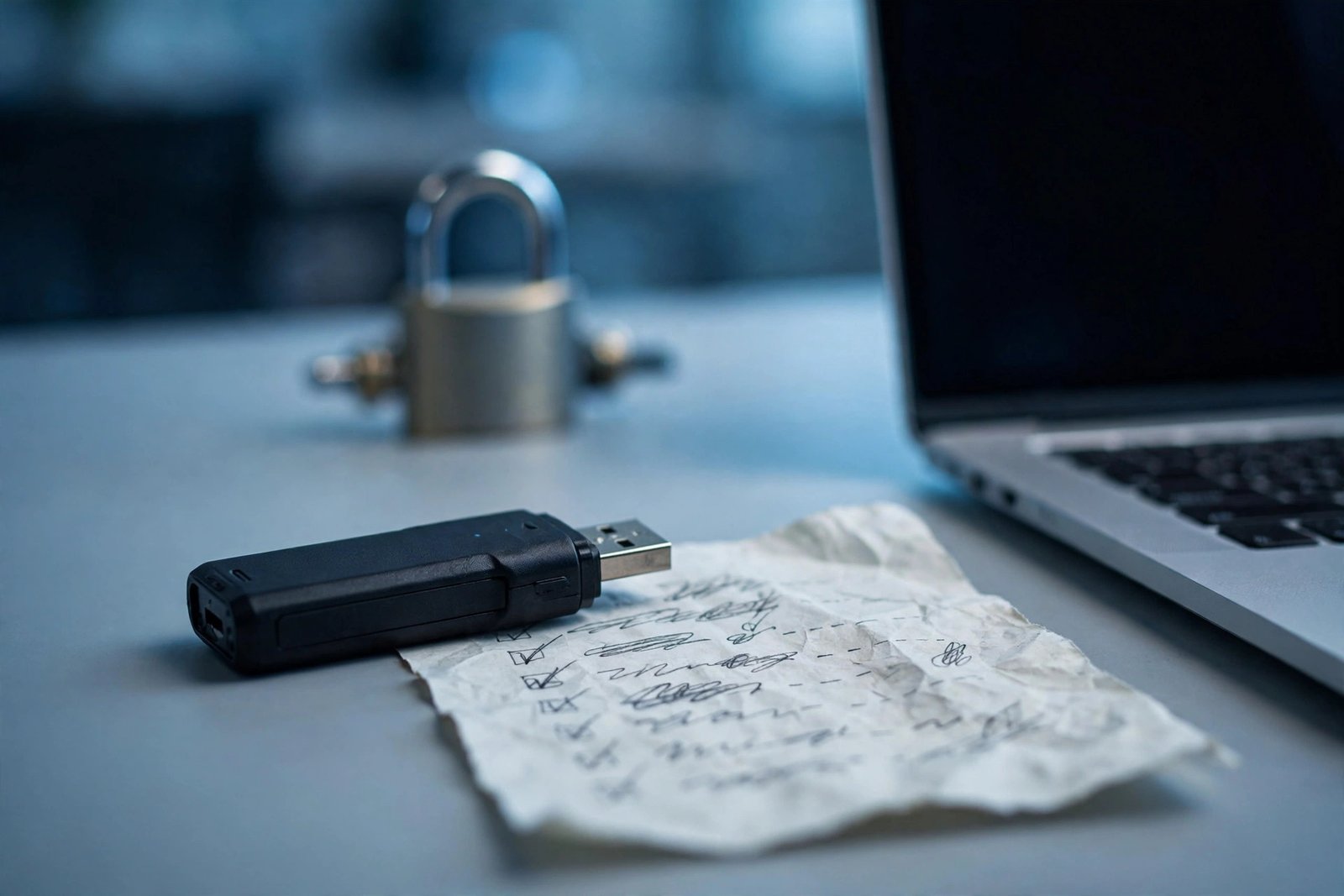
A hardware wallet is a small physical device — roughly the size of a USB stick — that stores your private keys offline, away from the internet and its hackers. To send crypto, you physically confirm the transaction on the device’s screen by pressing its buttons. Even if your computer is riddled with malware, the keys never leave the device.
The two long-established names are Ledger (the Nano series) and Trezor (the Model One and Model T), both European companies with decade-plus track records. Buy directly from the manufacturer — never second-hand, never from a marketplace seller, because a tampered device could steal your funds. Expect to pay roughly £50 to £150 depending on the model.
Hardware wallets are the right choice once your holdings reach an amount you would genuinely miss — for most people, somewhere in the low hundreds of pounds and up. The minor inconvenience of plugging in a device is a small price for the security.
Software wallets — convenient and capable
Software wallets are apps on your phone or computer that manage your keys for you. Reputable examples include long-standing open-source options and the wallets built into major platforms. They are free, easy to use, and fine for everyday amounts — the crypto equivalent of the cash in your physical wallet rather than the savings in your vault.
The risk is the device itself. A phone infected with malware, a laptop you leave unlocked, or a phishing attack that tricks you into approving a malicious transaction can all drain a software wallet. Good digital hygiene matters enormously: keep your operating system updated, be deeply suspicious of public Wi-Fi risks when managing money, and never install wallet apps from unofficial sources.
Exchange wallets — convenient but custodial
When you buy crypto on a platform, it sits in a wallet the exchange controls. This is the default for most beginners and it is acceptable for small amounts and short periods — especially on an FCA-registered platform where you have verified the firm’s legitimacy. The exchange handles all the technical complexity, and you can recover access if you forget your password.
But you are trusting a company with your money, and crypto history is littered with exchanges that were hacked, mismanaged, or simply fraudulent. The collapses of major international platforms in 2022 stranded millions of customers. Treat exchange storage as a convenient parking spot, not a long-term home.
Paper wallets — largely obsolete
A paper wallet is simply your keys printed on paper and stored physically. It sounds secure — fully offline — but it is fragile (fire, flood, fading ink), awkward to use, and easy to get wrong. Modern beginners should skip paper wallets in favour of a hardware wallet, which offers the same offline security with far better usability.
The seed phrase: the 12 or 24 words that are everything
Every self-custody wallet — hardware or software — generates a recovery phrase (also called a seed phrase): 12 or 24 ordinary words in a specific order. This phrase is the master backup of your wallet. Anyone who has it can recreate your wallet on their own device and take everything. There is no customer service, no password reset, no appeal.
How to handle it correctly:
- Write it on paper (or stamp it into metal for fire resistance) — by hand, carefully, checking every word.
- Store it offline, somewhere safe: a safe, a locked drawer, a safety deposit box. Not photographed, not in cloud storage, not in your email drafts, not in a notes app that syncs.
- Never share it with anyone, ever. No legitimate support agent, exchange, wallet company or government agency will ever ask for it. Anyone who does is a scammer — full stop.
- Consider a second copy stored in a different location, in case of fire or theft. Some people split phrases across locations for larger holdings.
This is also why storing passwords safely matters in a crypto context: your exchange password and your seed phrase are the two keys to your kingdom, and they deserve the highest level of care you give any credential.
A safe setup for a UK beginner, step by step
Here is a practical configuration that balances security with sanity for someone holding a few hundred to a few thousand pounds:
- Buy on an FCA-registered platform and complete two-factor authentication on your account from day one — preferably app-based rather than SMS, which is vulnerable to SIM-swap fraud.
- Order a hardware wallet directly from the manufacturer’s website. While it ships, your crypto can sit temporarily on the exchange.
- Initialise the device following the official instructions only. Write down the seed phrase by hand during setup. The device will ask you to confirm it — do this carefully.
- Send a tiny test transaction first — a few pounds’ worth — and verify it arrives before moving the full amount. This one habit has saved countless beginners from sending funds to mistyped addresses.
- Move the bulk of your holdings to the hardware wallet and keep only a small amount on the exchange if you trade occasionally.
- Store the device and the seed phrase separately. A thief who finds one without the other gets nothing.
Total cost: roughly £50–£150 for the device and an hour of your time. For the peace of mind, it is the best-value purchase in all of crypto.
Scams and threats to watch for
The wallet ecosystem has its own predators, and beginners are their favourite prey:
- Fake wallet apps and websites. Scammers clone the look of legitimate wallets. Always download from official sites or app stores, and double-check URLs letter by letter.
- “Support” scammers. Anyone who contacts you first claiming to be wallet support is a fraudster. Real companies do not cold-message customers.
- Address poisoning. Attackers send tiny transactions from lookalike addresses hoping you copy the wrong one next time. Always verify the full address, not just the first and last characters.
- Clipboard malware. Some malware swaps a copied wallet address for the attacker’s. The test-transaction habit above is your defence.
- Physical threats. Do not advertise your holdings on social media. The “$5 wrench attack” — coercion in person — is rare but real, and discretion is free.
MoneyHelper, the government’s free guidance service, publishes advice on avoiding cryptocurrency scams that is worth reading alongside this guide.
So which wallet is actually safest for you?
For most UK beginners, the answer is a combination, not a single product: an FCA-registered exchange for buying and small balances, plus a hardware wallet from Ledger or Trezor for anything you intend to hold. That pairing gives you convenience where you need it and serious security where it counts, without requiring technical expertise.
As your holdings grow, you can add layers — a second hardware wallet as backup, multi-signature setups that require multiple devices to approve transactions, or metal seed-phrase storage. But do not let the perfect be the enemy of the good: a beginner with a properly set-up hardware wallet and a securely stored seed phrase is already better protected than the vast majority of crypto holders.
The uncomfortable truth underlying all of this is that in self-custody, you are the bank — with all the responsibility that implies. Take it seriously, follow the steps above, and your crypto will be as safe as it is reasonably possible to make it.
Frequently Asked Questions
What is the safest crypto wallet for beginners?
A hardware wallet from an established manufacturer like Ledger or Trezor, bought directly from the maker, is widely considered the safest option for beginners holding meaningful amounts. It keeps private keys offline while remaining straightforward to use.
Is it safe to keep crypto on an exchange?
For small amounts and short periods on a reputable, FCA-registered platform, it is acceptable. For larger holdings or long-term storage, it is not recommended — exchanges can be hacked or fail, and your crypto is generally not covered by FSCS protection.
What happens if I lose my hardware wallet?
Nothing, provided you still have your seed phrase: buy a new device (or use compatible software) and restore your wallet with the 12 or 24 words. If you lose both the device and the seed phrase, the crypto is permanently unrecoverable.
Are mobile crypto wallets safe?
Reputable mobile wallets are reasonably safe for everyday amounts if your phone is secure — updated OS, official app, no jailbreaking. They are not ideal for life-changing sums, where a hardware wallet is the better choice.
Can HMRC see my crypto wallet?
HMRC can request data from UK exchanges, and blockchain transactions are publicly visible. From 2026, international reporting frameworks mean tax authorities share crypto data across borders. Assume your activity is visible and keep proper records for Capital Gains Tax purposes.


Leave a Reply