
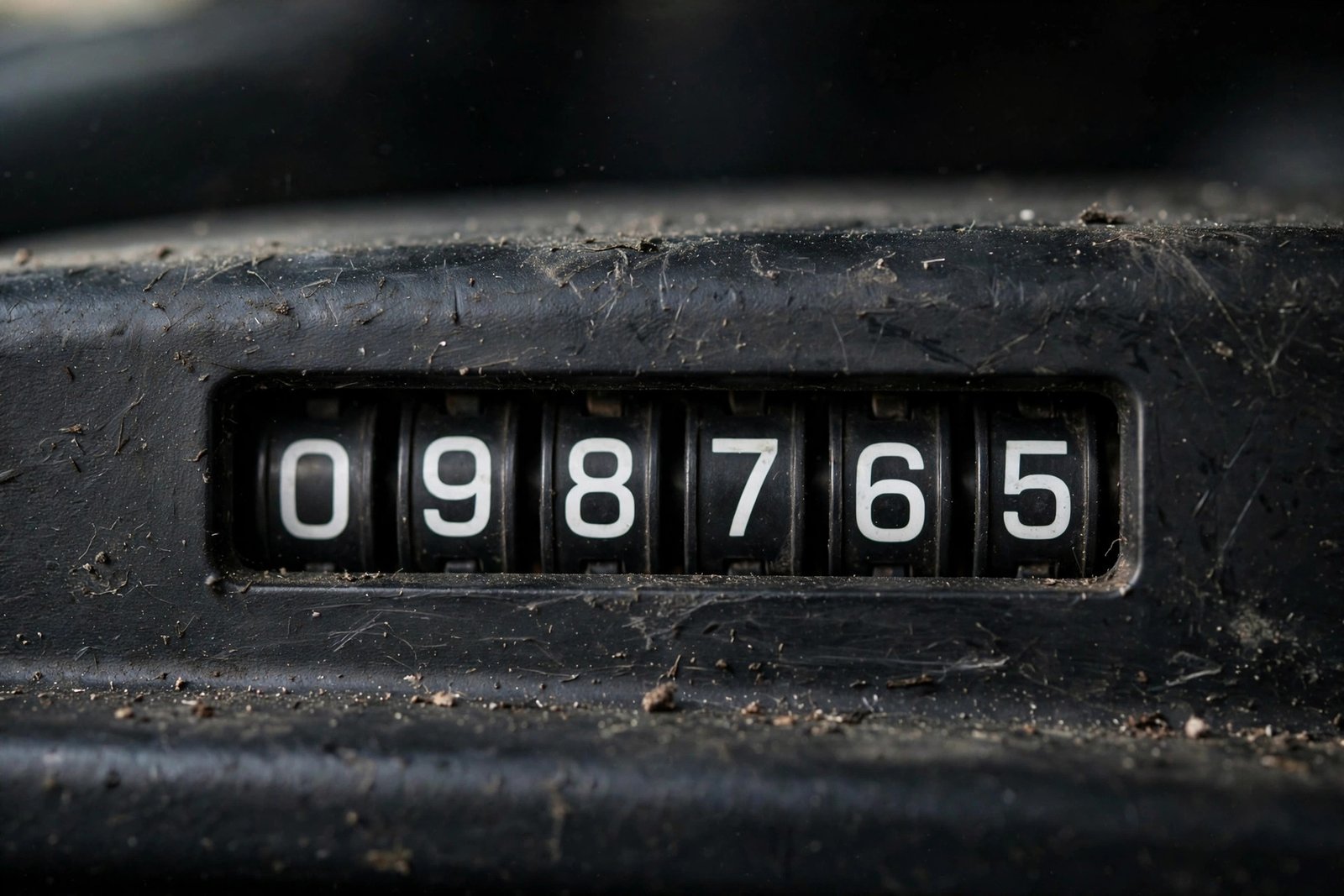
You’re scrolling through used car adverts and the mileages are all over the place: a three-year-old car with 18,000 miles, another with 65,000. The low-mileage one costs £2,000 more. Is it worth it? The question of the “best” mileage for a used car purchase is one of the most misunderstood in British motoring — because the number on the odometer matters far less than most buyers think, and the things that matter more are hiding in plain sight.
Why mileage is a proxy — and a flawed one
Mileage is popular because it’s simple: one number that seems to summarise a car’s life. And it’s not meaningless — components wear with use, and a car that’s covered 150,000 miles has simply done more work than one with 40,000. But mileage is a proxy for wear, not a measure of it. A motorway cruiser that’s done 100,000 gentle miles at constant speed is often in better mechanical shape than a town car with 40,000 miles of cold starts, speed bumps, stop-start traffic and short journeys that never warm the engine properly.
The UK average is about 7,000–8,000 miles a year. So a five-year-old car with 40,000 miles is average; with 20,000 it’s low; with 70,000 it’s high. But “average” tells you nothing about how those miles were done — and that’s where smart buyers look instead.
The sweet spots by buyer type
The value hunter: 60,000–100,000 miles
This is where depreciation has done its worst and the car still has most of its life left. A well-maintained modern car at 80,000 miles is barely middle-aged — engines routinely last 150,000–200,000 miles with proper servicing. You can save 30–50% versus a low-mileage equivalent. The key: it must have full service history and evidence of the big-ticket maintenance (cambelt/timing chain, clutch, suspension) being done or due. A high-mileage car with meticulous history beats a low-mileage car with none, every time.
The low-hassle buyer: 20,000–50,000 miles
You’ll pay more, but you get the balance of the manufacturer’s warranty (or a decent aftermarket one), plenty of life in wear items (brakes, tyres, clutch), and minimal immediate maintenance. This is the sweet spot for buyers who want to just drive without thinking about cars — the premium buys peace of mind. Ex-fleet and ex-lease cars often sit in this band at competitive prices.
The bargain basement: under £3,000, mileage almost irrelevant
At the cheap end, condition and history swamp mileage as factors. A £2,000 car with 110,000 miles and full history from a caring owner is a far better buy than a £2,000 car with 60,000 miles, no history and three previous owners in two years. Below £3,000, buy on evidence, not odometer.
What matters more than the number
Experienced buyers interrogate these instead of fixating on mileage:
- Service history. The single most important factor. Regular servicing with receipts — ideally at the manufacturer’s intervals — is worth more than 30,000 fewer miles without it.
- Number and type of previous owners. One careful owner for six years beats four owners in six years. Fleet/lease history is fine if serviced; multiple short private ownerships is a red flag.
- MOT history. Free to check on the government’s MOT history service — look for patterns of failures, recurring advisories, and mileage consistency (gaps or rollbacks are clocking).
- How the miles were done. Ask. “Mostly motorway commuting” is the golden answer. “School runs and shopping” means cold-start wear. A seller who knows the car’s story is usually a caring owner.
- Big-ticket items. Has the cambelt been changed on schedule (typically 60,000–100,000 miles or 5–7 years — a £300–£600 job that destroys engines if skipped)? Clutch condition? These matter more than whether the odometer reads 55,000 or 75,000.
The mileage traps to avoid
Suspiciously low mileage. A ten-year-old car with 25,000 miles sounds lovely — but cars that sit deteriorate: seals dry out, brakes corrode, tyres age (replace at six years regardless of tread), and condensation attacks the exhaust and internals. “Low mileage” needs the story to make sense (elderly owner, second car) and the MOT history to corroborate it.
Clocked cars. Digital odometers didn’t end clocking — they just moved it to laptops. The MOT history check is your defence: it records mileage at every test, and inconsistencies glow. Also check service records and wear: a 40,000-mile car with a worn-through driver’s seat and shiny steering wheel is lying to you.
The just-under-the-cambelt trap. Cars priced attractively at 58,000 miles with a 60,000-mile cambelt interval are the classic trap — you’re buying a £500 bill due in months. Always check the cambelt interval against the current mileage before agreeing a price.
When weighing a used purchase, the same careful comparison mindset that helps with buying refurbished tech wisely applies — condition evidence beats headline numbers. And if you’re buying second-hand generally, smart second-hand buying habits transfer surprisingly well to cars.
Diesel, petrol, hybrid: mileage means different things
Fuel type changes the mileage calculus. Diesels need long runs — a low-mileage diesel that’s only done short trips is a DPF (diesel particulate filter) disaster waiting to happen, with £1,000+ repair bills. Don’t buy a diesel for town driving, whatever the mileage. Hybrids’ batteries are generally durable, but check battery health on high-mileage examples. Petrols are the most mileage-forgiving for mixed use. And EVs? Mileage matters less than battery health — a 100,000-mile EV with 90% battery health is a better buy than a 40,000-mile one at 80%.
The test drive: reading a car beyond the odometer
Numbers on paper only go so far — a twenty-minute test drive reveals what adverts hide. Start the car from cold if possible; listen for rattles, knocks or excessive diesel clatter on startup. Drive a route with bumps, corners and a stretch of faster road. The steering should track straight, the brakes should stop smoothly without vibration or pulling, and the gearbox should shift cleanly with no crunching or slipping. Test everything electrical: windows, air conditioning (run it cold — regassing a neglected system costs £60–£100), heaters, lights and infotainment. A seller who resists a proper test drive or insists on “just around the block” is waving a red flag. And always view in daylight — evening viewings hide bodywork sins that sunlight exposes instantly.
Conclusion
The “best” mileage for a used car isn’t a number — it’s a combination: mileage appropriate to the car’s age, done in the right way (longer runs beat short hops), backed by full service history and a clean MOT record. As a rough guide, 20,000–50,000 miles buys peace of mind, 60,000–100,000 miles with history buys the best value, and under £3,000 you should ignore the odometer and buy on evidence. Stop asking “how many miles?” as your first question. Start asking “who serviced it, how was it driven, and what’s the MOT history?” — and you’ll buy better cars for less money, every time. The RAC’s used-car buying guide covers the full check sequence in more detail.
Frequently Asked Questions
Is 100,000 miles too much for a used car?
Not for a well-maintained modern car — many run reliably to 150,000–200,000 miles. At 100,000 miles, insist on full service history and evidence that major items (cambelt, clutch) have been addressed.
Is low mileage always better?
No. Suspiciously low mileage can mean a car that’s sat deteriorating — dried seals, corroded brakes, aged tyres. The mileage story must make sense and be corroborated by MOT history.
How can I check a used car’s mileage is genuine?
Use the government’s free MOT history checker, which records mileage at every test. Look for consistency across years and cross-reference with service records. Inconsistencies indicate clocking.
What’s more important: mileage or service history?
Service history, by a distance. A high-mileage car with meticulous servicing will outlast a low-mileage car that’s been neglected. Always prioritise documented maintenance over a low odometer reading.


Leave a Reply