
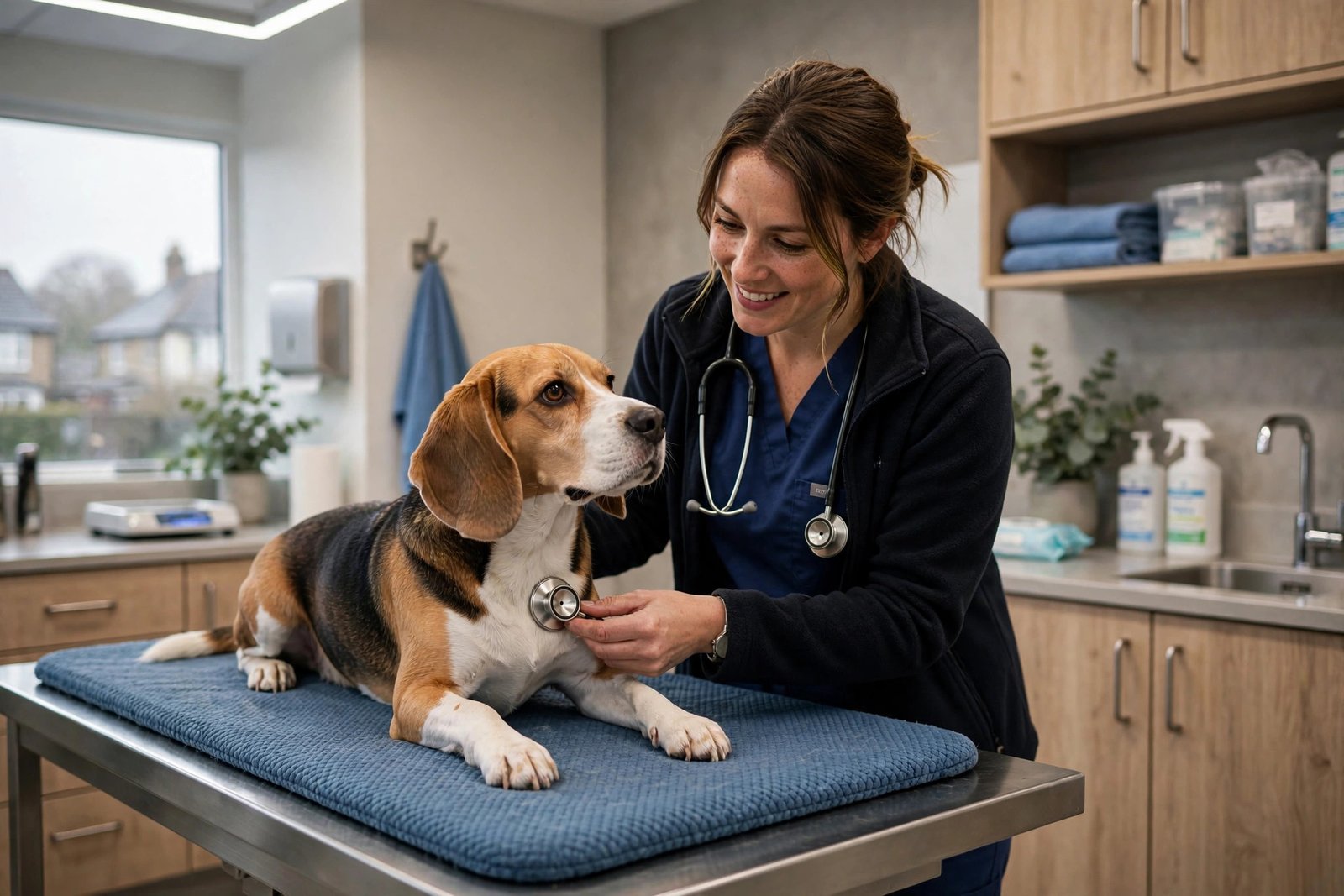
Your dog is limping, or vomiting at midnight, or has eaten something unspeakable — and you’re frantically Googling “vet near me” while panicking. The vet you choose in a crisis is rarely the vet you’d choose calmly, which is exactly why finding a good vet should happen before you need one. Here’s how to find a veterinary practice you’ll trust with your pet’s life — and your money.
Start before you need one
The best time to find a vet is when everything’s fine: after getting a new pet, moving house, or right now, reading this. A calm first visit — a new-pet check or vaccination — lets you assess the practice without stress, and means your pet’s records, history and baseline are on file when something goes wrong. Emergency-hunting for a vet at midnight limits you to whoever’s open, not who’s best.
What “good” looks like: the RCVS standard
In the UK, all vets must be registered with the RCVS (Royal College of Veterinary Surgeons) — check the register if in doubt. Beyond that, look for practices in the RCVS Practice Standards Scheme: accredited practices are inspected against standards for equipment, hygiene, staff training and client care. Core accreditation is good; “General Practice” or “Hospital” tiers indicate higher capabilities (hospital status means 24-hour on-site care, for instance). It’s the closest thing to an official quality mark — and surprisingly few owners know to look for it.
Recommendations and reviews: read them right
Ask local dog walkers, groomers, trainers and rescue centres — these professionals see vet outcomes across many clients and give unvarnished opinions. Fellow pet owners’ recommendations help too, but weight them: “they were lovely when my cat was put to sleep” tells you about compassion; “they diagnosed what two other vets missed” tells you about clinical quality. You want both.
Online reviews need context. Vet reviews skew negative because grieving or angry owners post more than happy ones, and because vet bills generate resentment that gets aimed at the practice. Read for patterns, not outliers: repeated mentions of rushed appointments, poor communication or surprise bills are red flags; a single furious review among dozens of positives is noise. The same careful approach you’d use to find any trusted local professional applies — multiple independent recommendations beat any single source.
Visit and assess: the trial appointment
Book a routine appointment and judge the practice on:
- How they handle your pet. Good vets read animal body language, go at the animal’s pace, use treats and low-stress handling. A vet who wrestles a terrified cat while chatting to you about the weather is showing you their standard of care.
- Communication. Do they explain findings clearly, offer options with honest pros/cons, and give costs upfront? The best vets say “here are three approaches, here’s what I’d do and why” — not just the most expensive option.
- Time. Ten-minute conveyor-belt appointments vs practices that book 15–20 minutes. Rushed vets miss things.
- Facilities. Clean, modern, separate dog/cat waiting areas (or at least cat-friendly measures), in-house lab and X-ray/digital imaging. You don’t need a referral hospital for routine care, but basic diagnostics on-site matter.
- Costs transparency. A written estimate before non-routine work, itemised bills, no surprise add-ons. Ask about their out-of-hours arrangements and fees now — emergency surcharges vary wildly (£150–£400+ just to be seen).
The money question: independent vs corporate
The UK vet market has consolidated dramatically — most practices are now owned by large corporate groups. Corporate ownership isn’t inherently bad (it funds better equipment and 24-hour hospitals), but it can mean pricing pressure, treatment protocols driven by targets, and less continuity of vet. Independents often offer more personal continuity and flexible pricing, but may refer complex cases elsewhere. Neither is automatically better — judge the individual practice. Do ask directly: “are you independently owned?” and “will I see the same vet each visit?” Continuity matters enormously for chronic conditions.
On costs: get pet insurance before problems arise (pre-existing conditions are excluded), and understand your policy — “lifetime” vs “per-condition” vs “time-limited” cover differ enormously at claim time. For eligible low-income owners, the PDSA and RSPCA offer reduced-cost care. And navigating professional appointments well — preparing questions, asking for itemised estimates — gets you better care for less money in any field.
Out-of-hours: the question everyone forgets
Ask now, not at midnight: who covers your emergencies out of hours? Some practices run their own 24-hour service; most hand over to a dedicated emergency provider (like Vets Now). Know the location, phone number and call-out fee structure in advance, and save them in your phone. A practice 10 minutes away with its own night vet beats a “better” practice 40 minutes away when your dog is bleeding at 2am.
Second opinions: your right, not an insult
Good vets welcome second opinions; insecure ones discourage them. If you’re facing a major diagnosis, an expensive treatment plan, or a recommendation for euthanasia that doesn’t feel right, a second opinion is standard medical practice — for pets as for people. You don’t need permission, though courtesy suggests telling your vet. Take the records (you’re entitled to them), and choose the second vet independently rather than a partner in the same practice. Many referral hospitals and university veterinary schools (the RVC, Edinburgh, Glasgow, Liverpool, Bristol, Cambridge) accept second-opinion cases and see the hardest problems daily. A second opinion that confirms the first buys peace of mind; one that differs can change everything.
When to change vets
Loyalty is good; inertia isn’t. Consider switching if: you consistently feel rushed or unheard, estimates are vague and bills surprising, your pet is visibly terrified every visit with no low-stress effort made, second opinions repeatedly contradict diagnoses, or you simply don’t trust them. You’re entitled to your pet’s records — practices must provide them (they may charge a small admin fee). A fresh pair of eyes has saved many pets; never feel trapped.
Conclusion
Finding a good vet in the UK means looking for RCVS Practice Standards accreditation, gathering recommendations from pet professionals, trialling with a routine visit, and judging communication, handling and cost transparency — not just proximity. Sort out-of-hours arrangements before you need them, insure early, and don’t confuse loyalty with inertia. Your vet is your pet’s GP, surgeon and emergency doctor rolled into one; choosing well, calmly, in advance, is one of the most consequential decisions you’ll make as a pet owner.
Frequently Asked Questions
How do I check if a UK vet is qualified?
All practising vets must be on the RCVS register — searchable on the RCVS website. Practices can also hold RCVS Practice Standards Scheme accreditation, which indicates inspected quality standards.
Are corporate vet practices worse than independents?
Not automatically. Corporates often have better equipment and 24-hour facilities; independents often offer better continuity and personal service. Judge each practice on communication, care standards and transparency.
How much does an emergency vet visit cost in the UK?
Out-of-hours consultation fees alone are typically £150–£400+, before any treatment. This is why pet insurance and knowing your practice’s emergency arrangements in advance matter so much.
Can I change vets easily?
Yes — register with the new practice and request your pet’s records from the old one (they’re obliged to provide them). There’s no notice period; many owners switch after a single bad experience.


Leave a Reply