Elvis Presley’s Money Story: Net Worth, Age, Wife and Family in Focus
A Singer’s Rise, in Brief
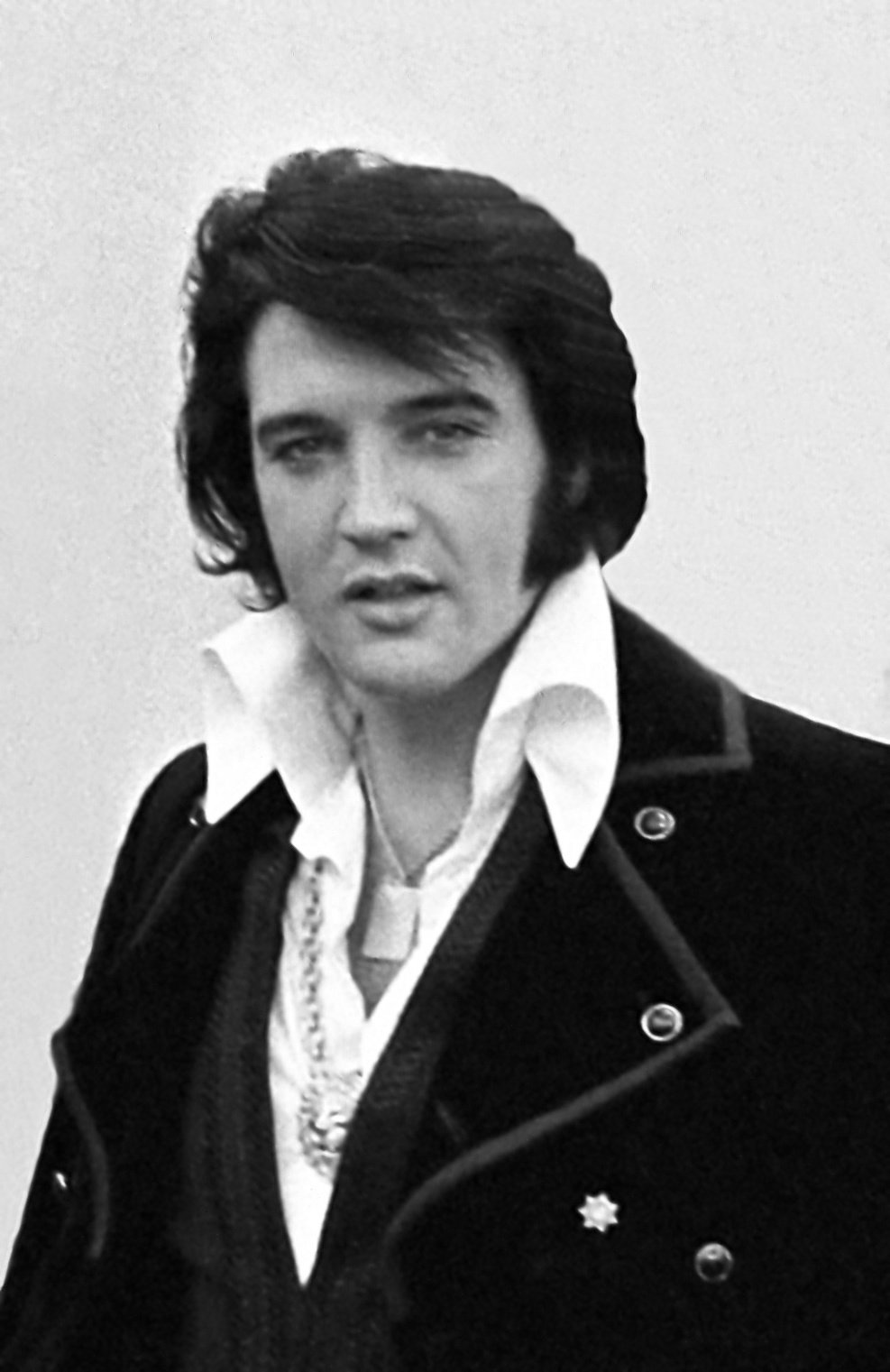
Elvis Presley died in 1977, aged 42, and has never really left. The boy from Tupelo who walked into Sun Studio in Memphis and changed popular music in a single afternoon remains the best-selling solo artist in recording history, the defining face of rock and roll, and the centre of an estate that still earns money on a scale most living stars would envy. His home, Graceland, is one of the most visited private houses in America. His records still sell. His image is recognised in every country on earth.
His financial story, though, is widely misunderstood, and this profile takes particular care with it. The fortune Elvis personally held at his death, the lifetime earnings that flowed through his hands, and the value of the estate that bears his name today are three different numbers, and they are kept strictly separate here, as they must be. What follows is the verified record: the poor Mississippi childhood, the astonishing career in songs, albums and films, his marriage to Priscilla and his daughter Lisa Marie, the house that became a shrine, the Cadillacs — and then, in the money section, the figures, each labelled for exactly what it is.
The Tupelo Childhood of 1935, Step by Step
Elvis Aaron Presley was born on 8 January 1935 in Tupelo, Mississippi. His birthday is one of the most famous in music. His twin brother, Jesse Garon, was stillborn — a family fact that belongs in any honest account of his early years, and one that marked the household from the start. His parents were Vernon Elvis Presley, who died in 1979, and Gladys Love Presley, who died on 14 August 1958, aged 46, a loss that by every account hit her son profoundly.
The family was poor. Vernon worked irregular jobs, and the Presleys moved to Memphis, Tennessee, in 1948, settling into public housing and the musical crossroads of the city: gospel in church, blues on Beale Street, country on the radio. Elvis absorbed all of it. He worked as a truck driver after school, and in 1953 he paid to record a couple of songs at the Memphis Recording Service — Sun Studio — ostensibly as a gift for his mother. The studio’s owner, Sam Phillips, heard something in the young man’s voice, and the biography of modern music turned on what happened next.
Home in Tupelo, Away from the Stage
Elvis Presley’s wife was Priscilla Presley, née Beaulieu. They met in September 1959 in Bad Nauheim, Germany, during his Army service, and married on 1 May 1967 in Las Vegas. The marriage ended in divorce on 9 October 1973, though Priscilla remained central to his story — and, later, to the survival of his estate, which she helped turn into a going concern by opening Graceland to the public.
They had one child: Lisa Marie Presley, born on 1 February 1968 in Memphis. Lisa Marie was the sole heir to his estate, a singer in her own right, and the mother of the actress Riley Keough. Lisa Marie died on 12 January 2023, and following a legal dispute over the estate’s trust, Riley Keough is now sole trustee and owner of Graceland. Elvis’s family story is therefore a short and poignant one: parents Vernon and Gladys, the stillborn twin Jesse Garon, one wife, one daughter, and a granddaughter now charged with the house and the name.
The Work, 1954 to 1969: A Singer’s Career in Full
1954 — Sun Studio and “That’s All Right”
On 5 July 1954, during a session at Sun Studio, Presley launched into an uptempo take on Arthur Crudup’s “That’s All Right”, and Phillips knew he had found the sound he had been looking for. The Sun singles that followed — raw, joyous, fusing country and rhythm and blues — began the recording career. His songs from this period are the foundation documents of rock and roll, and the five Sun singles remain among the most valuable records ever pressed.
1956 — RCA, Heartbreak Hotel and the films begin
In November 1955 his contract was sold to RCA for $35,000, then an unprecedented sum. “Heartbreak Hotel” (1956) made him a national sensation, and television appearances turned sensation into phenomenon. The same year he began the film career that would occupy much of the next decade: 31 feature films between 1956 and 1969, formula pictures for the most part, but enormously popular ones that carried his songs to audiences worldwide. Across his lifetime he released 24 studio albums, a catalogue spanning rock and roll, country, gospel and ballads.
1958 to 1960 — Army service
At the peak of his fame, Presley was drafted. He served in the United States Army from March 1958 to March 1960, much of it in Germany, and he served as an ordinary soldier rather than in entertainment duties — a decision that reshaped his public standing at home. It was during this posting, in Bad Nauheim, Germany, that he met the young Priscilla Beaulieu, who would become his wife. He returned to America in 1960 with his popularity intact and a string of hits waiting.
1968 to 1969 — The comeback
After years in which films crowded out serious recording, the 1968 television comeback special returned him, dressed in black leather, to the raw performer of the Sun years. Sessions at American Sound Studio in Memphis in 1969 followed, producing “Suspicious Minds” and “In the Ghetto”, among his finest records. Readers interested in how this career has been assessed elsewhere in the network can compare Elvis Presley’s net worth profile on our sister site.
1969 to 1977 — Las Vegas and the final concerts
From 1969, Las Vegas residencies and relentless touring defined his working life. The jumpsuits, the karate flourishes and the vast band became the enduring image, even as his health declined through the 1970s. His final concert was on 26 June 1977 in Indianapolis. He died on 16 August 1977 in Memphis, Tennessee, aged 42. That date and place are stated once, soberly, as the record requires; this profile adds no detail beyond them.
Dates, Family and Work: The Singer in Brief
| Dates, Family and Work: The Singer in Brief | Details |
|---|---|
| Full name | Elvis Aaron Presley |
| Birthday | 8 January 1935, Tupelo, Mississippi |
| Age | Died aged 42, on 16 August 1977, in Memphis, Tennessee |
| Height | 6 ft 0 in (1.83 m) |
| Weight | No reliable published figure exists — no coroner-published weight is relied on, and published figures vary too widely to state as fact |
| Wife | Priscilla Presley, née Beaulieu (married 1 May 1967; divorced 9 October 1973) |
| Children | One — Lisa Marie Presley (born 1968, died 12 January 2023) |
| Parents | Vernon Elvis Presley (died 1979) and Gladys Love Presley (died 14 August 1958) |
| Family | Son of Vernon and Gladys Presley; his twin brother Jesse Garon was stillborn; husband of Priscilla from 1967 to 1973; father of Lisa Marie |
| Songs | Including “That’s All Right”, “Heartbreak Hotel”, “Suspicious Minds” and “In the Ghetto” |
| Albums | 24 lifetime studio albums, alongside the five Sun singles and an extensive catalogue of soundtracks and gospel recordings |
| House | Graceland, Memphis — bought March 1957 for $102,500 |
| Car collection | More than 100 cars in his lifetime reported, Cadillac-centred; no total valuation relied on |
| Net Worth | Around $5 million at his death in 1977 — Celebrity Net Worth (around $26–27 million in inflation-adjusted terms); the modern estate figure is separate and is set out in the money section |
How Business Deals Turned a Singer into a Fortune
The figures must be taken in the right order. First, the man himself: Celebrity Net Worth puts Elvis Presley’s net worth at his death at around $5 million, a figure corroborated by Parade in January 2026 and others, and equivalent to roughly $26–27 million in inflation-adjusted terms. For the best-selling solo artist in history, that is a strikingly small fortune, and the reasons are structural and documented. In 1973 he and his manager sold his catalogue royalties back to RCA for $5.4 million, cutting off the income stream that would have made him wealthy beyond measure. His manager, Colonel Tom Parker, took a commission of 50 per cent. The money came in enormous quantities and went out nearly as fast.
Secondly, the earnings: Forbes puts his lifetime earnings somewhere between $100 million and $1 billion. That is earnings — the gross flow of a career — not wealth held at any one moment, and it is labelled as such here. Thirdly, and entirely separately, comes the estate today. A 2020 Rolling Stone feature, quoting a Presley executive, estimated the modern estate at $400–500 million. Forbes’s annual estimates of the estate’s earnings show $110 million in 2022, $100 million in 2023, $50 million in 2024 and $17 million in 2025. None of that was Elvis’s personal net worth; it is the value created after his death, largely by opening Graceland and licensing the name. The estate’s ownership history reflects that value: a majority stake in Elvis Presley Enterprises was sold in 2005 for around $100 million, with Graceland retained, and a further deal with Authentic Brands Group followed in 2013 at around $145 million.
House — Graceland
Graceland, in Memphis, was bought in March 1957 for $102,500. The house stands on 13.8 acres, runs to around 17,552 square feet, and was his home for the last twenty years of his life. Opened to the public on 7 June 1982, it became the engine of the estate’s revival, and it was designated a National Historic Landmark in 2006. It remains in the family’s hands through the trust now overseen by Riley Keough.
The Pink Cadillac and a Cadillac-Centred Collection
More than 100 cars are reported to have passed through his hands in his lifetime, and the collection was Cadillac-centred. The famous 1955 Cadillac Fleetwood Series 60 — the “pink Cadillac” — is on permanent display at Graceland. Other documented cars include a 1956 Eldorado, a 1960 Rolls-Royce Silver Cloud, Stutz Blackhawks including the 1973 car he drove on the day he died, a 1971 De Tomaso Pantera and a BMW 507. His aircraft, the Convair 880 “Lisa Marie” and a Lockheed JetStar, both bought in 1975, are also preserved at Graceland. No total valuation of the cars is relied on here, because none has been reliably published.
It is worth pausing on how unusual that financial structure was. Most stars of his era lost their money to spending; Presley’s was lost, in large part, on paper — a catalogue sold too early and a commission set at half of everything he earned. The songs and albums themselves never stopped being valuable. They simply belonged, after 1973, to other people. The estate’s later success came from the one asset that could not be signed away in the same fashion: the house, the name and the image, which his family, led by Priscilla, learned to manage as a business after his death. That distinction — between the value he created and the value he kept — is the single most important fact in his financial biography.
What Comes Next for a Singer from Tupelo
Elvis Presley’s legacy is
the largest of any popular musician of the twentieth century, and the paradox at its heart is financial as much as musical. He earned, on Forbes’s range, up to a billion dollars across his career, held only around $5 million of it at his death, and left a name that would go on to be worth hundreds of millions to an estate he never saw. The $5 million figure and the $400–500 million estate estimate are both part of the record; confusing them does him, and the facts, a disservice.
What endures beyond the figures is the work: the Sun sessions, the comeback, the Memphis recordings of 1969, and a voice that still defines a genre nearly fifty years after his death at 42. Graceland draws its visitors, the catalogue earns its millions, and his granddaughter keeps the house. The King, as the world insists on calling him, remains exactly that — in the charts of history, if not in the fortune he personally kept.