How Much Money Does Damon Albarn Have? Net Worth, Career and Family
From Gorillaz to today: the outline
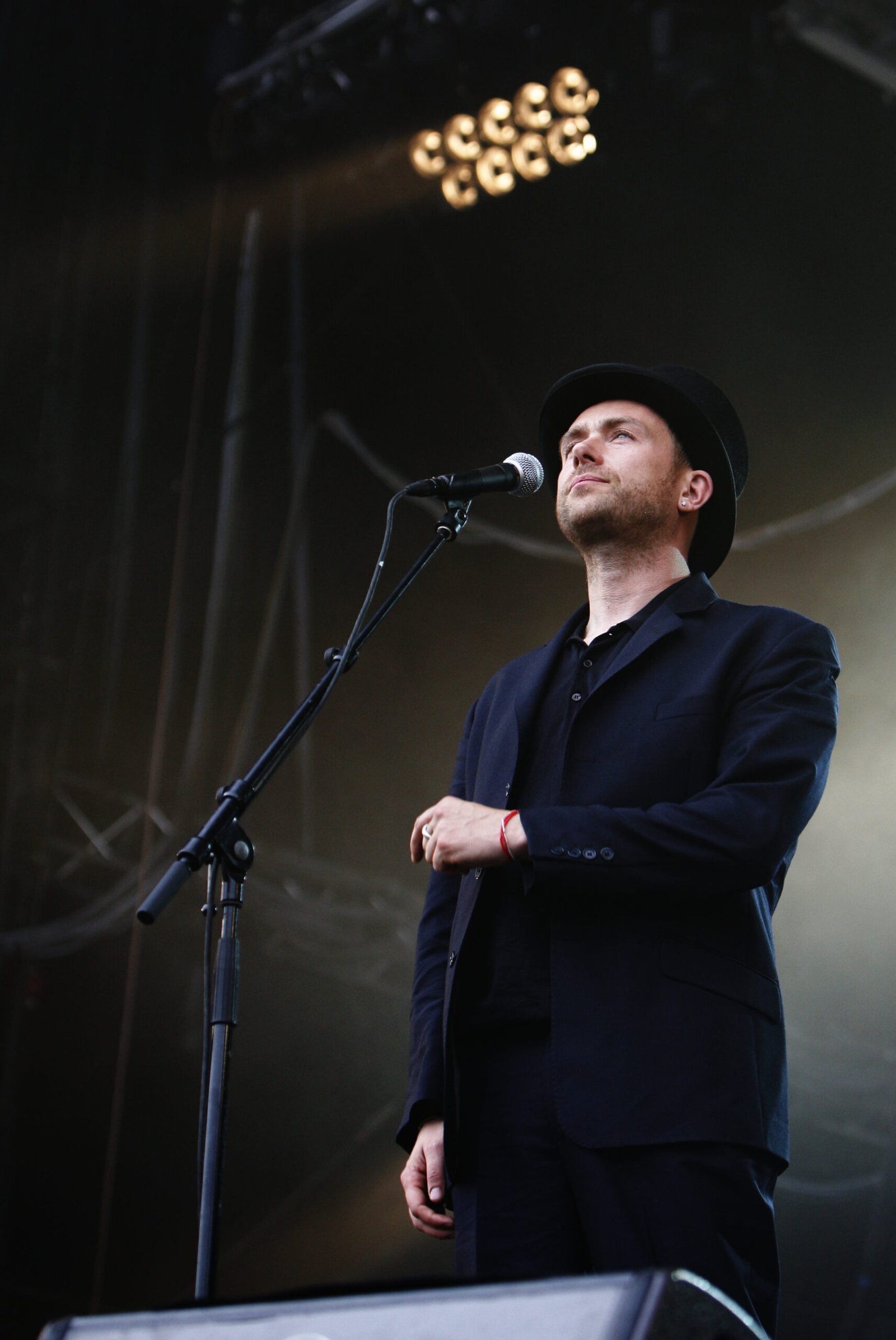
Damon Albarn has spent more than three decades refusing to stay in one place musically. He came to fame fronting Blur, the guitar band he formed with Graham Coxon, Alex James and Dave Rowntree at the end of the 1980s, then built a second career of equal size with Gorillaz, the animated group he devised with the artist Jamie Hewlett, behind which he could work with almost anyone, from any tradition, without the machinery of a conventional band getting in the way. Around those two pillars sits a body of work that takes in stage operas, a supergroup with Paul Simonon and Tony Allen, the Africa Express collective and two quiet, reflective solo albums.
He is still adding to it. In February 2026 Gorillaz released their ninth studio album, The Mountain, and it went to number one in the United Kingdom, with a tour following that included a stadium date at Tottenham Hotspur Stadium in June and concerts running into the autumn. This profile sets out the whole record in order: the early years in London and Essex, the work itself from Leisure to The Mountain, the family behind him, the facts in full, and then the money — how the fortune attributed to him is made up, and what other trackers say about it.
The Whitechapel story, in numbers and names
| The Whitechapel story, in numbers and names | Details |
|---|---|
| Full Name | Damon Albarn |
| Born | 23 March 1968, Whitechapel, London |
| Birthday | 23 March |
| Age | 58 |
| Height | 5 ft 11 in (1.80 m) |
| Weight | No reliable published figure exists |
| Partner | None publicly confirmed (Suzi Winstanley, 1998–2023) |
| Children | One daughter — Missy Albarn (born 1999) |
| Parents | Keith Albarn and Hazel Albarn, née Dring |
| Family | Parents Keith and Hazel Albarn; one daughter, Missy |
| Songs | Includes “Song 2”, “Parklife”, “Girls & Boys”, “Clint Eastwood”, “19-2000” and “Feel Good Inc.” |
| Albums | With Blur: Leisure (1991), Parklife (1994), The Great Escape (1995), Blur (1997), 13 (1999), Think Tank (2003), The Magic Whip (2015), The Ballad of Darren (2023). With Gorillaz: Gorillaz (2001), Demon Days (2005), Plastic Beach (2010), Humanz (2017), Cracker Island (2023), The Mountain (2026). Solo: Everyday Robots (2014) |
| @damonalbarn | |
| Net Worth | $45 million — Celebrity Net Worth |
Two points in the table deserve a word of explanation. The partner row records no current partner because none has been publicly confirmed since the end of the Winstanley relationship in 2023; a single-source tabloid report from 2026 linking him to a Gorillaz collaborator is not relied on here. And for his weight, no reliable published figure exists, so the table says so plainly rather than repeating a number no authority stands behind.
The earnings from Gorillaz onward
Celebrity Net Worth puts Damon Albarn’s net worth at $45 million, and that is the figure carried in this profile, attributed to that source. Secondary trackers put the total lower, at about $40 million; those figures are noted here for completeness and are not adopted, and no competing total from Forbes or the Sunday Times Rich List was found. The estimate should be read as exactly that — an estimate, resting on a thirty-five-year public earnings record.
Its basis is a catalogue of unusual depth. Songwriting and publishing income flows from nine Blur studio albums and nine Gorillaz albums, including recordings — “Song 2”, “Clint Eastwood”, “Feel Good Inc.” — that continue to earn from streaming, licensing and broadcast use more than two decades after release. Live income comes from stadium and arena touring by both bands, most recently the 2026 Gorillaz tour. Fees and royalties from stage works, the Africa Express project and collaborations add a third strand. Those are earnings streams, described here as the raw material of the estimate rather than as the estimate itself, and no annual income figure is treated as wealth. No detailed inventory of his property has been published in a form this profile can rely on, and none is reconstructed here: what is on the record is a long association with a home in Iceland, where he has spent substantial periods since the late 1990s, and a working base in west London, where his Studio 13 has been the centre of Gorillaz and solo recording for many years.
The private life, in plain terms
His parents’ influence runs through the work: his father’s art and teaching, his mother’s stage design, and a home in which music from Mali or India was unremarkable listening. His father, Keith Albarn, died during the period in which The Mountain was being made, and the album is dedicated in part to him; his mother, Hazel, is still living. He has spoken over the years about periods of heavy drinking and drug use in the 1990s, and about moderating both; the subject is handled in his songs rather than in statements, and he gives few personal interviews.
From 1991 to 1998 he was in a relationship with Justine Frischmann of Elastica. From 1998 he was with the artist Suzi Winstanley; they never married, and their daughter, Missy, was born in 1999 and named after the rapper Missy Elliott. In 2023 it was reported, and has not since been contradicted by either party, that the relationship had ended after some 25 years. No current partner has been reliably confirmed in reporting from 2025 or 2026, and this profile does not present Winstanley as his current partner: the table in this profile records the position exactly as it stands. Missy Albarn, a photographer, has appeared with her father at public events in recent years, including London fashion week in March 2025. He was appointed OBE in the 2016 New Year Honours for services to music, and he posts on Instagram as @damonalbarn, where the account is given over mainly to Gorillaz and Blur activity, tour announcements and studio photographs rather than to private life.
Whitechapel, 1968: the childhood
Damon Albarn was born on 23 March 1968 in Whitechapel, London. His father, Keith Albarn, was an artist who had managed a psychedelic band in the 1960s and went on to teach art; his mother, Hazel Albarn, née Dring, worked as a theatrical set designer. The family lived first in Leytonstone, in east London, and moved to Aldham, near Colchester in Essex, when he was nine. By his own account it was a liberal, creative home, and his parents’ record collection, together with his father’s interest in music from Mali, India and elsewhere, left a mark that his later collaborations would make plain.
He attended Stanway Comprehensive School in Colchester, where he met Graham Coxon, the guitarist with whom he would form Blur. He studied acting briefly at the East 15 Acting School in Debden, leaving after a year, and worked for a period as a tea boy at a recording studio while writing and performing with early bands. In 1988, at Goldsmiths College in London, where he was studying part-time, he and Coxon formed a band with Alex James and Dave Rowntree. After an early change of name they settled on Blur, and signed to Food Records in 1990. His biography from that point is the biography of the work itself: there was no long apprenticeship in other people’s projects, and by the age of twenty-three he was releasing albums under his own band’s name.
Gorillaz, and everything after it
1991–1997: Blur and the Britpop Years
Blur’s first album, Leisure (1991), arrived in the afterglow of the baggy era and sold respectably without settling the band’s identity. Modern Life Is Rubbish (1993) was a deliberate turn towards sharper, more observational writing. Parklife (1994) made them central figures in the movement the press called Britpop: it reached number one, produced the singles “Girls & Boys”, “To the End” and “Parklife” itself, and won four BRIT Awards. The Great Escape (1995) also reached number one, and its lead single won a much-publicised chart contest against Oasis in August 1995, a contest Albarn has since described with some embarrassment. It was the period when Blur and Gallagher’s Oasis defined British guitar music between them, and readers who want the other side of that rivalry can turn to Noel Gallagher’s net worth profile. The attention came at a cost he has discussed openly, and the follow-up, Blur (1997), recorded partly in Iceland, stripped the sound back and produced “Song 2”, the band’s most durable single worldwide.
1998–2005: Gorillaz and a Second Career
In 1998 Albarn and Jamie Hewlett, sharing a flat in London at the time, devised Gorillaz: a band of four animated members — 2-D, Murdoc Niccals, Russel Hobbs and Noodle — behind whom Albarn could work with a rotating cast of collaborators while remaining largely out of view himself. The first Gorillaz album (2001) sold more than seven million copies and produced “Clint Eastwood” and “19-2000”, songs that introduced his writing to an audience well beyond the one Blur had reached. Blur, meanwhile, made 13 (1999), a fractured and experimental record, and Think Tank (2003), recorded largely without Coxon, who left during its sessions. Demon Days (2005), the second Gorillaz album, was the project’s high-water mark: it reached number one, sold in the millions worldwide and produced “Feel Good Inc.”, featuring De La Soul, which won a Grammy Award. In 2006 he also formed the Africa Express collective, bringing musicians from Africa and the West together on the same stage, a project that has continued, in various forms, ever since.
2006–2014: A Supergroup, Stage Operas and a Solo Album
The range widened further. The Good, the Bad & the Queen (2007), made with Paul Simonon, Tony Allen and Simon Tong, was a sombre record about London that was widely praised. With Hewlett he created Monkey: Journey to the West, a stage opera drawn from a Chinese classic, first performed in Manchester in 2007. A third Gorillaz album, Plastic Beach (2010), gathered collaborators from Lou Reed to Snoop Dogg; a fourth, The Fall (2010), was recorded largely on a tablet computer during a tour. Blur reunited for concerts in 2009 and played the closing ceremony of the London Olympics in 2012. His own-name stage work continued with the opera Dr Dee (2011), drawn from the life of the Elizabethan scholar John Dee. In 2014 he released Everyday Robots, his first album billed as a solo record: quiet, autobiographical and produced with Richard Russell, it reached number two and was nominated for the Mercury Prize.
2015–2023: Reunions, Gorillaz Returned and The Ballad of Darren
Blur’s The Magic Whip (2015), begun in Hong Kong and completed in London, was their first studio album in twelve years and their sixth number one. Gorillaz returned after a long pause with Humanz (2017) and The Now Now (2018), followed by the collaborative Song Machine project (2020) and Cracker Island (2023), which reached number one. A second album with The Good, the Bad & the Queen, Merrie Land, appeared in 2018, and his second solo album, The Nearer the Fountain, More Pure the Stream Flows (2021), grew out of performances in Iceland, where he has kept a home for many years. In 2023 Blur released The Ballad of Darren, their ninth studio album, and played two concerts at Wembley Stadium. The album’s reflective tone was widely connected, in interviews at the time, to loss and to the end of his long relationship, a connection he did not discourage.
2024–2026: The Mountain and Touring at 58
Gorillaz marked their 25th anniversary in 2025 with exhibition and concert performances in London, at which the new album was performed in full before its release. The Mountain followed on 27 February 2026, released through the project’s own Kong label. Recorded in India, London and elsewhere, it draws on Indian classical instrumentation, features performances in several languages and is concerned throughout with death and grief: Albarn and Hewlett each lost their father during its making, and the album’s notes dedicate it in part to them, alongside earlier collaborators who have died, some of whose unused vocal recordings appear on the record. It reached number one in the spring of 2026, and the accompanying tour took in the Tottenham Hotspur Stadium concert in June and dates into the autumn. Few musicians of his generation are still adding new chapters of that scale to a catalogue that began in 1991, and fewer still are doing so with material written around bereavement rather than celebration.
Looking back over the whole life
Albarn’s position at 58 is unusual in popular music: two bands, either of which would constitute a career, a body of stage work beside them, and a new number-one album in 2026 made, deliberately, out of grief. The catalogue runs from the observational pop of Parklife to the Indian classical instrumentation of The Mountain without ever settling into a single manner, and the touring that supports it still fills stadiums.
The fortune attributed to him is modest beside some of his contemporaries, which says more about how little of his output was ever aimed at the largest possible audience than about its reach. On the evidence of 2026 — a ninth Gorillaz album at number one and a tour running into the autumn — the work, rather than the money, remains the point.