Cillian Murphy’s Net Worth, Age, Wife, Family and Career — The Full Story
No Early Stardom, No Franchise — Cork Theatre Instead
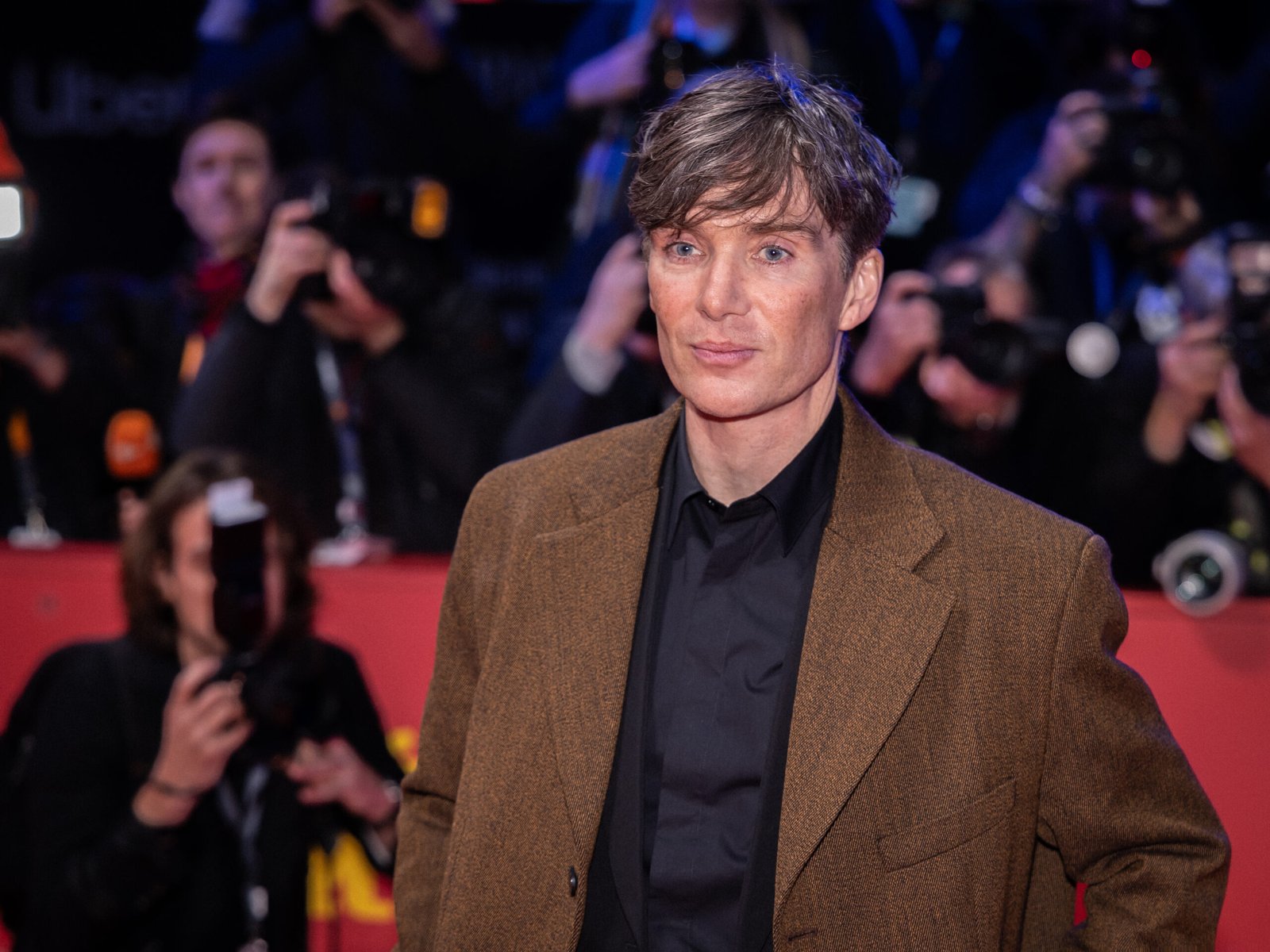
Cillian Murphy’s career has an unfashionable shape, and that is precisely its distinction. There was no early stardom to sustain and no franchise to lean on. There was Cork theatre in his teens, a play that toured for two years, a breakthrough at 26, and then twenty years of careful choices: stage work kept up alongside screen work, a long collaboration with one director, and a Birmingham gangster played across six series until the character became part of the furniture of British popular culture.
The largest prizes arrived late. He was 47 when he played J. Robert Oppenheimer, and the performance collected the Academy Award, the BAFTA, the Golden Globe and the Screen Actors Guild award in a single season. By the standards of performers at that level, the fortune that goes with it is modest: a decade of theatre and independent productions pays differently from a decade of studio vehicles, and he has never organised his working life around the difference.
His private arrangements are of a piece with the work. He married in 2004, before almost all of the fame. The family lived in London for a period and moved to Dublin in 2015 so that his sons would grow up in Ireland. He keeps no social media accounts and gives interviews sparingly.
The Eldest of Four, Raised in Ballintemple, Cork
Cillian Murphy was born on 25 May 1976 in Douglas, a suburb of Cork in Ireland, and was raised in Ballintemple, in the same city. His birthday falls in late May, and he turned 50 in May 2026. He is the eldest of four children. His father, Brendan Murphy, worked for the Department of Education, and his mother taught French. His grandfather and other members of the wider family were also teachers, and the background was academic in a way that made his eventual profession the exception in the family rather than the expectation. His mother’s name has not been shared publicly, and this profile does not supply one: a name carried by low-quality listings has no verified basis, and the family’s position on the matter is stated here plainly rather than filled in from unreliable sources.
He was educated in Cork, at a school he has described without much affection, where sport carried more weight than the arts and his interest in performance found little encouragement. Music came before acting. In his teens he played guitar and sang in a band, and the group was offered a recording contract, which, advised by his parents and mindful of the terms on offer, he turned down. He began acting at school in a drama module presented by a visiting theatre director, and the experience settled the question the recording contract had left open.
He enrolled to study law at University College Cork in 1996 and left the course, having spent much of his first year acting with the university drama society and with the Cork theatre company Corcadorca. That same year he met the visual artist Yvonne McGuinness at one of his band’s performances. His professional break came in Enda Walsh’s play Disco Pigs, first staged in Cork in 1996, in which he played one of two teenagers joined by an intense, sealed-off friendship. The production toured widely and ran, on and off, for two years, and it carried him out of Cork for good.
His nationality is Irish, and one correction belongs in this section because it concerns the record itself. The programme bank from which this profile’s keyword set derives groups him under a British heading. That is wrong. He was born in Cork, has lived most of his life in Ireland, and is an Irish actor; the facts table records his nationality as Irish, and the error in the grouping is corrected here explicitly rather than repeated.
Disco Pigs, Peaky Blinders, and an Oscar for Oppenheimer
The work falls into four periods: the stage breakthrough and the first screen success, the years of building a reputation with a small group of directors, the long Birmingham decade, and the prizes and production work of the 2020s.
1996 to 2004: Disco Pigs and 28 Days Later
The stage success of Disco Pigs carried him into Irish and British theatre work and then to the screen version of the play in 2001. His breakthrough came the following year, when Danny Boyle cast him as Jim, the courier who wakes from a coma into an emptied London, in 28 Days Later (2002). The production was a substantial international success and put an actor little known outside Ireland in front of audiences in Britain and further afield in a single release. Work followed in both directions: Intermission (2003), Girl with a Pearl Earring (2003) and Cold Mountain (2003). He also kept returning to the stage, including The Playboy of the Western World in 2004, and the pattern of alternating screen work with theatre was set early and has never entirely been dropped.
2005 to 2012: Batman Begins, the Barley Fields and Inception
In 2005 he played the Scarecrow, Dr Jonathan Crane, in Christopher Nolan’s Batman Begins, beginning a collaboration with Nolan that has run through six productions. The same year brought the thriller Red Eye, in which he played the antagonist opposite Rachel McAdams, and the Irish drama Breakfast on Pluto. Ken Loach’s The Wind That Shakes the Barley (2006), in which he played a doctor drawn into the war of independence and the civil conflict that followed it, won the Palme d’Or at Cannes and became, on release, the most successful Irish independent production of its time at the Irish box office. Boyle’s science fiction production Sunshine (2007) reunited him with the director of his breakthrough, and he returned as the Scarecrow in The Dark Knight (2008). Nolan’s Inception (2010), in which he played the heir whose mind the central theft is designed to enter, was one of the largest commercial successes of its year, and by the end of the period he was established as a character actor of unusual intensity who could also carry a leading role.
2013 to 2022: Peaky Blinders
From 2013 the centre of his career was the small screen. In Peaky Blinders, created by Steven Knight and first broadcast by the BBC, he played Thomas Shelby, the head of a Birmingham crime family building a legitimate empire out of an illegitimate one in the aftermath of the First World War. The series ran for six series to 2022, grew from a modestly watched BBC Two drama into an international success after it was taken up by Netflix, and made Shelby, with his flat cap, undercut and measured voice, one of the most recognisable characters of the decade; the production he led opposite Tom Hardy, whose own career and fortune are set out in Tom Hardy’s net worth profile, remains the defining work of this period. Murphy was also an executive producer on the later series. Other work continued around it: Transcendence (2014), In the Heart of the Sea (2015), Free Fire (2016), Nolan’s Dunkirk (2017), in which he played a shell-shocked officer rescued from the sea, and A Quiet Place Part II (2021). The Birmingham role, however, was the one that changed the scale of his fame, and he has been consistent in saying that it did so on his own terms: the work was made in Britain, to a British schedule, while his family life remained in Ireland and then, for a period, in London, a short flight from Cork. The stage work, meanwhile, never stopped: he played the sole character in Enda Walsh’s Misterman in 2011, took the lead in Walsh’s Ballyturk in 2014, and in 2018 played the father in the stage adaptation of Max Porter’s Grief Is the Thing with Feathers.
2023 to 2026: Oppenheimer, the Oscar and The Immortal Man
Oppenheimer, released in July 2023, gave him his first unambiguous leading role in a production of the largest scale: Nolan’s biography of J. Robert Oppenheimer, the physicist who led the Los Alamos laboratory. The production took close to a billion dollars worldwide, and his performance won the Academy Award, the BAFTA, the Golden Globe and the Screen Actors Guild award for best actor, a clean sweep of the major prizes for a performance built almost entirely on restraint. His reported salary for the production was $10 million; that is an earnings figure, and it is kept separate from the wealth estimate in One Published Estimate, and Trackers That Disagree Outside It. He followed it with smaller Irish work, Small Things Like These (2024), which he also produced, and Steve (2025). In 2024 he co-founded the production company Big Things Films. In March 2026 he returned as Shelby in Peaky Blinders: The Immortal Man, the feature continuation of the series, which premiered on 2 March 2026 and reached Netflix on 20 March 2026, with Murphy starring and producing, and he appeared at the close of 28 Years Later: The Bone Temple (2026), resuming the role of Jim more than two decades after he first played it.
One Published Estimate, and Trackers That Disagree Outside It
Celebrity Net Worth puts his net worth at $20 million. No competing total from Forbes or the Sunday Times Rich List exists. The disagreement in this case comes from outside the named sources: trackers beyond those sources run to $30 million and in some cases $35 million for 2026. Those figures are recorded here because readers will meet them elsewhere, but they are not used, and the $20 million figure attributed above is the one this profile stands on. The disagreement is printed, as it should be, rather than quietly resolved in either direction.
The composition of the estimate is a career of a particular kind: a decade of theatre and independent productions, which pay modestly, and one long-running leading role in which he also held a producer’s interest on the later series, worth more than a fee alone. And there was a late arrival at the largest level of screen salary with Oppenheimer, for which his reported $10 million fee is a matter of earnings, not wealth: a salary is spent, taxed and invested like any other income, and no part of it can simply be read across into a fortune. His production company, Big Things Films, founded in 2024, is the newest component of the position, giving him an ownership interest in productions, including Irish ones, that would previously have paid him a fee and nothing more.
A smaller disagreement belongs here too, since readers comparing listings will find it. His height is given by consensus as 5 ft 9 in (1.75 m), the figure used in the facts table, while IMDb lists 5 ft 7½ in. The consensus figure is used, and the variance is noted rather than hidden. No complete inventory of his property or other assets has been published, and none is reconstructed here.
Yvonne McGuinness, a Visual Artist From Kilkenny, Married Since 2004
He married Yvonne McGuinness in 2004. The bank label of wife is verified: McGuinness, a visual artist from Kilkenny whose work includes installation and moving image, is his wife, and the marriage remains in place in 2026. They had met in 1996, when she came to see his band play, and the relationship predates every part of his fame by the better part of a decade. There is no reinvention story here, and none is needed: the marriage began before Batman Begins, before Peaky Blinders and before the Oscar, and it has simply continued through all three.
They have two sons: Malachy, born in December 2005, and Aran, born in July 2007. The family lived in London for a period and moved to Dublin in 2015, a decision he has explained simply, as a wish for his sons to grow up Irish and near their grandparents. The move was made at the height of the Birmingham series’ success: when the ordinary pressures of the industry pointed towards Los Angeles, the family chose Dublin, and his working life since has been organised around travelling to productions rather than relocating for them.
His parents have remained in Ireland and out of public life, and he has protected that privacy as carefully as his own. He maintains no social media accounts of any kind. He has no verified personal Instagram account, accounts using his name are not his, and news of his work reaches the public through production companies and broadcasters rather than from him.
Cillian Murphy in Brief: Cork, Peaky Blinders and the Oscar
| Cillian Murphy in Brief: Cork, Peaky Blinders and the Oscar | Details |
|---|---|
| Full Name | Cillian Murphy |
| Born | 25 May 1976, Douglas, County Cork, Ireland |
| Birthday | 25 May |
| Age | 50 years old |
| Height | 5 ft 9 in (1.75 m) |
| Weight | No reliable published figure exists |
| Wife | Yvonne McGuinness (married 2004) |
| Children | Two sons: Malachy (b. December 2005) and Aran (b. July 2007) |
| Parents | Brendan Murphy and his wife, a teacher of French whose name has not been shared publicly |
| Family | The eldest of four children; married Yvonne McGuinness in 2004 |
| Movies and TV Shows | 28 Days Later, Batman Begins, The Wind That Shakes the Barley, Inception, Peaky Blinders, Dunkirk and Oppenheimer among the best known |
| Nationality | Irish |
| No verified personal account; he maintains no social media accounts | |
| Net Worth | Estimated $20 million (Celebrity Net Worth) |
Fame in His Late Thirties, the Largest Prizes in His Late Forties
At 50, Murphy’s career has an unusual shape: the fame arrived in his late thirties, the largest prizes in his late forties, and the production company that may matter most to his next twenty years was founded only in 2024.
The estimate of $20 million, attributed to Celebrity Net Worth, fits that shape. It is the fortune of a performer who chose the work first for thirty years, and it is recorded here with the higher figures from elsewhere printed alongside it and plainly marked as not used.