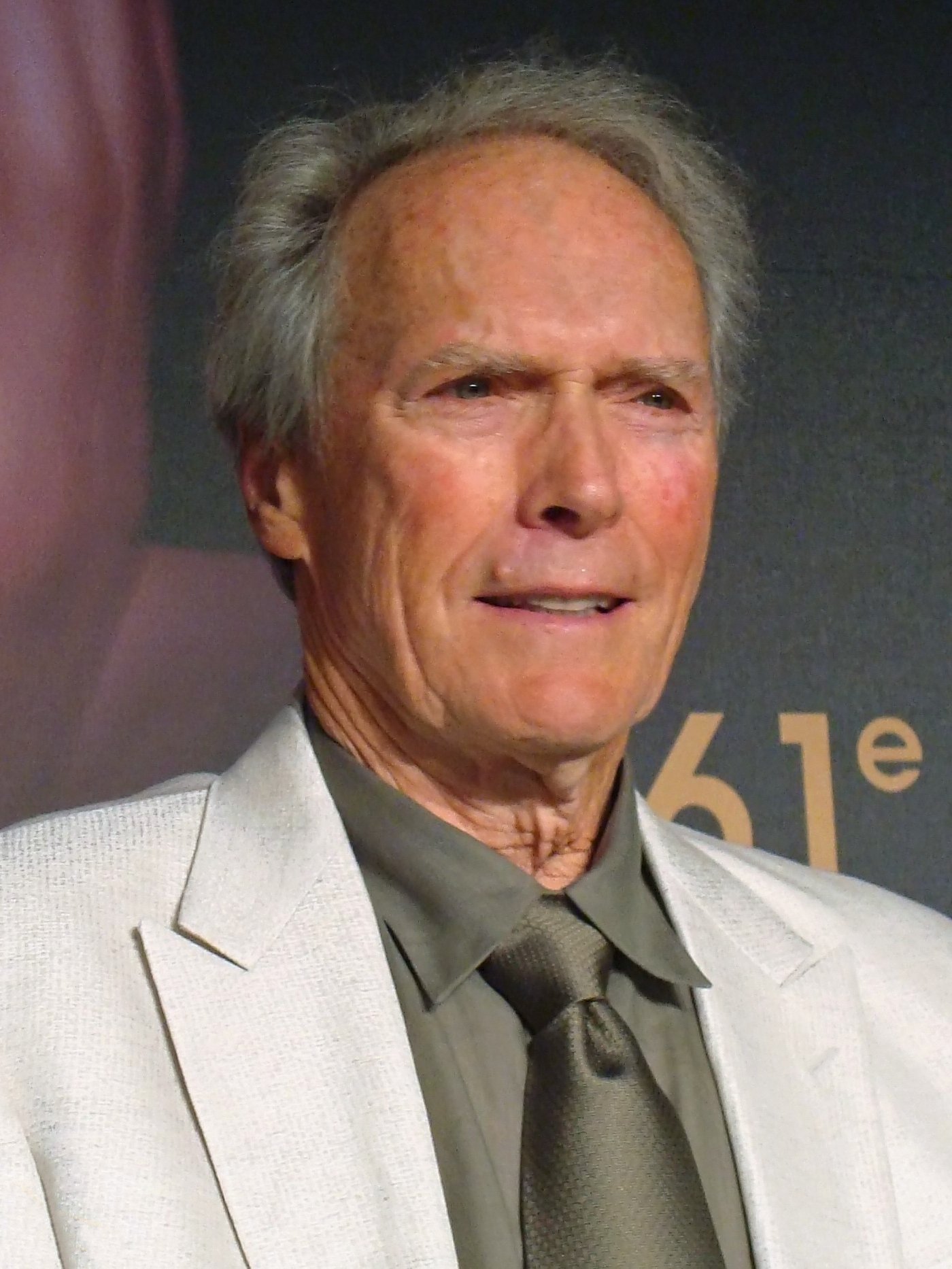
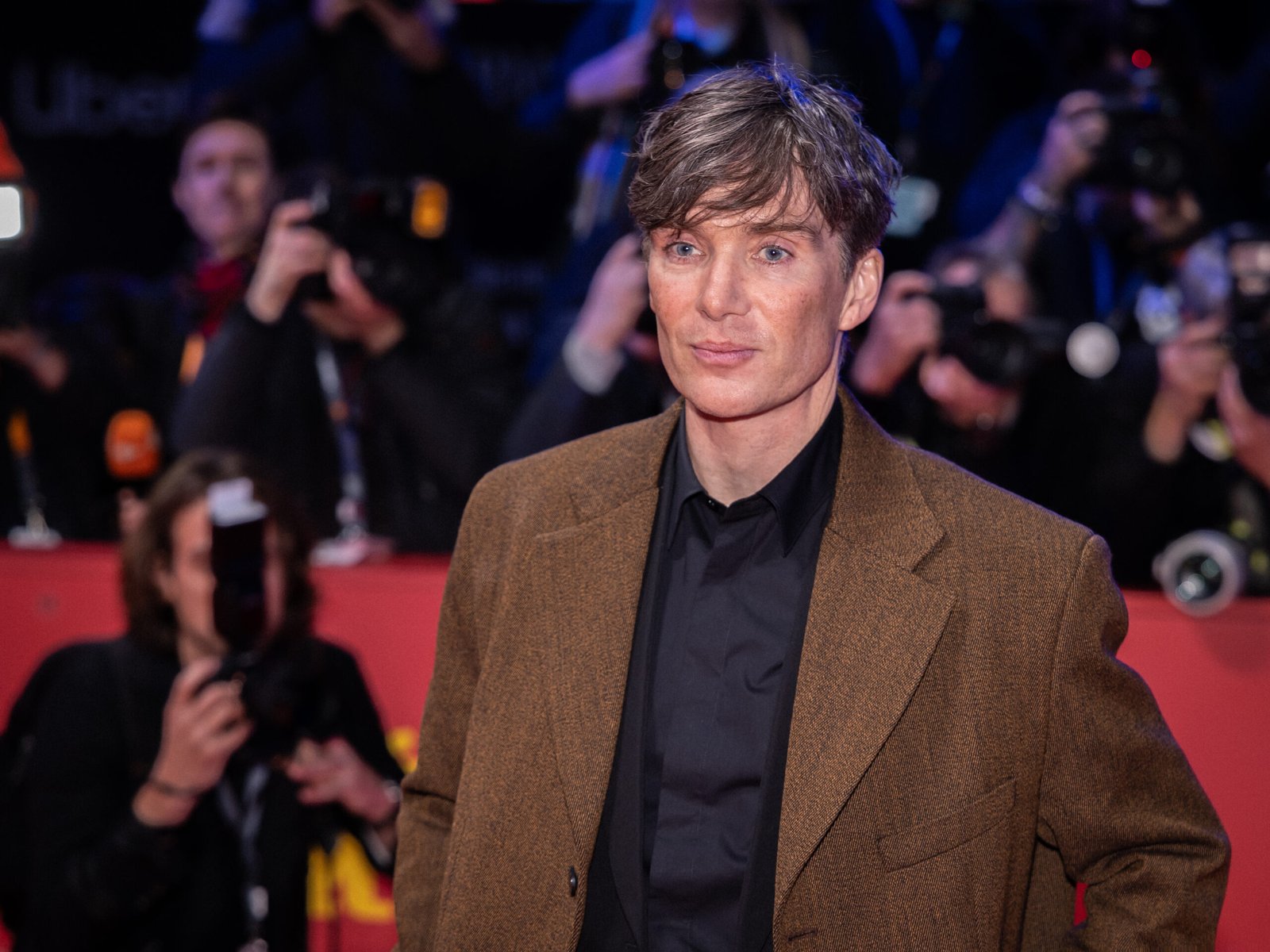
Colin Farrell Worth Unpacked: Age, Height, Career and Family in Full
A 1976 Start in Castleknock and a Life as an Actor
Colin Farrell’s career is usually told in two acts, and for once the cliché fits the record. The first act was fast: a Dublin drama school dropout, cast in a BBC serial in his early twenties, was within four years carrying studio productions opposite some of the biggest names in the business, and, by his own later account, living at a pace the work could not sustain. He entered a rehabilitation clinic at the end of 2005 and has been sober since 2006, a fact he has discussed openly ever since.
The second act was slower and, on the evidence, better. The leading-man vehicles gave way to smaller productions chosen for their directors: a hitman comedy in Belgium that won him a Golden Globe, a deadpan dystopia, an island story in 2022 that brought a second Golden Globe, a festival prize at Venice and his first Academy Award nomination, and a prosthetic-covered supporting turn as the Penguin that grew into a series of its own and a third Golden Globe. At 50, he remains one of the most employed performers of his generation.
His private life is kept at the opposite pitch to the first act’s publicity. He has never married, a point corrected in detail below because a fabricated version of his family has circulated online, and he has two sons, the elder of whom has a developmental condition about which Farrell has spoken with unusual candour and for whose sake he founded a charitable foundation in 2024. There is no current partner to report, and none is invented here.
The Quiet Years in Castleknock
His parents remain in Ireland, and his father’s second career, the health food business in Dublin, is the background to a childhood he has described as comfortable and unremarkable until fame arrived, suddenly, at 24. The family record then requires a direct correction, because a fabricated version of it has circulated. A page presenting him as a married man with five sons has been published and shared; it is wrong in both particulars, and it was rejected by this programme when it was checked. The verified position is as follows. He has never married. In 2001 he took part in a ceremony in Tahiti with the actress Amelia Warner which was widely reported at the time as a wedding; it was not legally binding, the relationship ended within months, and he has no wife. And he has two sons, not five.
The two sons are these. James Padraig Farrell was born on 12 September 2003; his mother is the model Kim Bordenave. Henry Tadeusz Farrell was born on 7 October 2009; his mother is the actress Alicja Bachleda-Curuś, whom he met while making Ondine. James has Angelman syndrome, a genetic condition affecting development and speech, and Farrell has spoken about his elder son publicly and in detail, in terms unusual for a performer of his generation: about the diagnosis, about milestones reached late and worked for hard, and about the position of families once a child with intellectual disability becomes an adult. In August 2024 he launched the Colin Farrell Foundation, dedicated to supporting adults with intellectual disabilities and their families, with James’s transition into adulthood as its stated starting point.
On the bank label of partner, the verified position is that there is no current partner to name. His most recent long-term relationship, with Kelly McNamara, who works as a personal assistant to the U2 guitarist the Edge, lasted about five years from 2017 and was reported in March 2023 to have ended, with busy working schedules given as the reason and no public comment from either party. No new partner has been publicly confirmed since, and 2026 summaries of his position likewise describe him as single. The table below records the position exactly: no publicly confirmed current partner. He maintains no official social media accounts. He has no verified personal Instagram account, and aggregator handles presented as his, of which @farrellgram is one example carried by listing sites, are not presented in this profile as his, because they are not his.
1976 in Castleknock: Birth, Family and School
Colin James Farrell was born on 31 May 1976 in Castleknock, a suburb of Dublin in Ireland. His birthday falls at the end of May, and he turned 50 in May 2026. His father, Eamon Farrell, had played professional football for Shamrock Rovers and later ran a health food business; his mother is Rita Farrell, née Monaghan. He was educated in Castleknock, at Castleknock College and St Brigid’s, and his childhood interests, by his own account, were football and the ordinary distractions of a Dublin suburb rather than the stage. He has described being inspired to act after the child performance at the centre of E.T. the Extra-Terrestrial moved him to tears as a boy, but the ambition took time to become practical: as a teenager he auditioned, unsuccessfully, for a place in a well-known Irish boy band, and at seventeen he travelled in Australia for a period before returning to Ireland.
On his return he enrolled at the Gaiety School of Acting in Dublin and left before completing the course, having been cast in work that made the training, in his judgement, less urgent than the employment. The casting was in the BBC’s Irish-set drama Ballykissangel, in which he played Danny Byrne across 1998 and 1999. Small parts in Irish and British productions followed, including The War Zone (1999) and the drama Falling for a Dancer (1998), and by the end of the decade he had what many actors spend ten years failing to get: a screen record, an agent and a route to auditions in Los Angeles.
His nationality is Irish, and a correction belongs here because it concerns the record itself. The programme bank from which this profile’s keyword set derives groups him under a British heading. That is wrong. He was born in Castleknock, Dublin, has remained based in Ireland in his loyalties and much of his best work, and is an Irish actor; the table below records his nationality as Irish, and the grouping error is corrected explicitly rather than repeated. It has remained central to the way his career has been described and, in the second act especially, to the roles he has chosen.
The Roles, Records and Years, 2000 to 2022
The work falls into the breakthrough years, the redefinition that began in Bruges, the deliberate character work of the 2010s, and the run of the 2020s that completed the second act.
2000 to 2005: Tigerland, Minority Report and Phone Booth
His breakthrough came quickly. Joel Schumacher cast him as the lead in the Vietnam-era drama Tigerland (2000), a low-budget production that drew strong reviews for its central performance, and the major studios followed: Hart’s War (2002) opposite Bruce Willis, Minority Report (2002) for Steven Spielberg, in which he played the ambitious investigator pursuing Tom Cruise’s character, and Phone Booth (2003), again for Schumacher, in which he carried a thriller set almost entirely inside a single telephone kiosk. The Recruit (2003), opposite Al Pacino, S.W.A.T. (2003) and Daredevil (2003), in which he played the villain Bullseye, completed a run that made him, by 2003, one of the most visible young leading men in the business. The period closed less happily: Oliver Stone’s Alexander (2004), in which he played Alexander the Great, was a critical and commercial failure, and Terrence Malick’s The New World (2005), in which he played John Smith, was admired rather than attended. He entered a rehabilitation clinic at the end of 2005 and has been sober from 2006 onwards.
2006 to 2014: Miami Vice, In Bruges and the Character Roles
Miami Vice (2006), for Michael Mann, was the last of the first-phase star vehicles. The performance that redefined him came in a smaller production: Martin McDonagh’s In Bruges (2008), which he starred in opposite Brendan Gleeson, whose own career and fortune are set out in Brendan Gleeson’s net worth profile, the two of them playing hitmen hiding in Belgium after a job gone wrong. His performance, comic, frightened and guilty by turns, won the Golden Globe for best actor in a comedy or musical and is still regularly placed at the head of his work. The years that followed were deliberately mixed: The Imaginarium of Doctor Parnassus (2009), Crazy Heart (2009), The Way Back (2010), the comedies and genre productions Horrible Bosses (2011) and Fright Night (2011), the remake Total Recall (2012), and a reunion with McDonagh on Seven Psychopaths (2012). Saving Mr. Banks (2013), in which he played the alcoholic father of P. L. Travers in flashback, drew some of the warmest notices of this period, precisely because the part was small, sad and played without star mannerisms.
2015 to 2021: The Lobster, Sacred Deer and Widows
From the middle of the decade the work settled into the pattern that has held since: leading roles for directors with strong individual styles, taken in preference to larger, blander productions. For Yorgos Lanthimos he played the hero of The Lobster (2015), a deadpan dystopian comedy that became an international art-circuit success, and the father in The Killing of a Sacred Deer (2017). He appeared in Fantastic Beasts and Where to Find Them (2016), Sofia Coppola’s The Beguiled (2017), Steve McQueen’s Widows (2018), Tim Burton’s Dumbo (2019) and Guy Ritchie’s The Gentlemen (2019), and took the second series of True Detective in 2015, returning in 2021 as the harpooner Henry Drax in the BBC’s adaptation of The North Water, a five-part drama set aboard a whaling ship bound for the Arctic in 1859, played without any attempt to soften the character. None of these were vehicles built around him alone, and that was the point: alternate the large productions that keep a name bankable with the smaller, stranger ones that keep it interesting, and let directors, rather than studios, do the choosing.
2022 to 2026: The Batman, The Banshees of Inisherin and The Penguin
Two productions in 2022 completed the rehabilitation. In Matt Reeves’s The Batman he played Oswald Cobblepot, the Penguin, under prosthetics that made him unrecognisable, in a supporting performance that took most of its scenes. In McDonagh’s The Banshees of Inisherin, set on a fictional island off the Irish coast in 1923, he played Pádraic, a man whose best friend abruptly ends their friendship. The performance won him the Volpi Cup at Venice, his second Golden Globe and his first Academy Award nomination. He then carried the Penguin into a dedicated series, The Penguin (2024), winning a third Golden Globe for it. After Yang (2021), A Big Bold Beautiful Journey (2025) and Ballad of a Small Player (2025), in which he played a gambler in Macau, complete the recent record.
The Earnings Behind the Fame: Property First
Celebrity Net Worth puts his net worth at $80 million. No competing total from Forbes or the Sunday Times Rich List exists, and no disagreement from a named source requires printing here: the figure stands as the tracker’s estimate, attributed as such. What does require care is the separation of earnings from wealth, which this profile observes throughout. Individual fees reported across the career, including a reported $10 million fee for The Batman, are earnings: money paid for a job, taxed and spent like any other income. They are the raw material from which an estimate of this kind is built, not the estimate itself, and no fee quoted in this profile should be read as a component figure of the total.
The basis of the estimate is more than two decades of leading-man salaries in three phases: the studio productions of the early 2000s, in which his fee rose quickly after Minority Report and Phone Booth, and the steadier character work of the 2010s, taken at lower fees for stronger directors. And there is the renewed commercial weight of The Batman, The Banshees of Inisherin and The Penguin in the 2020s, which returned him to the top of casting lists at an age when most of his contemporaries from the first act have left them. His foundation is a charitable commitment rather than an asset, and no figure for it forms part of the total. No complete inventory of his property has been published, property is not discussed in this profile beyond that single sentence, and none is reconstructed here.
What Comes Next for an Actor from Castleknock
At 50, Farrell’s career is the rare case of a performer whose second act has been critically stronger than his first: the teenage near-miss with a boy band and the hectic years of the early 2000s are now the preamble, and the prizes, the festival honours and the Penguin all belong to the deliberate twenty years that followed the clinic in 2005.
The estimate of $80 million, attributed to Celebrity Net Worth, rests on those twenty years: salaries earned across three phases of work, and a reputation rebuilt carefully enough that the interesting directors are still the ones doing the telephoning.
From 1976 in Castleknock to Today: The Facts
| From 1976 in Castleknock to Today: The Facts | Details |
|---|---|
| Full Name | Colin James Farrell |
| Born | 31 May 1976, Castleknock, Dublin, Ireland |
| Birthday | 31 May |
| Age | 50 years old |
| Height | 5 ft 10 in (1.78 m) |
| Weight | No reliable published figure exists |
| Partner | No publicly confirmed current partner |
| Children | Two sons: James Padraig (b. 12 September 2003) and Henry Tadeusz (b. 7 October 2009) |
| Parents | Eamon Farrell and Rita Farrell, née Monaghan |
| Family | Never married; father of two sons |
| Movies and TV Shows | Tigerland, Minority Report, Phone Booth, In Bruges, The Lobster, The Banshees of Inisherin, The Batman and The Penguin among the best known |
| Nationality | Irish |
| No verified personal account; he maintains no official social media accounts | |
| Net Worth | Estimated $80 million (Celebrity Net Worth) |