
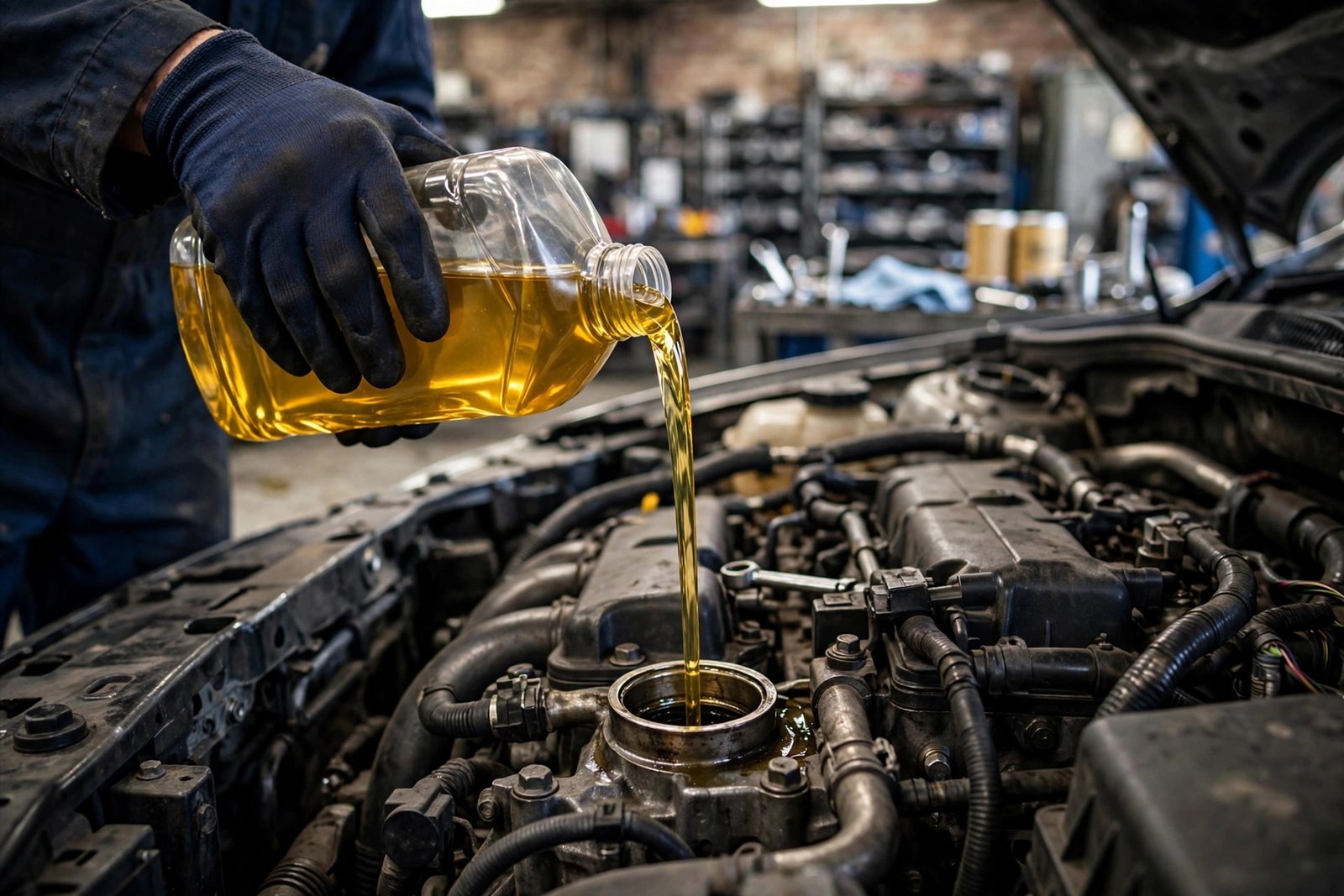
“Every 3,000 miles” — the old rule your dad swore by — is dead. Modern engines, modern oils and manufacturer service schedules have transformed oil change intervals, yet confusion reigns: garages still push frequent changes, dashboards flash warnings at mysterious intervals, and forums argue endlessly. So how often should you really change your car’s oil in the UK? The answer depends on your car, your oil, and how you drive — but it is almost certainly less often than the garage suggests and more thoughtfully than “whenever the light comes on.”
What manufacturers actually recommend
Modern cars typically specify oil changes every 10,000–20,000 miles or every 12–24 months, whichever comes first — a huge shift from the 3,000-mile era. Your car’s handbook is the definitive answer for your specific engine; the variation between manufacturers is real (some VAG models specify up to 20,000 miles on long-life oil, while some performance engines want 6,000). Many modern cars have oil-life monitoring systems that calculate degradation from driving patterns rather than simple mileage — trust these over round numbers, as they account for the cold starts and short trips that actually degrade oil. The RAC’s motoring advice confirms: follow the manufacturer’s schedule, not the garage’s upsell.
Why the 3,000-mile rule died
Three things changed: fully synthetic oils (vastly more stable than old mineral oils), tighter-tolerance engines (less contamination), and better filtration. Modern synthetic oil easily protects for 10,000+ miles in normal use. Garages promoting 3,000–6,000-mile intervals are typically selling a service you do not need — though there are exceptions (see below). The rule served 1980s mineral oil; it does not serve your 2020 hatchback.
When to change more often than scheduled
Severe driving conditions
Manufacturers define “severe” or “arduous” conditions that halve recommended intervals: frequent short trips (under 10 miles — the engine never fully warms up, causing fuel dilution and moisture buildup), stop-start city driving, towing, dusty environments, and extreme cold. If your driving is mostly 3-mile urban hops, treat your schedule as severe: change at half the normal mileage. This is the most common reason UK drivers should change oil more often than the headline figure — Britain’s urban driving patterns are textbook “severe conditions.”
Older and high-mileage cars
Cars over 100,000 miles or 10 years old benefit from shorter intervals (6,000–10,000 miles) even on synthetic oil — worn engines contaminate oil faster through blow-by. High-mileage oils with seal conditioners can help ageing engines. And if your car consumes oil between changes (check the dipstick monthly — many drivers never do), top up with the correct specification immediately; running low is far more damaging than changing late. The AA’s guidance on engine maintenance stresses regular level checks as the single most neglected task.
Oil types: what to use
Use exactly the specification in your handbook — typically something like “5W-30 meeting VW 504.00” — not just the viscosity. Modern engines with variable valve timing, turbos and particulate filters are sensitive to oil chemistry; the wrong specification can damage emissions systems costing thousands. Fully synthetic meeting the manufacturer’s spec is the default for most modern cars; semi-synthetic suits some older models. Buying oil yourself (correct spec, from a motor factor) and asking the garage to use it can save money versus garage-supplied oil markups. Never mix specifications, and never use a thicker oil to “fix” consumption — it masks wear while starving tight tolerances.
DIY vs garage: costs and practicalities
A garage oil change in the UK costs £80–£180 depending on car and region (main dealers at the top, independents cheaper). DIY costs £30–£60 in oil and filter — but requires ramps or axle stands, a drain pan, and responsible disposal of waste oil (free at council recycling centres; pouring it down drains is illegal and environmentally catastrophic). For most drivers, a trusted independent garage is the sweet spot: reasonable cost, proper disposal, and a professional eye spotting other issues. Whatever you choose, keep records — a stamped service history with correct intervals protects resale value far beyond the cost of the services. This parallels other maintenance schedules: just as boiler servicing has its own timetable, your car’s needs are specific, not generic.
What about the service indicator?
Dashboard service indicators generally track the manufacturer’s schedule (sometimes adjusted for driving style). They are reliable guides, not marketing ploys — but they assume correct oil was used last time. If a previous owner or cheap garage used the wrong specification, the indicator’s assumptions are void. When buying used, an immediate oil change with the correct spec resets everything to known-good.
The dashboard warning: what oil lights mean
Not all oil warnings are equal, and confusing them causes expensive mistakes. The oil pressure warning (red oil can) means stop immediately — it indicates pressure loss, and driving even a mile can destroy the engine; pull over safely and call for recovery. The oil level warning (yellow/amber oil can, on cars that have one) means check and top up soon — you can drive carefully to buy oil. The service indicator (spanner or “service due”) is just the scheduled-change reminder. Knowing which light you are seeing determines whether you need a £10 top-up, a £100 service, or a tow truck — so learn your dashboard before the lights teach you.
Oil and MOTs: keeping the service history clean
While oil changes are not an MOT test item, a well-maintained engine sails through emissions tests that catch neglected ones — excessive smoke from worn, oil-starved engines is an MOT failure. More importantly, a documented oil-change history transforms a used car’s value: buyers pay premiums for full service histories, and “oil changed every 10k with receipts” is the single most reassuring sentence in a private advert. Keep every invoice, note the mileage and oil spec each time, and photograph the dipstick-level if you DIY. When comparing household maintenance costs, the same principle applies elsewhere — a boiler service follows manufacturer guidance over generic rules, just like your engine.
Conclusion
Change your oil per the manufacturer’s schedule — typically 10,000–20,000 miles or 12–24 months — using exactly the specified oil, and halve the interval if your driving is mostly short urban trips. Check the level monthly, never run low, learn your dashboard warnings, and keep records. The 3,000-mile rule belongs to history; the modern rule is simpler: right oil, right schedule, adjusted for how you actually drive. It is the cheapest engine insurance you will ever buy.
Frequently Asked Questions
How often should I change my car oil in the UK?
Typically every 10,000–20,000 miles or 12–24 months per the manufacturer’s handbook — whichever comes first. Halve the mileage interval for mostly short urban trips (“severe conditions”).
Is the 3,000-mile oil change rule still valid?
No — it dates from the mineral-oil era. Modern fully synthetic oils and engines easily handle 10,000+ miles. Garages still recommending 3,000 miles are usually upselling.
What happens if I don’t change my oil?
Oil degrades into sludge, losing lubrication and cooling ability — leading to increased wear, overheating, turbo failure and ultimately engine seizure. It is the cheapest catastrophic failure in motoring.
Can I change my car’s oil myself?
Yes — oil and filter cost £30–£60 versus £80–£180 at a garage. You need ramps/stands, a drain pan, and must dispose of waste oil at a council recycling centre (never down drains).
Does oil type really matter?
Enormously — use exactly the manufacturer’s specification (e.g. 5W-30 meeting VW 504.00), not just the viscosity. Wrong oil can damage turbos and emissions systems costing thousands to repair.




Leave a Reply