
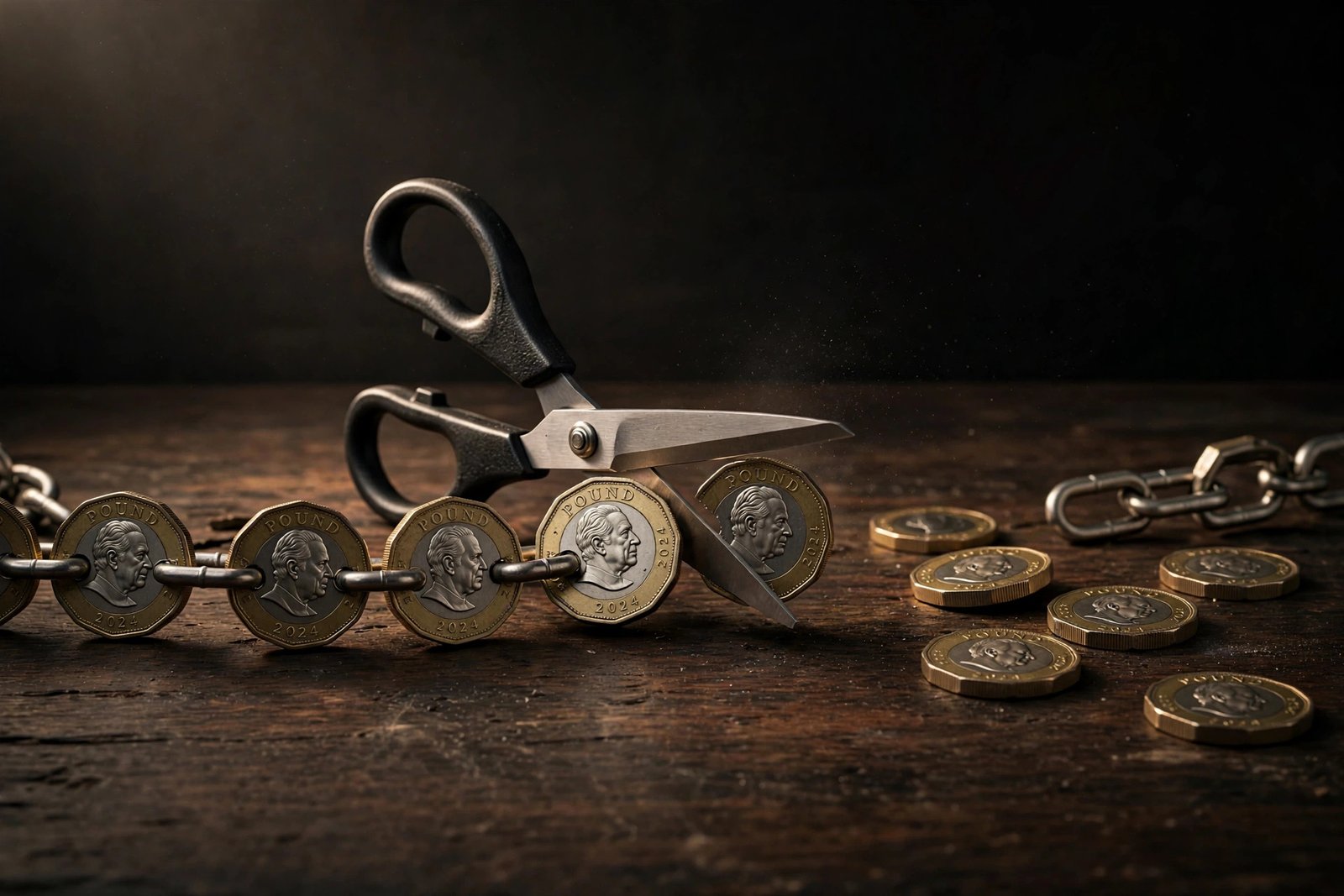
Crypto fees are death by a thousand cuts: a spread here, a trading fee there, a deposit charge, a withdrawal fee — and suddenly your £500 investment needed a 5% gain just to break even. Learning how to avoid paying high crypto trading fees in the UK is one of the highest-return skills in crypto, because every pound saved is a pound that stays invested. This guide maps every fee layer, then gives you the concrete tactics that cut total costs by 50–80%.
Know Your Enemy: The Five Fee Layers
Fees stack invisibly. 1. The spread: the gap between the buy and sell price on instant-buy screens — often 0.5–2%, and the single biggest cost for beginners. 2. Trading fees: a percentage per trade (0.1–1.5%), varying by platform and order type. 3. Deposit fees: UK bank transfers via Faster Payments are usually free; debit/credit card deposits often cost 2–4%. 4. Withdrawal fees: fiat withdrawals are typically cheap (£0–£1), but crypto withdrawals add network (gas) fees that spike with congestion. 5. Hidden FX and conversion fees: trading through USD pairs or non-GBP routes adds currency costs. A beginner buying £500 of Bitcoin with a debit card on an instant-buy screen, then withdrawing, can easily pay £20–£30 all-in — 4–6%. The same £500 moved carefully can cost under £5. The difference is pure knowledge, and it compounds: frequent traders who ignore fees can lose a fifth of their capital yearly to friction alone.
Tactic 1: Ditch Instant Buy for the Advanced Exchange
The single biggest saving: stop using the shiny “Buy Crypto” button. Almost every major exchange offers an advanced/pro trading interface with dramatically lower fees — the same company, the same liquidity, a fraction of the cost. Instant-buy might charge a 1.5–2% spread plus fees; the advanced interface might charge 0.1–0.35% per trade with a tight spread. The interface looks intimidating (order books, charts), but you only need one skill: placing a limit order. Set your price, set your amount, done — and limit orders often qualify for the lowest “maker” fee tier. Fifteen minutes learning the advanced view pays for itself on your first trade and keeps paying forever. This is the 80/20 of crypto fee reduction, and most beginners never discover it because platforms (profitably) steer you toward the expensive button.
Tactic 2: Fund With Faster Payments, Not Cards
How money enters the exchange matters enormously. Faster Payments bank transfers are near-instant in the UK and almost always free on FCA-registered platforms — the clear winner. Debit cards are fast but typically cost 2–4% — on £1,000, that is £20–£40 vaporised before you own a single satoshi. Credit cards are worse: fees plus cash-advance interest, and many UK issuers block crypto purchases outright. Set up your bank transfer once, save the exchange as a payee, and future deposits take seconds. One caveat: first deposits sometimes trigger additional verification delays, so do not leave your first funding to the minute before a trade you want to make. And keep records — a budget that actually works should show your true all-in cost per purchase, fees included, so you know your real break-even.
Tactic 3: Trade Less, Batch More, Choose Networks Wisely
Frequency is a fee multiplier. Day-trading crypto as a beginner means paying the spread and trading fee dozens of times monthly — a near-guaranteed loss against professionals and bots. Pound-cost averaging monthly (or even quarterly for small amounts) slashes fee drag while improving behaviour. Batch your moves: one £600 purchase beats six £100 purchases on most fee structures. Withdraw strategically: consolidate to fewer, larger withdrawals; check whether your exchange supports cheap networks for crypto withdrawals (withdrawing via a low-fee network instead of Ethereum mainnet can save £10+ per withdrawal). Hold on exchanges minimally but wisely: moving tiny balances repeatedly to your wallet wastes fees — accumulate to a sensible threshold first. Review your fee statements quarterly; budgeting tools make the true cost visible, and visibility is what changes behaviour. Also compare platforms annually — fee schedules change, and loyalty to an expensive exchange is just a donation.
Tactic 4: Watch the Sneaky Ones
Beyond the big layers lurk smaller traps. Inactivity fees: some platforms charge dormant accounts — close what you do not use. Conversion spreads: “convert” features (BTC→ETH in one tap) hide wide spreads; trade on the order book instead. Staking commissions: exchanges take 10–25% of staking rewards — compare with direct staking if you are technical. Premium subscriptions: “zero-fee” tiers with monthly charges only pay off above certain volumes — do the maths. FX fees: always trade GBP pairs directly; routing through USD adds a hidden currency haircut. And beware the ultimate fee trap: just as with household bills, the “hassle” of switching providers is exactly what expensive incumbents count on. Spend one afternoon a year auditing where your crypto fees go — it is among the highest-paid hours in personal finance. The FCA’s consumer guidance also reminds you to factor total costs into any investment decision.
Putting It Together: Your Low-Fee Crypto Routine
Here is the routine in one place. Monthly: Faster Payments deposit into your FCA-registered exchange; limit order on the advanced interface; log the all-in cost in your records. Quarterly: review fee statements — are spreads creeping up? Has the platform changed its tiers? Yearly: compare two rival platforms’ all-in costs on your typical activity; switch if the saving exceeds the hassle. Always: batch small moves, avoid cards, trade GBP pairs directly, and keep records for HMRC — HMRC’s cryptoassets guidance treats every trade as a potential tax event, and MoneyHelper offers free guidance on keeping investment costs down generally. Investors who run this routine typically cut lifetime fee drag by more than half — which, compounded over decades, can be worth tens of thousands. The cheapest trade is the one you did not need to make; the second cheapest is the one you executed properly.
Frequently Asked Questions
What is the cheapest way to buy Bitcoin in the UK?
Faster Payments deposit (free) into an FCA-registered exchange, then a limit order on the advanced/pro trading interface. Avoid debit cards and instant-buy screens — together they are the most expensive common route.
Do limit orders really save money?
Yes — two ways: tighter spreads than instant-buy, and often lower “maker” fees than “taker” fees. On a £1,000 trade, the saving versus instant-buy is frequently £10–£20.
Are “zero-fee” crypto platforms really free?
Rarely. They typically earn through wider spreads, payment for order flow, or premium tiers. Always calculate the all-in cost (deposit → trade → withdrawal) rather than trusting the headline.
How much do fees matter for long-term holders?
Less per trade, but entry and exit still cost. A buy-and-hold investor making two transactions a year loses little to fees — which is another argument for trading less.
Should I switch exchanges to save on fees?
If the saving is material and the alternative is FCA-registered with a solid reputation, yes. But do not chase the absolute cheapest unknown platform — security and reliability are worth paying a small premium for.
Avoiding high crypto trading fees is not about finding secret loopholes — it is about refusing to pay for convenience you do not need: the instant-buy button, the debit card, the twentieth trade of the month. Fund by bank transfer, trade on the advanced interface with limit orders, batch your activity, and audit annually. Do that, and you will keep 3–5% more of every pound you put in — a return no trading strategy can promise, available to everyone, starting with your very next deposit.



Leave a Reply