
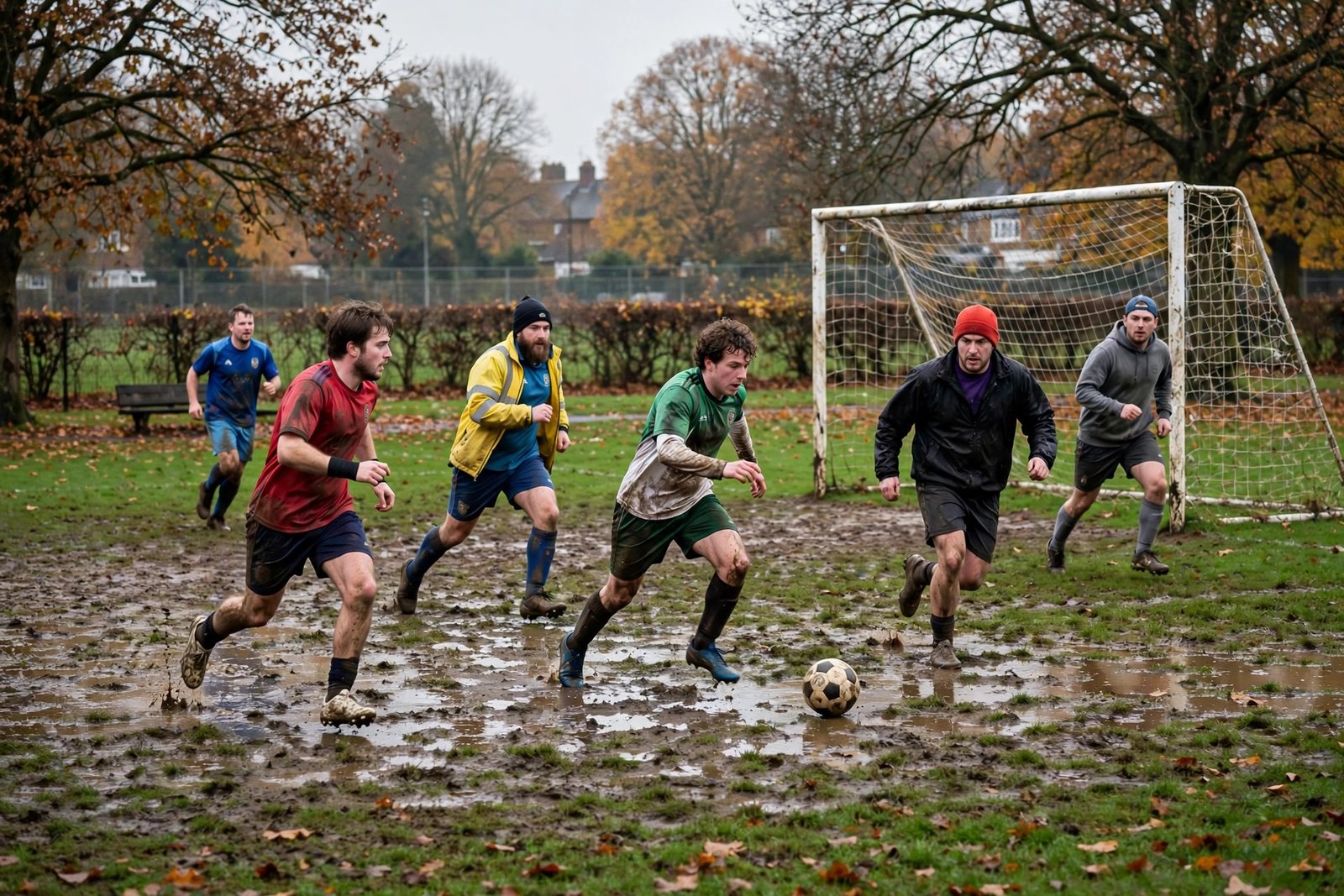
Every weekend, on muddy pitches from Manchester to Margate, the real heart of English football beats far from the Premier League’s floodlights. Sunday league football — amateur, gloriously chaotic, and fuelled by questionable pre-match breakfasts — is played by hundreds of thousands of adults across the UK. If you have ever watched your team on a Saturday and thought “I could do that,” or you have just moved to a new area and want instant mates, joining a Sunday league team might be the best decision you make this year. Here is exactly how to find one, what to expect, and how to survive your first season.
What Sunday league football actually involves
Sunday league is amateur 11-a-side football, usually played on Sunday mornings, organised into local leagues affiliated with county Football Associations. The standard is wildly variable: some divisions feature ex-academy players with frightening pace, others are essentially a fitness club with a ball. Most leagues run from September to April, with teams playing 20–30 league games plus cups. Training, if it happens at all, is typically one evening a week — many teams do not train and just turn up on matchday.
The commitment is refreshingly human. Expect a match fee of £5–£10 per game to cover pitch hire and referees, an annual signing-on fee that is rarely more than £50, and a social calendar that often matters as much as the football. If you are new to an area, few things integrate you faster — it is one of the most reliable ways to meet new people as an adult in the UK, because you instantly share a changing room with twenty of them.
Finding a team near you
1. Ask your County FA
Every county in England has a Football Association that administers local leagues — the Football Association’s website links to each one. County FA sites usually list affiliated Sunday leagues with contact details for league secretaries, who always know which clubs are short of players. This is the most reliable route: leagues are desperate for new teams and players, and a secretary will happily point you at three or four clubs looking for your position.
2. Social media and team finder pages
Search Facebook for “[your town] Sunday league” or “players wanted” and you will find groups where managers post weekly appeals for players. Gumtree, local Reddit communities and apps like Footy Addicts also list casual and league games. Post a short advert with your position, experience level and availability — honesty about your ability saves everyone an awkward first session.
3. Just turn up to a local game
The old-fashioned method still works. Sunday morning parks are full of matches; watch ten minutes, chat to a manager at half-time, and ask if they need players. Sunday league managers are a welcoming breed — most would rather have an enthusiastic beginner than play with ten men. Bring boots and you might get a run-out the same morning. The BBC Sport football pages are also worth following for inspiration — watching the professionals on Saturday often provides the push to play yourself on Sunday.
What standard do you need to be?
Far lower than you think. Sunday league accommodates everyone from former semi-pros to people who have not kicked a ball since school. The key is finding the right division: most leagues have five or more divisions graded by ability, so there is genuinely a level for every player. Be honest with the manager about your fitness and experience, and ask to train or play a friendly before committing.
Fitness matters more than skill at the lower levels. Being able to run for 90 minutes — even slowly — makes you more valuable than a skilful player who fades after half an hour. If you are starting from zero, a few weeks of jogging will transform your first month. Sorting your kit matters too — check what gym clothes are best for beginners before you spend money on gear you do not need.
Costs, kit and the admin nobody warns you about
Sunday league is cheap by the standards of adult hobbies. Your main costs are boots (£30–£80 for a decent pair that will last seasons), shin pads (non-negotiable — referees check), and weekly match fees. Clubs usually provide shirts; you provide shorts, socks and your own dignity. Registration involves signing a league form and, in most counties, an ID check to prevent ringers — the scourge of cup finals everywhere.
The hidden cost is time. Sunday mornings are sacred to some households, so negotiate this with your partner before you sign up rather than after your third consecutive away trip to a windswept industrial estate. Many players find that making time for hobbies with a full-time job is the real challenge — the football itself is the easy part.
Surviving your first season: an honest guide
Expect the banter, embrace the chaos
Sunday league changing rooms run on banter the way cars run on petrol. It is almost always affectionate, but it is relentless — arrive with thick skin and a willingness to laugh at yourself. The football itself will surprise you: some games are genuinely good, others descend into farce involving dogs on the pitch and a referee who arrived by bicycle. Both are part of the charm.
Look after your body
The biggest shock for new players is not the standard but the physical toll. Weekend warriors in their thirties pull hamstrings with alarming regularity. Warm up properly — even five minutes of jogging and dynamic stretches — and do not play through sharp pain. The league will still be there next week; your hamstring might not be. Stay hydrated, eat something sensible beforehand (not the full English, tempting as it is), and accept that Monday will hurt for the first month.
Be reliable above all else
Managers value reliability over talent. Turn up on time, reply to the availability messages, pay your subs promptly, and you will be picked ahead of more gifted players who cancel on Saturday nights. Sunday league teams live and die on numbers — the player who is always there is worth more than the star who is not.
What if 11-a-side feels like too much?
Not everyone wants the full Sunday morning commitment, and there are excellent alternatives. Small-sided leagues (5, 6 or 7-a-side) run by operators like Powerleague and Goals play on weeknights on 3G pitches — one hour, no mud, shower and home. Walking football has exploded for the over-50s, and many areas now run veterans’ leagues for the over-35s where the pace is kinder and the post-match pint is longer. There is a version of the game for every age and fitness level; the only mistake is assuming you have missed your chance.
Conclusion
Joining a Sunday league team is one of the simplest, cheapest and most rewarding things an adult in the UK can do. Find your county FA’s league list or a local players-wanted group, be honest about your level, invest in decent boots and shin pads, and commit to turning up. Within a month you will be fitter, you will have twenty new acquaintances, and you will understand your professional club’s struggles on a deeply personal level. The standard of football may vary wildly — but the standard of the stories you will tell afterwards never does.
Frequently Asked Questions
How much does it cost to play Sunday league football in the UK?
Typically £5–£10 per match in subs plus a small annual registration fee, plus your own boots and shin pads. Most players spend well under £300 across a full season — far cheaper than a gym membership.
Do I need to be good to join a Sunday league team?
No. Leagues are divided into multiple divisions by ability, so there is a level for complete beginners. Fitness and reliability matter far more than skill at the lower levels.
How do I find a Sunday league team near me?
Contact your County FA for a list of local leagues, search Facebook groups for “players wanted” posts in your town, or simply turn up to a Sunday morning game at your local park and ask the manager.
What age can you play Sunday league football until?
There is no upper age limit for open-age Sunday league, and many players continue into their forties and fifties. Veterans’ leagues (usually over-35s) and walking football offer gentler alternatives as the years accumulate.
Do Sunday league teams train during the week?
Some do, usually one evening a week, but many grassroots teams simply play matches on Sundays with no midweek training. Ask the manager about expectations before you commit.




Leave a Reply