
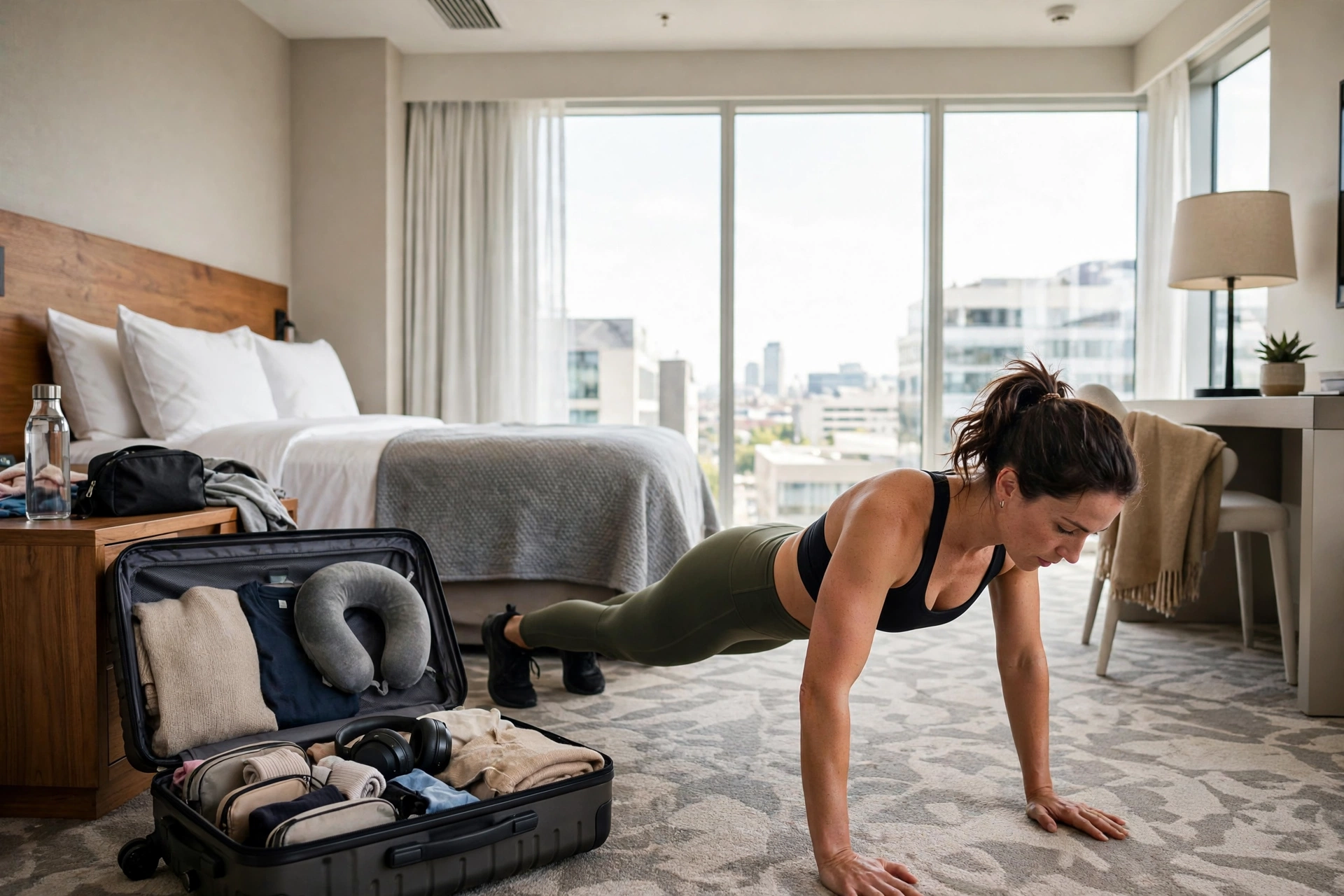
Quick answer: To stay fit while traveling, aim for 20–30 minutes of bodyweight exercise daily (squats, push-ups, lunges, planks), walk as much as possible, use hotel gyms or stairs, pack resistance bands, and keep protein intake up. Consistency with short workouts beats skipping exercise entirely — even 15 minutes maintains your fitness.
Travel disrupts routines — unfamiliar beds, restaurant meals, long journeys and packed schedules make exercise easy to skip. But you do not need a gym, much time, or any equipment to maintain your fitness on the road. With a little planning, travel can even become one of your most active weeks.
This guide covers practical strategies for staying fit while traveling, whether you are on a two-day business trip or a month-long holiday.
The Travel Fitness Mindset
First, reset your expectations. Travel fitness is about maintenance, not progress. If you normally train five days a week, three short sessions on the road is a win. Research consistently shows that even brief exercise preserves fitness far better than complete rest — and it boosts energy, sleep quality and mood, all of which make travel itself more enjoyable.
Aim for “good enough”: 15–30 minutes of movement daily, plenty of walking, and reasonable food choices most of the time.
No-Equipment Workouts That Actually Work
The 20-minute hotel room circuit
No gym? No problem. Repeat this circuit 3–4 times with minimal rest:
- 20 bodyweight squats
- 10 push-ups (knees down if needed)
- 20 alternating lunges
- 30-second plank
- 20 glute bridges
- 30 seconds of high knees or star jumps
This hits every major muscle group and elevates your heart rate. Do it first thing in the morning and it is done before the day’s plans interfere.
Stairs are a gym
Hotel stairwells are criminally underused. Ten minutes of stair climbing — up briskly, down carefully — is outstanding cardio. For a harder session, do intervals: sprint up two flights, walk down, repeat 8–10 times.
The 7-minute option
Genuinely short on time? The scientifically-validated 7-minute workout (12 bodyweight exercises, 30 seconds each, 10 seconds rest) maintains fitness remarkably well. There are free apps that guide you through it with timers.
Pack These: Tiny Kit, Big Difference
- Resistance bands: A set weighs almost nothing, costs £10–£15, and enables rows, presses, curls and shoulder work that bodyweight alone cannot provide.
- Skipping rope: The best portable cardio tool ever made. Ten minutes of skipping rivals thirty minutes of jogging.
- Trainers: If you only pack one fitness item, make it proper trainers — they unlock running, gym use and long walking days.
- Swim kit: Many hotels have pools; a 20-minute swim is a superb full-body workout.
Make the Destination Your Gym
- Walk everywhere: Sightseeing on foot easily racks up 15,000–20,000 steps. Choose the walking route over the taxi whenever time allows.
- Run the city: A morning run is the best way to see a new place — you will discover streets and parks you would never otherwise find. Ask hotel staff for safe running routes.
- Try local activities: Surfing in Cornwall, hiking in the Lake District, cycling in Amsterdam — travel is an opportunity to try movement you cannot do at home.
- Use hotel gyms: Even basic hotel gyms usually have dumbbells and a treadmill or bike — enough for a solid 30-minute session.
- Bodyweight in parks: Park benches are perfect for step-ups, dips and incline push-ups.
Eating Well on the Road
- Protein first: Aim for a palm-sized portion of protein at each meal — it preserves muscle and keeps you full. Eggs at breakfast, grilled meat or fish, yoghurt, nuts.
- Breakfast matters most: A proper breakfast (not just a pastry) sets up the whole day. Hotel buffets are protein goldmines — eggs, yoghurt, fruit.
- Smart snacks: Carry nuts, fruit or protein bars to avoid the petrol-station crisp trap.
- Hydrate: Travel dehydrates — flights especially. Carry a refillable water bottle and drink steadily.
- The 80/20 rule: Eat well 80% of the time and enjoy local food guilt-free the other 20%. Trying new cuisines is part of travel’s joy.
Beating Jet Lag With Movement
Exercise is one of the most effective jet lag remedies. On arrival day:
- Get outside in daylight as soon as possible — light resets your body clock faster than anything.
- Do 20–30 minutes of moderate exercise (a brisk walk or easy run) in the late morning or afternoon of your destination’s timezone.
- Avoid hard training late in the evening — it delays sleep onset.
- Stay hydrated and go easy on alcohol, which fragments sleep.
The NHS jet lag guidance confirms that daylight exposure and activity are the key tools for adjusting quickly.
Staying Fit on Business Trips
Business travel is the hardest case — long days, client dinners, unfamiliar hotels. Tactics that work:
- Morning workouts: Non-negotiable. Evenings get eaten by work dinners; mornings are yours.
- Walking meetings: Suggest a walking one-to-one instead of a sit-down coffee.
- Stand and move: Stand on calls, take stairs, walk to the restaurant instead of taking a taxi.
- Pack workout clothes on top: If they are the first thing you see when you open the case, you are far more likely to use them.
Sample 7-Day Travel Workout Plan
Here is a realistic week that keeps you fit without dominating your trip:
- Monday: 20-minute hotel room bodyweight circuit
- Tuesday: Rest — but walk 12,000+ steps sightseeing
- Wednesday: 25-minute run or 10 minutes skipping + core work
- Thursday: Rest — swim if the hotel has a pool
- Friday: 20-minute resistance band session (upper body focus)
- Saturday: Active day — hike, cycle, or long city walk
- Sunday: Gentle stretching or yoga, 15 minutes
Total: about 2 hours across the week. That is enough to maintain virtually all your fitness — and you will enjoy the trip more for having the energy exercise provides.
Recovery While Traveling
Travel is tiring in ways training is not — disrupted sleep, long sitting, dehydration. Support recovery by:
- Stretching for 5–10 minutes each evening, focusing on hip flexors, hamstrings and shoulders (the classic travel tight spots).
- Using a tennis ball or water bottle as a makeshift foam roller for your back and feet.
- Prioritising sleep — an eye mask and earplugs weigh nothing and transform hotel sleep quality.
- Drinking water steadily through travel days rather than trying to catch up in the evening.
Staying Fit on Long-Haul Flights
- Walk the aisle every 1–2 hours — it prevents stiffness and reduces DVT risk on long flights.
- Do seated exercises: ankle circles, calf raises, glute squeezes, shoulder rolls.
- Wear compression socks on flights over 4 hours, especially if you are prone to swollen ankles.
- Resist the urge to stay up all night before an early flight — arriving exhausted ruins the first two days.
The NHS advice on DVT recommends moving regularly during long journeys — good for both circulation and general comfort.
Frequently Asked Questions
How do I exercise in a hotel room without equipment?
Bodyweight circuits are highly effective: squats, lunges, push-ups, planks, glute bridges and burpees need no space or equipment. A 20-minute circuit 3–4 times around maintains strength and fitness.
Will I lose fitness if I don’t train for two weeks?
Minimal loss. Research shows fitness declines slowly — noticeable losses take 3–4 weeks of complete inactivity. Even short maintenance sessions during travel essentially pause the clock.
What is the best portable exercise equipment?
Resistance bands win overall — lightest, cheapest (£10–£15), most versatile. A skipping rope is the best cardio option. Together they weigh less than a paperback.
How can I eat healthy while traveling?
Prioritise protein at each meal, eat a proper breakfast, carry healthy snacks, stay hydrated, and follow the 80/20 rule — mostly sensible, with room to enjoy local food.
Is walking enough exercise while traveling?
For maintenance, often yes — especially 12,000+ steps daily with hills or brisk pace. Add two short bodyweight sessions per week to preserve upper-body and core strength.
Staying fit while traveling is simpler than the fitness industry suggests: move daily, walk lots, do short bodyweight sessions, eat sensibly most of the time. Your routine will be waiting when you get home — and you will return feeling better than if you had done nothing. For building serious fitness at home, see our guide on training for a century bike ride and our everyday wellbeing guide on practising self-care.
Leave a Reply