
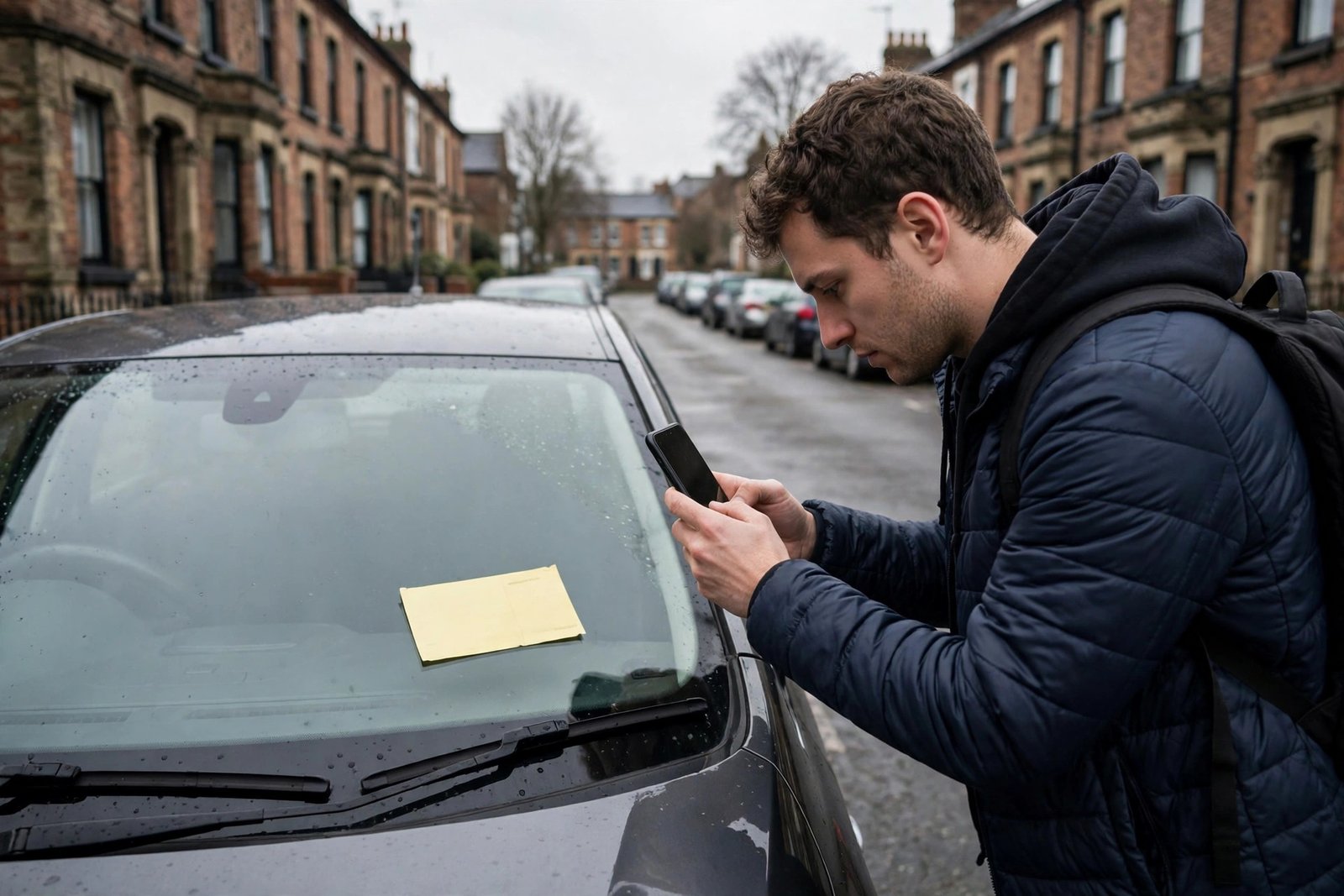
Nothing sours a day in a British city like returning to your car to find a yellow penalty notice tucked under the wiper. Parking fines — sorry, Penalty Charge Notices — cost UK drivers hundreds of millions every year, and a huge proportion are paid unnecessarily by people who either didn’t know the rules or didn’t know they could fight back. Here’s how to avoid them in the first place, and what to do when one lands anyway.
Understand what you’re actually dealing with
First, the terminology matters. A Penalty Charge Notice (PCN) is issued by councils or Transport for London for parking contraventions on public roads — these are enforceable by law. A parking ticket from a private company (in a supermarket or private car park) is technically an invoice for breach of contract, not a fine — the rules for challenging them differ. Knowing which one you’re holding determines your options. This guide focuses on council PCNs, the most common kind.
The golden rules of avoiding PCNs
1. Read the signs. All of them. Every time.
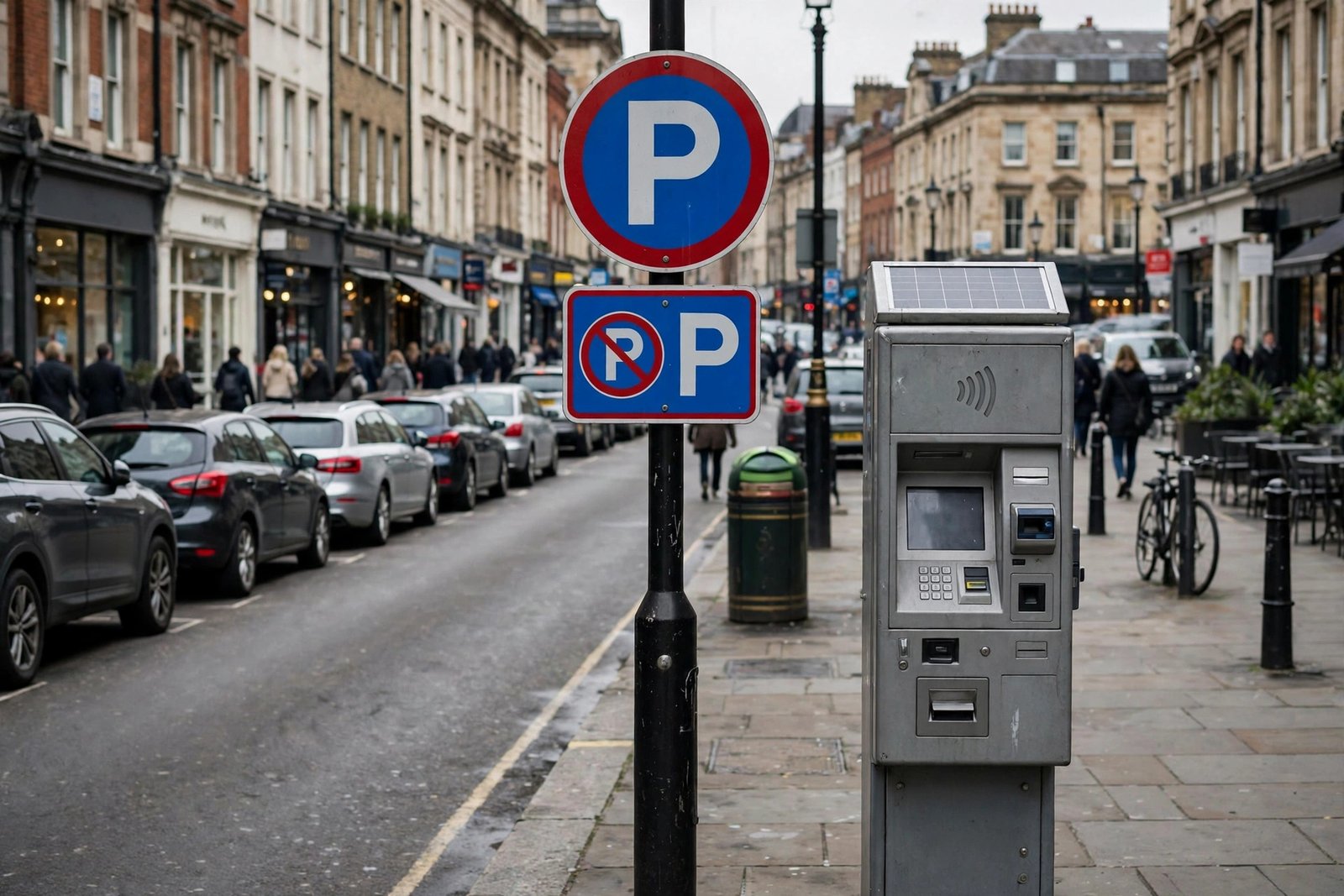
Most PCNs come from not reading — or misreading — the signage. UK parking signs are notoriously dense: time plates with multiple panels, different rules for different days, resident bays that become pay-and-display at certain hours. The discipline is simple: before leaving the car, read every sign on the nearest post fully. Photograph them with your phone — if you do get a ticket, those photos are evidence, and if you don’t, they cost you ten seconds.
2. Never trust your memory of the rules
“I’ve parked here for years” is how regulars get caught. Councils change restrictions frequently — a bay that’s been free for a decade can become residents-only overnight with minimal fanfare. Treat every familiar street as potentially changed, especially after roadworks. The government’s parking ticket guidance is the authoritative starting point for understanding your position.
3. Master the apps, and set reminders
RingGo, PayByPhone, ParkMobile — whichever your city uses, learn it properly. The classic expensive mistake is paying for parking but entering the wrong registration, or paying for the wrong zone. Double-check the reg and location code every time. Set a phone alarm for 10 minutes before expiry — overstaying by even a few minutes is ticketable, and “I was only five minutes late” is not a defence (though it can be mitigation on appeal).
4. Know the deceptive bays
Certain parking situations catch even careful drivers: single yellow lines (no waiting during the signed hours — and “waiting” includes sitting in the car), loading bays (goods vehicles only, often with time restrictions), disabled bays (Blue Badge only, always), bus lanes with parking prohibitions, and the dreaded “footway parking” ban that applies across all of London and increasingly elsewhere. Dropped kerbs — parking across one is ticketable even without yellow lines.
5. Check the ticket machine actually worked
If the machine is broken, photograph it (with the error display visible) and check for a helpline number — many councils allow you to pay by phone instead. “The machine was broken” is a valid appeal ground, but only with evidence. Don’t just park for free and hope.
City-specific traps
London is the extreme case: the entire city bans footway parking, the Congestion Charge and ULEZ zones add another layer of “park here, pay twice” risk, and borough rules vary street by street. But every UK city has its quirks — Edinburgh’s city-centre restrictions, Manchester’s event-day controls around the stadiums, Birmingham’s Clean Air Zone interactions. When visiting an unfamiliar city, spend five minutes on the council’s parking pages before you travel. It’s the cheapest research you’ll ever do.
If you’re weighing whether driving into the city is worth it at all, the cheapest ways to get around London often beat the combined cost of fuel, parking charges and PCN risk — sometimes the smartest parking strategy is not bringing the car.
When the ticket lands anyway: don’t just pay
Here’s what most drivers don’t realise: a large proportion of PCNs are issued incorrectly — wrong contravention code, inadequate signage, procedural errors — and councils cancel a significant share of appeals. The 14-day discounted rate (usually 50% off) creates urgency, but paying it waives your right to challenge. The sequence:
- Check the ticket for errors: wrong registration, wrong location, wrong date or time, wrong contravention code. Any of these can invalidate it.
- Gather evidence immediately: photos of the signs, the bay markings, the ticket machine, your parking app receipt. Evidence degrades; collect it now.
- Make an informal challenge (usually within 14 days) if you have grounds — many councils cancel at this stage without formal proceedings.
- If rejected, you can make formal representations and ultimately appeal to the independent adjudicator (London Tribunals or the Traffic Penalty Tribunal). Adjudicators overturn councils regularly.
Strong appeal grounds include: unclear or missing signage, broken ticket machines (with evidence), procedural errors on the PCN, being prevented from returning by circumstances beyond your control, and loading/unloading where permitted. Weak grounds include: “I didn’t see the sign” (without evidence it was obscured), “I’ve parked here for years”, and “I was only two minutes late” — though the last sometimes succeeds on proportionality.
Understanding your consumer and legal rights generally makes you a more effective challenger — the principle is the same: authorities and companies must follow their own procedures, and when they don’t, you can hold them to it.
Private parking tickets: a different game
Private parking companies (ParkingEye and the like) issue their charges under contract law. The key points: don’t ignore them (they can and do take drivers to court, and ignoring escalates costs), but do challenge — first to the operator, then to the independent appeals service (POPLA in England and Wales). Many private tickets fail on signage adequacy or the operator’s authority to issue charges. The 10-minute grace period rules and keeper-liability requirements under the Protection of Freedoms Act give you real protections. Never pay a private ticket without at least checking whether the signage where you parked was actually adequate. The MoneySavingExpert parking appeals guide walks through challenging both council and private tickets.
Conclusion
Avoiding parking fines in UK cities is mostly about discipline: read every sign, photograph everything, master the parking apps, and never assume the rules haven’t changed. And when a ticket lands despite your care, don’t reflexively pay the discounted rate — check it for errors, gather evidence, and challenge it properly, because a remarkable number of PCNs don’t survive scrutiny. The councils count on most drivers paying without question. Don’t be most drivers.
Frequently Asked Questions
How much is a parking fine in the UK?
Council PCNs are typically £50–£130 depending on the area and severity (£25–£65 if paid within 14 days at the discounted rate). London charges are at the top end. Private parking charges are usually £60–£100.
Can I ignore a private parking ticket?
No — private operators can take you to court and routinely do. Challenge it through the operator and then POPLA instead; ignoring it only increases what you might end up paying.
What are the best grounds for appealing a parking ticket?
Incorrect details on the ticket, inadequate or missing signage, broken ticket machines (with photographic evidence), and procedural errors by the council. Evidence gathered at the time is what wins appeals.
Does a parking ticket affect my credit rating?
An unpaid PCN itself doesn’t appear on your credit file, but if it escalates to court action and a County Court Judgment, that does. Private parking charges that go to court can also result in CCJs. Deal with tickets rather than ignoring them.
Leave a Reply