
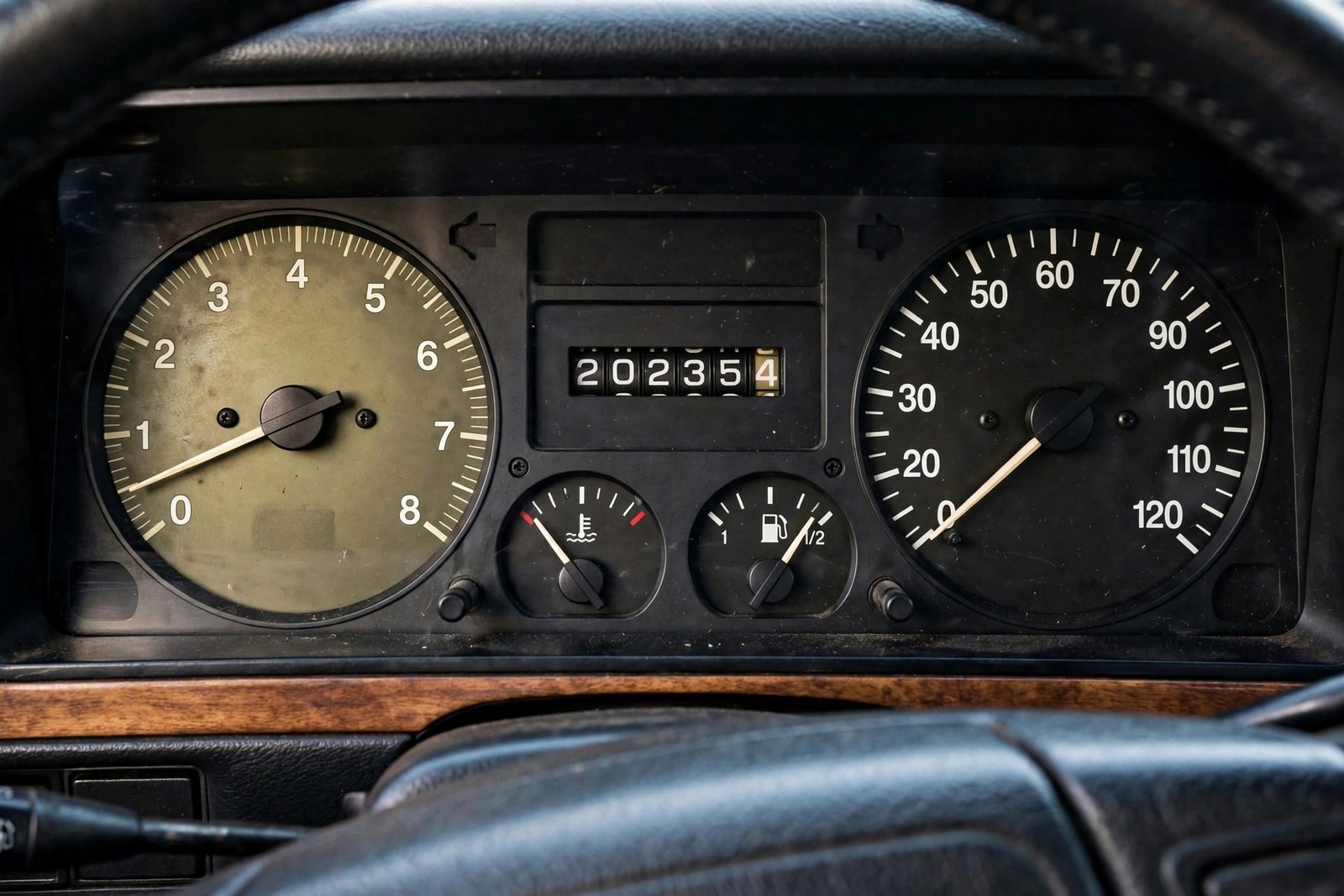
200,000 miles. In the minds of most British car buyers, it’s the point where a car becomes scrap metal with seats. Yet talk to taxi drivers, travelling sales reps, or anyone who’s run a car properly, and you’ll hear a different story: 200,000 miles is entirely achievable for most modern cars, and plenty sail past 250,000 or even 300,000. The difference between a car that dies at 120,000 and one that thrives at 220,000 isn’t luck — it’s maintenance discipline. Here’s the full playbook.
First, the mindset shift: miles don’t kill cars, neglect does
Engines are designed for hundreds of thousands of miles. What kills cars is deferred maintenance compounding: the oil change skipped “just this once”, the coolant leak topped up instead of fixed, the cambelt run 20,000 miles past its interval. Each shortcut is survivable alone; stacked over years, they’re fatal. High-mileage heroes aren’t pampered garage queens — they’re cars whose owners fixed small things promptly, every time. That’s the whole secret, and it’s available to anyone.
Oil: the non-negotiable religion
If you take one thing from this article: change the oil on time, with the correct specification, every time. Oil is the lifeblood — it lubricates, cools, cleans and protects. Old, degraded oil is how engines die slowly: increased wear on every bearing, sludge clogging oilways, turbochargers starved of lubrication (turbo failure is one of the classic high-mileage killers, and it’s almost always an oil issue).
Follow the manufacturer’s interval as a maximum, not a target — and if you do lots of short trips, tow, or drive hard, halve it. Use exactly the specified grade (0W-20 vs 5W-30 isn’t a suggestion; modern engines with variable valve timing depend on precise oil viscosity). A £60–£100 oil service is the cheapest longevity insurance in motoring. The AA’s driving advice pages reinforce what every good mechanic knows: oil discipline is the foundation everything else builds on.
Cooling system: the silent killer
Overheating kills engines in minutes — a burst hose or failed thermostat can warp a cylinder head before the temperature gauge even registers. At high mileages, cooling components are all living on borrowed time: hoses harden and crack, radiators clog internally, water pumps weep, thermostats stick. Inspect hoses annually (squeeze them — they should be firm but pliable, not rock-hard or mushy), watch for coolant loss (any regular top-up means a leak to find, not a habit to maintain), and replace the coolant at the specified interval — old coolant loses its anti-corrosion properties and rots the system from inside.
Never ignore the temperature gauge creeping up. Pull over, switch off, investigate. Driving an overheating car “just to the next junction” is how £2,000 head gasket jobs happen.
Transmission: the forgotten fluid
Everyone services the engine; almost nobody services the gearbox — and it’s the second most expensive component in the car. Many manufacturers claim “sealed for life” transmissions, but transmission specialists universally recommend fluid changes every 60,000–80,000 miles. Fresh fluid prevents the wear that leads to harsh shifting, slipping and eventual failure. A £150–£250 transmission service versus a £2,000–£4,000 rebuild or replacement: the maths is not close.
Driving habits matter too: come to a complete stop before shifting between drive and reverse, don’t ride the clutch, and in automatics, avoid creeping on the brakes in traffic for extended periods — shift to neutral or park if you’re stationary for a while.
Suspension, steering and brakes: the wear cycle
Past 100,000 miles, you’re in the era of consumable chassis parts: shock absorbers (typically 80,000–100,000 mile life), bushes, ball joints, wheel bearings, brake discs. None of these are crises — they’re predictable wear, and replacing them on schedule keeps the car feeling tight and safe rather than tired and vague. Budget £300–£600 a year for chassis consumables on a high-miler and you’ll never face the dreaded “it needs £1,500 of suspension work all at once” moment that sends so many cars to the scrapyard.
Listen to the car: knocks over bumps (worn bushes/shocks), humming that changes with speed (wheel bearings), vibration under braking (discs). Catching these early is the difference between a £150 bearing and a £400 hub assembly. Drivers who cover big touring miles learn this attentiveness naturally — the car talks, and high-milers listen.
Rust: the British car’s true mortality
In the UK, rust kills more high-mileage cars than mechanical failure. Our salted winter roads attack sills, wheel arches, subframes and brake lines relentlessly. The defence: wash the underside regularly in winter (a £5 jet wash blast of the arches monthly), treat stone chips promptly, and inspect the MOT advisories every year — “corrosion” advisories are early warnings, not background noise. Waxoyl or Dinitrol undersealing (£200–£400 professionally applied) is the best investment for any car you intend to keep past 150,000 miles in Britain. A mechanically perfect car with rotten sills is still a scrapper.
The 200,000-mile maintenance calendar
For a car you’re deliberately running to the moon and back:
- Every 6 months / 6,000 miles: oil and filter (sooner for hard use), tyre check, fluid levels
- Annually: full service, brake inspection, coolant strength check, hose inspection, air-con run (even in winter — it keeps seals alive)
- Every 2 years: brake fluid change (it absorbs moisture; old fluid corrodes the system from inside), coolant change per schedule
- Every 60,000–80,000 miles: transmission fluid, cambelt if applicable (never exceed the interval — a snapped belt destroys most engines)
- Ongoing: fix every leak, noise and warning light promptly. The £50 fix today is the £500 fix next year.
Driving habits that add 50,000 miles
Mechanical sympathy is free and powerful: warm the engine gently (drive off promptly but keep revs low until warm — idling to “warm up” wastes fuel and wears engines), avoid short trips where possible (cold starts cause most engine wear; combine errands), don’t lug the engine at low revs under load, and cool turbocharged engines down with a minute of gentle driving after hard use. None of this requires driving like a saint — just avoiding the specific abuses that shorten life. Keeping the car garaged or at least sheltered also slows every form of deterioration. If you’re disciplined about home maintenance schedules, apply the same mindset to the car — systems last when they’re serviced, whatever the system.
Conclusion
Making your car last past 200,000 miles isn’t about babying it or spending fortunes — it’s about religious oil changes, a cooling system you respect, transmission fluid most owners forget, chassis wear you stay ahead of, rust you fight every winter, and the discipline to fix small problems while they’re small. Do that, and 200,000 miles isn’t a miracle; it’s just what happens when a well-engineered machine gets the maintenance it was designed for. The RAC’s car maintenance hub has servicing schedules for keeping high-mileage cars healthy. The cars that die young are rarely worn out. They’re given up on.
Frequently Asked Questions
Can a modern car really do 200,000 miles?
Yes — most modern engines are engineered for 200,000+ miles with proper maintenance. Taxis and fleet cars routinely exceed 250,000. Maintenance discipline matters far more than brand or model.
What’s the most important maintenance for high mileage?
Oil changes, on time with the correct grade — nothing else comes close. After that: cooling system care, transmission fluid changes, and cambelt replacement on schedule.
At what mileage should I stop investing in repairs?
When annual repair costs consistently exceed the car’s value, or when structural rust appears. A good rule: if a single repair costs more than the car’s worth and more big bills are likely, it’s time to move on.
Does motorway mileage wear cars less?
Generally yes — steady-speed motorway miles cause far less wear per mile than town driving: fewer cold starts, less stop-start, stable temperatures. A 150,000-mile motorway car is often healthier than a 70,000-mile town car.


Leave a Reply