
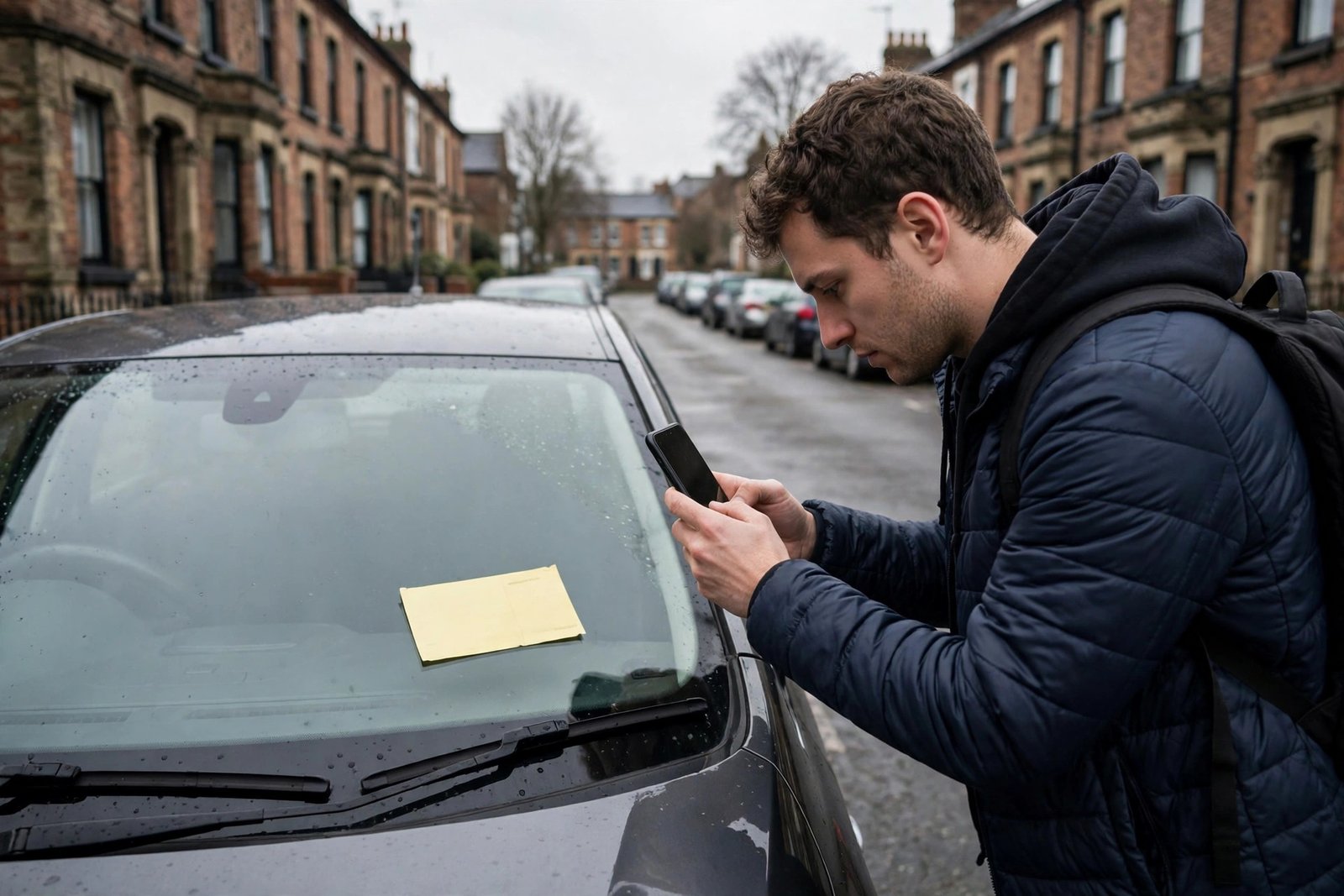
So the yellow ticket is on your windscreen. Before you sigh and pay the discounted rate, know this: a remarkable number of UK parking tickets are issued incorrectly, and councils cancel a significant proportion of challenges. Appealing isn’t gaming the system — it’s holding the system to its own rules. Here’s exactly how to appeal a parking ticket in the UK, step by step, with the grounds that actually win.
Step zero: don’t pay (yet)
This is the most important decision. Paying the discounted 14-day rate feels like the responsible move, but payment is legally an admission — once paid, you generally can’t then appeal. The discount creates deliberate urgency, but you have nothing to lose by challenging first: if your informal challenge fails, most councils re-offer the discount period. Check the ticket’s small print — it will tell you the deadlines. The only exception: if you know you’re bang to rights with zero grounds, paying the discount is the rational move. But verify that first.
Step 1: identify exactly what you’ve got
Check whether it’s a council Penalty Charge Notice (PCN), a Transport for London PCN, or a private parking charge. The appeal routes differ completely. A council PCN says “Penalty Charge Notice” and names the council; private tickets come from companies like ParkingEye or Euro Car Parks and are headed “Parking Charge Notice”. This guide covers council PCNs; private charges go to the operator first, then to POPLA (the independent appeals service) — and the same evidence-gathering discipline applies.
Step 2: gather evidence immediately
Evidence wins appeals, and it degrades fast. Go back to the location (or send someone) and photograph:
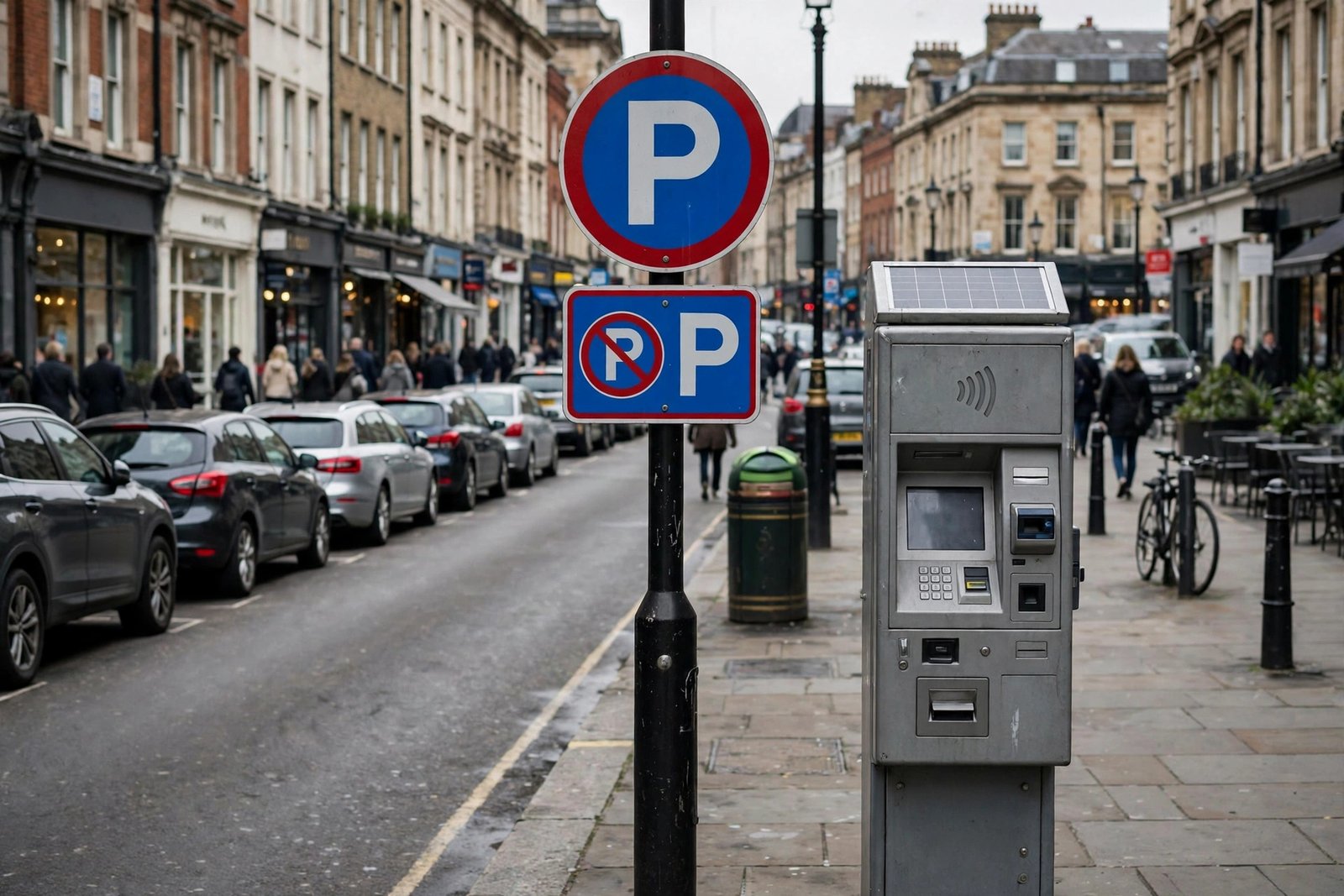
- The signs and road markings at the exact bay — are they clear, visible, unobstructed, and compliant?
- The ticket machine, if relevant — was it working? Photograph any error display.
- The bay markings themselves — faded, missing or contradictory lines are strong grounds.
- Your car in position, if it’s still there.
- Anything that prevented compliance: roadworks, obscured signs, a broken machine.
Also preserve: your parking app receipt or ticket stub, dashcam footage if you have it, and a written account of what happened while it’s fresh. Councils decide on paper — whoever has the better paper wins. The same evidence-gathering discipline that helps when you claim compensation for a delayed flight applies here: document everything at the time, challenge through the proper channels, and escalate if the first answer is no.
Step 3: check the ticket for errors
Scrutinise the PCN itself. Common fatal errors include: wrong vehicle registration, wrong location, wrong date or time, wrong contravention code (each parking offence has a specific code — e.g., code 01 is “parked in a restricted street during prescribed hours”), and missing legally required information. Councils must follow strict procedural rules; a PCN with the wrong contravention code describes an offence that didn’t happen at your location, and adjudicators cancel those routinely. This check alone wins a surprising number of appeals.
Step 4: make the informal challenge
Most councils allow an informal challenge (sometimes called an informal representation) within 14–28 days. Write it clearly and factually: state the PCN number, explain what happened, list your grounds, and attach your evidence. Keep the tone professional — adjudicators and council officers respond to facts, not fury. Good structure:
- What happened (one paragraph, factual).
- Why the PCN shouldn’t stand (your grounds, numbered).
- Your evidence (listed, attached).
- What you’re asking for (cancellation of the PCN).
Many councils cancel at this stage if the grounds are solid — it’s cheaper for them than the formal process. You’ll usually get a response within a few weeks.
The grounds that actually win
Strong grounds
- Signage inadequate or non-compliant. Signs must meet strict legal requirements for size, placement and clarity. Obscured, damaged, missing or misleading signs are among the most successful appeal grounds.
- Faulty ticket machine (with evidence you tried to pay or reported it).
- Procedural errors — wrong code, wrong details on the PCN, failure to follow statutory process.
- Valid permit/ticket not visible — if you had a valid permit or paid, but it fell off the dashboard, many councils cancel on first offence with proof of payment.
- Prevented from complying — medical emergency, vehicle breakdown (with evidence), roadworks forcing you into the bay.
- Loading/unloading where the restriction allows it — you’re generally permitted to stop for genuine loading on many restrictions, though “popping into a shop” doesn’t count.
Weak grounds (usually fail)
- “I didn’t see the sign” — unless you can show it was obscured or missing.
- “I’ve parked here for years” — irrelevant to whether this parking was lawful.
- “I was only a few minutes late” — sometimes succeeds on proportionality, but don’t rely on it.
- “I can’t afford it” — financial hardship isn’t a legal ground (though some councils exercise discretion).
- “Someone else was driving” — for council PCNs, liability sits with the registered keeper regardless.
Step 5: formal representations and the adjudicator
If the informal challenge is rejected, don’t despair — councils reject most informal challenges as a matter of policy. You can then make formal representations when you receive the Notice to Owner (for postal PCNs) or following rejection. If that’s rejected too, you have the right to appeal to the independent adjudicator — London Tribunals (for London) or the Traffic Penalty Tribunal (outside London). This is the stage where councils lose regularly: adjudicators are legally trained, independent, and apply the law strictly. Many appellants win here on grounds the council dismissed.
The adjudicator process is free, can usually be done on paper or by phone/video, and the adjudicator’s decision is binding on the council. Councils know this — a well-evidenced appeal to the adjudicator is the strongest card you hold. The government’s guide to challenging a ticket lays out the formal process and your rights at each stage.
What about private parking charges?
Briefly, since many drivers confuse them: private charges are appealed first to the operator, then to POPLA (Parking on Private Land Appeals) in England and Wales. POPLA is free and independent, and overturns a large share of charges — particularly on inadequate signage, the operator’s authority to issue charges, and keeper liability technicalities under the Protection of Freedoms Act 2012. Never ignore a private charge (they do go to court), but never pay one without challenging either. Knowing your rights in disputes generally helps here too — the pattern is always the same: check their procedures, gather your evidence, escalate through the proper channels.
Conclusion
Appealing a parking ticket in the UK is a structured process, not a lottery: don’t pay the discount reflexively, gather evidence immediately, check the ticket for errors, challenge informally with facts and photos, and escalate to formal representations and the independent adjudicator if needed. Councils count on apathy — most tickets are paid without question, which is exactly why the ones that are challenged with real evidence succeed so often. London cases go to London Tribunals; elsewhere it’s the Traffic Penalty Tribunal — both free and independent of the council. The system has rules, and the rules bind the council too. Use them.
Frequently Asked Questions
How long do I have to appeal a parking ticket?
Usually 14 days for an informal challenge (to preserve the discount if you lose) and 28 days for formal representations after a Notice to Owner. Deadlines are on the ticket — don’t miss them.
Will I lose the 50% discount if I appeal and lose?
Usually not — most councils re-offer the discount period after rejecting an informal challenge. Check the specific council’s policy on the ticket or their website before deciding.
What is the Traffic Penalty Tribunal?
The independent adjudication service for parking appeals outside London (London Tribunals covers London). It’s free, independent of the council, and its decisions are binding. A large proportion of well-evidenced appeals succeed here.
Can I appeal a private parking charge?
Yes — first to the operator, then to POPLA (free, in England and Wales). POPLA overturns many charges on signage, authority and technical grounds. Never ignore a private charge, but always challenge it before paying.
Leave a Reply