
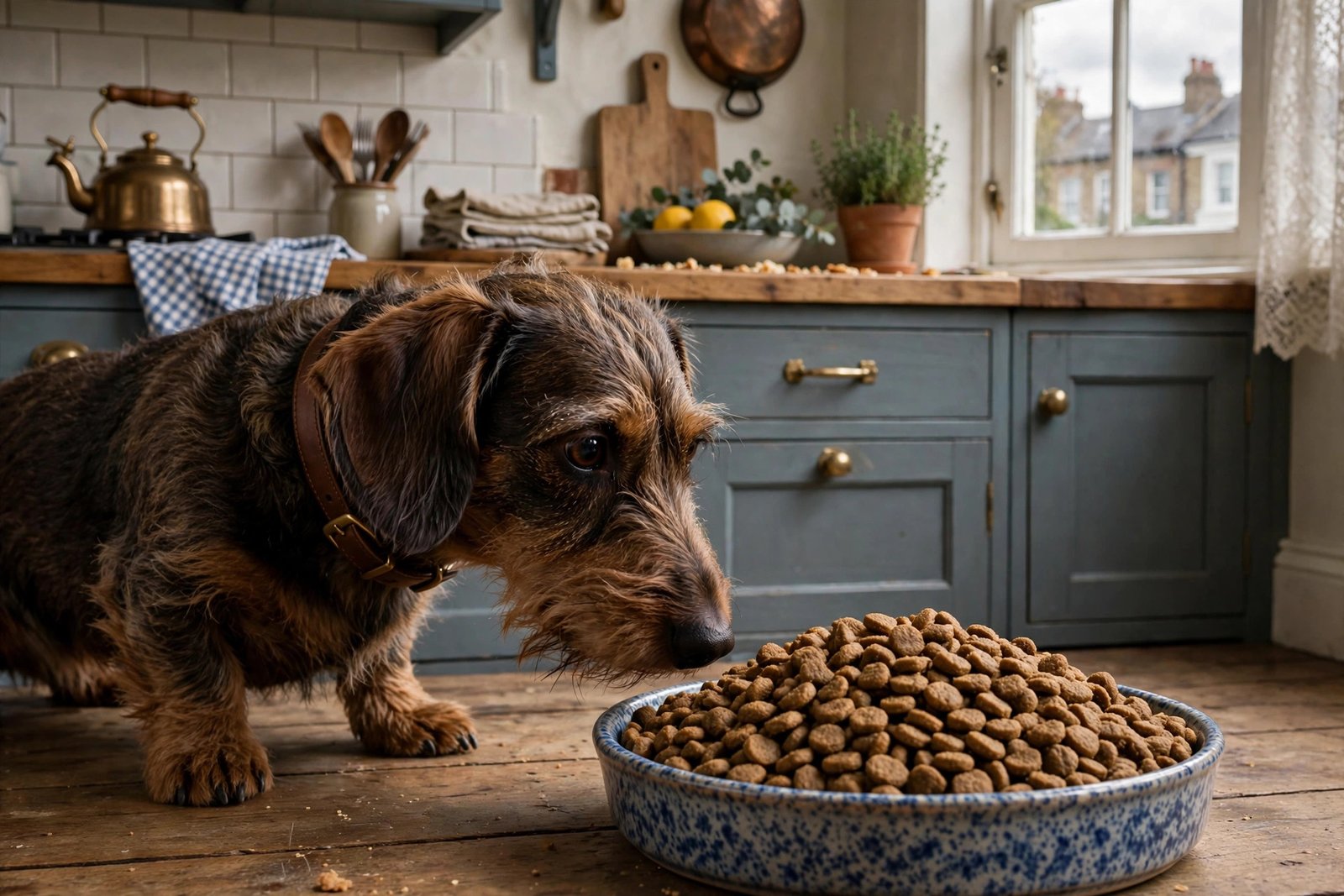
Your dog has always been a enthusiastic eater — the kind who inhales dinner before you’ve put the bowl down. Now they’re sniffing at it, walking away, leaving half a bowl. Or maybe they’ve always been fussy and it’s getting worse. A dog not eating properly is one of the most worrying things for a UK dog owner, precisely because appetite is such a reliable barometer of how a dog feels. Here’s how to work out what’s going on, what you can try at home, and when it’s a vet visit.
First: how long has this been going on?
Duration is the single most important factor. A dog that skips one meal but is otherwise bright, bouncy and normal is rarely an emergency — dogs have off days, just like us. A dog that hasn’t eaten properly for 48 hours, or a dog that’s off food and showing other symptoms (lethargy, vomiting, diarrhoea, drinking lots more or less than usual), needs veterinary attention promptly. Puppies, elderly dogs and small breeds dehydrate and lose condition faster — be more cautious with them. As a rule: 24 hours of reduced appetite with no other symptoms, monitor; 48 hours, call the vet; any additional symptoms, call sooner.
The common, non-scary causes
Stress and routine disruption
Dogs are creatures of habit, and appetite is often the first thing to go when life changes: a house move, new baby, building work, a family member away, a new pet, or even a change in feeding location or bowl. Fireworks season (October through January in the UK, with Bonfire Night, Diwali and New Year) puts thousands of dogs off their food from sheer anxiety. If the appetite dip coincides with a life change, patience and routine usually fix it.
Fussiness and learned behaviour
Be honest: have you been topping up the bowl with chicken, gravy or treats when they refuse the kibble? Dogs learn fast. If holding out reliably produces something tastier, holding out becomes the strategy. This is the most common cause of “my dog won’t eat” in otherwise healthy dogs — a training problem disguised as a health problem. The fix is unglamorous: put the food down for 20 minutes, remove what isn’t eaten, and offer nothing until the next mealtime. A healthy dog won’t starve itself; most cave within 48 hours.
Food issues
Sudden food refusal after a diet change is normal — dogs need 7–10 days of gradual transition. Spoiled food is another culprit: check the use-by date, and remember that opened dry food goes stale within 4–6 weeks (store it sealed, cool and dry). A new bag from a different batch can taste different enough to cause suspicion. And in summer heatwaves, many dogs eat less — normal, provided water intake stays up.
Medical causes to take seriously
When appetite loss comes with other signs, or persists beyond a couple of days, medical causes move up the list:
- Dental pain. Cracked teeth, gum disease and oral tumours make eating painful. Signs: dropping food, chewing on one side, pawing at the mouth, bad breath. Dental disease is extremely common in dogs over three — and often invisible until it’s advanced.
- Gastrointestinal problems. Nausea, gastritis, intestinal blockages (especially in dogs that chew toys, socks and other foreign objects), pancreatitis. Vomiting, diarrhoea, abdominal pain or a hunched posture alongside appetite loss all point here.
- Infections and fever. Kennel cough, tick-borne diseases and other infections suppress appetite. Ticks are a year-round UK issue now, not just a summer one.
- Organ disease. Kidney disease, liver disease and other systemic illnesses often first show as gradual appetite decline, increased thirst, weight loss or lethargy — particularly in older dogs.
- Pain anywhere. Arthritis, injuries, post-surgical pain — dogs in pain often won’t eat. If your senior dog is also stiff on walks, the two may be connected.
Your vet will typically start with a physical exam, and may suggest blood tests, dental examination under sedation, or imaging depending on findings. Pet insurance that covers diagnostics makes these decisions easier — which is why understanding health insurance costs in general helps you think clearly about cover for your dog too.
What to try at home (for the otherwise well dog)
If your dog is bright, drinking normally, and has no other symptoms, these steps often restart eating within a day or two:
- Warm the food slightly. Ten seconds in the microwave (stirred, tested) releases aromas that stimulate appetite — this alone works surprisingly often.
- Reset the routine. Fixed mealtimes, 20-minute windows, no grazing, no table-scrap top-ups. Boring is good.
- Reduce treats. Treats shouldn’t exceed 10% of daily calories; many fussy dogs are simply full of treats.
- Check the bowl and location. Some dogs dislike metal bowls (noise, reflections), deep bowls (whisker stress is debated but some dogs prefer shallow), or eating near noisy appliances.
- Add gentle exercise before meals. A good walk stimulates appetite naturally.
- Try a different protein or texture — but transition gradually, not abruptly.
What not to do: don’t panic-cook elaborate meals to tempt them (you’re training fussiness), don’t leave food down all day (it goes stale and removes mealtime structure), and don’t assume “they’ll eat when hungry” applies to a dog that’s also lethargic or vomiting — that’s a vet case, not a patience case.
When to call the vet: the clear triggers
- No food for 48 hours (24 for puppies, toy breeds or elderly dogs)
- Appetite loss plus vomiting, diarrhoea, lethargy or pain
- Drinking dramatically more or less than usual
- Weight loss you can see or feel
- Dropping food, drooling, or pawing at the mouth (dental)
- Known ingestion of something dangerous (toxins, foreign objects)
- Your gut says something’s wrong — owners are usually right
The PDSA offers free and low-cost vet care for eligible UK owners, and their advice pages cover appetite loss in detail. The RSPCA’s dog health resources are another trustworthy reference for worried owners. And if you’re unsure whether your vet is the right one for a second opinion, knowing how to navigate professional appointments generally — preparing questions, asking for explanations — makes every vet visit more productive.
Conclusion
A dog not eating properly in the UK is most often dealing with stress, fussiness they’ve been inadvertently trained into, or a food issue — all fixable at home with routine, patience and fewer treats. But appetite is also the early warning system for dental pain, gastrointestinal problems and systemic illness, so the 48-hour rule and the symptom checklist matter. Monitor calmly, act decisively, and trust the combination of observation and veterinary advice. Most appetite dips resolve; the ones that don’t are exactly what vets are for.
Frequently Asked Questions
How long can a dog go without eating?
A healthy adult dog can survive several days without food, but shouldn’t have to. Call the vet after 48 hours of not eating (24 hours for puppies, small or elderly dogs), or sooner if there are other symptoms.
Why is my dog not eating but drinking water?
This combination often points to nausea, dental pain or early systemic illness — the dog wants hydration but eating hurts or causes nausea. Monitor closely and call the vet if it persists beyond a day.
Should I change my dog’s food if they won’t eat?
Not immediately — sudden changes often worsen the problem. First rule out stress, fussiness and illness. If you do change food, transition gradually over 7–10 days.
Is it normal for dogs to skip meals in summer?
Yes, many dogs eat less in hot weather. As long as water intake is normal and the dog is otherwise well, reduced summer appetite is usually nothing to worry about.
Leave a Reply