How Rich Is Michael Jackson? Age, Height, Family, Career and Net Worth
The Most Famous Popular Musician of His Generation
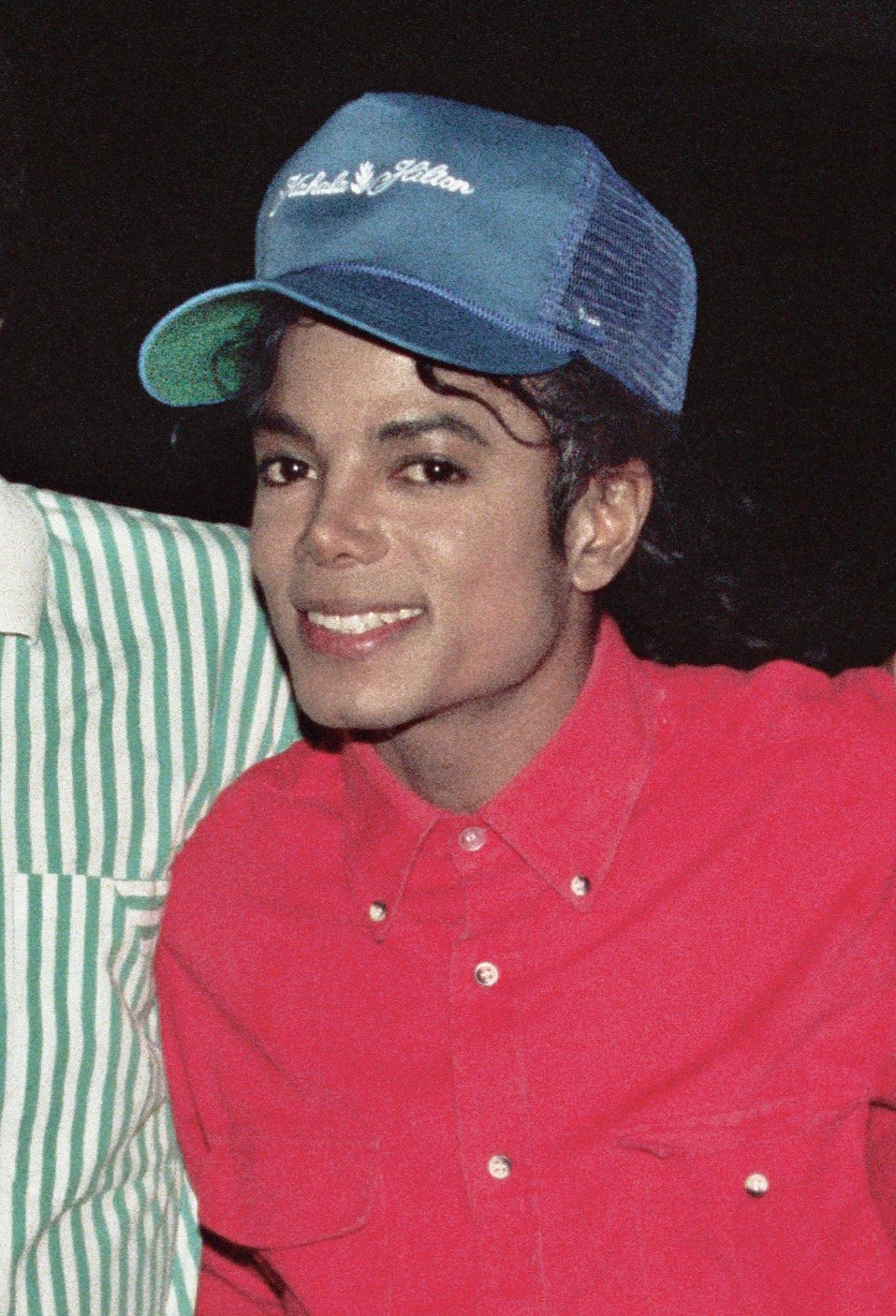
Michael Jackson was the most famous popular musician of his generation and, for a period in the early 1980s, arguably the most famous person in the world. He began as a child prodigy fronting a family group, became a solo star while still a teenager, and then, with a run of albums between 1979 and 1991, redefined what a pop record could sell, how a music video could look and how a live performer could move. His biography is inseparable from that scale: the success was so large, so early and so sustained that everything which followed, in his career and in his home life, happened under a level of scrutiny few performers have ever experienced.
He became famous first as the youngest member of the Jackson 5, whose Motown singles topped the American charts in 1969 and 1970, and then again, more completely, as a solo artist. By the mid-1980s his songs were unavoidable, his short films for television set new production standards, and his signature steps, gloves and jackets were copied on every continent. Later years brought fewer albums, long gaps between releases, cancelled plans and intense public controversy, alongside tours that still sold out stadiums whenever they were announced.
His present-day status, more than a decade and a half after his death, is that of a catalogue and an estate rather than a working artist. His recordings continue to sell and stream in enormous quantities, stage productions built on his music tour the world, and his estate remains one of the most commercially successful of any deceased entertainer. This profile is written about him in the past tense throughout, because he died in 2009, and it separates carefully between what he was worth at his death and what his estate has earned since, two figures that are often wrongly confused.
The Jackson 5, Thriller, and the Final Plans
1969–1978: The Jackson 5 and the Young Solo Star
The Jackson 5 signed to Motown in 1969 and released four consecutive American number one singles: “I Want You Back”, “ABC”, “The Love You Save” and “I’ll Be There”. Jackson’s voice, phrasing and stage presence, remarkable in a child of eleven, made him the group’s focal point. Alongside the group he recorded solo albums for Motown, including Got to Be There (1972) and Ben (1972), whose title song became his first solo number one. The group later moved to Epic Records as the Jacksons, and by the late 1970s he was increasingly writing and shaping his own material, while his performance in the film The Wiz (1978) brought him into the orbit of producer Quincy Jones.
1979–1987: Off the Wall, Thriller and Bad
Off the Wall (1979), produced by Jones, included “Don’t Stop ‘Til You Get Enough” and “Rock with You” and established him as an adult solo artist. Thriller (1982) surpassed it on a scale the industry had not seen: songs including “Billie Jean”, “Beat It” and the title track, supported by groundbreaking short films, made it the best-selling album of all time. During this period he also collaborated with Paul McCartney, duetting on “The Girl Is Mine” on Thriller and on “Say Say Say” — a partnership readers can explore further in Paul McCartney’s net worth profile. Bad (1987) produced five American number one singles, including “I Just Can’t Stop Loving You”, “Bad”, “The Way You Make Me Feel”, “Man in the Mirror” and “Dirty Diana”, and was supported by a world tour that set attendance records.
1991–2009: Later Albums, Long Gaps and the Final Plans
Dangerous (1991) opened with “Black or White” and included “Remember the Time” and “Heal the World”, selling in the tens of millions despite a changing market. HIStory (1995) combined a greatest hits disc with new songs including “Scream”, a duet with Janet Jackson, and “Earth Song”, which became a major hit in Britain. Invincible (2001) was his final studio album released in his lifetime, featuring “You Rock My World”. His later years were dominated by live plans rather than new records, culminating in the announcement in March 2009 of a residency of concerts in London under the title This Is It, which was in rehearsal at the time of his death and was later documented in a concert film of the same name. His songs and albums continue to chart posthumously, and his catalogue remains among the most valuable in popular music.
The Eighth of Ten Children, Born in Gary, Indiana
Michael Joseph Jackson was born on 29 August 1958 in Gary, Indiana, and his birthday fell just a day apart from that of several of the other defining pop stars of his era. He was the eighth of ten children in a working-class family living in a small house on Jackson Street. His father, Joseph Walter “Joe” Jackson, worked in a steel mill and drove his children’s musical careers with famous strictness, while his mother, Katherine Esther Jackson, provided the gentler counterweight in the household and remained close to him throughout his life.
His siblings were Rebbie, Jackie, Tito, Jermaine, La Toya, Marlon, Brandon — Marlon’s twin, who died at birth — Randy and Janet. Five of the brothers formed the Jackson 5, rehearsing after school under their father’s supervision and performing in talent shows and clubs before signing to Motown. Family was therefore not simply his background; it was his first band, his first management and his first experience of fame. The youngest sister, Janet, later built a major solo career of her own, making the family one of the most successful in popular music history across two generations.
His formal education was repeatedly interrupted by touring and recording, and he was tutored privately for much of his childhood once the group became successful. That upbringing — famous before he was a teenager, working to an adult schedule while his peers were at school — was something he discussed throughout his adult life, and it informed both his songwriting and his later determination to give his own children a more sheltered childhood than the one he had known in Gary.
Unmarried at His Death, With No Partner
Jackson was unmarried at his death, and he had no partner at that time; that is the honest answer to the partner question, and any account suggesting otherwise goes beyond the verified record. Earlier in his life he had been married twice. His first wife was Lisa Marie Presley, whom he married in 1994 and from whom he was divorced in 1996. He then married Debbie Rowe in 1996, and that marriage also later ended in divorce. Both marriages attracted enormous press attention at the time, and both belong to the history of his home life rather than to his circumstances at his death.
His children were three. Prince, whose full name is Michael Joseph Jackson Jr. and who was born in February 1997, and Paris-Michael Katherine Jackson, born in April 1998, were his children with Debbie Rowe. His youngest child, Prince Michael II, known as Bigi, was born in February 2002 via a surrogate. After his death the children were raised principally within the wider Jackson family, under the guardianship of his mother, Katherine, and they have each since spoken publicly, in measured terms, about growing up as his children and about protecting his legacy.
His parents remained defining figures. Joe Jackson, who died in 2018, was both the architect of the family’s success and, by his children’s own accounts, a demanding and sometimes harsh presence in their childhood. Katherine Esther Jackson was the parent to whom he was closest, and her faith shaped the household in which he was raised. He was raised a Jehovah’s Witness — his mother was baptised in 1963 — and he disassociated himself from the faith in 1987. Posthumous claims that he converted to another faith are unconfirmed and should never be presented as fact. The wider family, including all of his siblings, remained a public presence throughout his life and continues to be involved in stewarding his memory.
Michael Jackson in Brief: Gary, Thriller and Family
| Michael Jackson in Brief: Gary, Thriller and Family | Details |
|---|---|
| Born | 29 August 1958, Gary, Indiana |
| Age | 50 (at his death in 2009) |
| Height | 5 ft 9 in (1.75 m) |
| Weight | No reliable published figure exists |
| Partner | None — he was unmarried at his death, with no partner |
| Children | Three: Prince (Michael Joseph Jackson Jr., born February 1997), Paris-Michael Katherine Jackson (born April 1998) and Prince Michael II, known as Bigi (born February 2002, via a surrogate) |
| Parents | Joseph Walter “Joe” Jackson (died 2018) and Katherine Esther Jackson |
| Net Worth | −$500 million at his death (Celebrity Net Worth) |
He died on 25 June 2009 in Los Angeles, aged 50, while preparing for his planned London concerts. The circumstances of his death were investigated exhaustively and litigated at length, and they continue to be reported with care by reputable outlets. For the purposes of this factual profile, the essential points are his age at death, the date, and the fact that his financial position at that moment — examined in the next section — was the opposite of the wealth his fame might have suggested.
A Negative Fortune at Death, Debts Above the Assets
Jackson’s net worth at his death was negative. Celebrity Net Worth puts his net worth at his death at minus $500 million, reflecting debts and creditor claims above $500 million, a position confirmed in his estate executors’ 2024 court filings. That negative figure must be printed exactly as it stands, because it is the accurate answer to what he himself was worth when he died: despite a lifetime of extraordinary earnings, he owed more than he owned. Years of heavy spending, borrowing secured against his assets, legal costs and a long period with little touring income had left his finances in a condition that surprised many observers when the estate’s filings became public.
What happened afterwards is a different story and must never be substituted for the figure above. His estate has since earned more than $3.5 billion, according to Forbes — earnings generated after his death through catalogue deals, licensing, stage productions, film and music releases drawn from his archive. Between October 2024 and September 2025 alone, the estate earned about $105 million, making him the highest-earning deceased celebrity for the 13th time. Those are estate earnings, not his personal net worth, and presenting them as though he had died a billionaire would be plainly wrong. The honest summary is a paradox: a performer who died half a billion dollars in debt left behind an estate that became one of the most profitable in entertainment history.
The House Story
His best-known house was Neverland Ranch in California, which he bought in 1988 for about $19.5 million and developed into a private estate with fairground rides, a zoo and a railway. He left it after his mid-2000s legal difficulties and never truly returned to live there. The estate sold the property in 2020, by then known as Sycamore Valley Ranch, for about $22 million. At his death he did not own the house he was living in: he was renting a mansion in Holmby Hills, Los Angeles, a detail that underlines the gap between his public image of limitless wealth and his actual financial position in 2009.
The Cars in the Jackson Record
No authoritative inventory of his car collection exists. A small number of models are multiply reported in published accounts — a 1999 Rolls-Royce Silver Seraph, a 1990 Rolls-Royce Silver Spur II, a 1985 Mercedes-Benz 500 SEL and a 1954 Cadillac Fleetwood — and they are presented here as reported vehicles rather than as a verified inventory. Longer lists circulating online go beyond what reliable sources support, and this profile does not repeat them as fact.
A Body of Work That Crossed Every Boundary
Jackson’s place in popular culture was secured by a body of work — Thriller above all — that crossed every boundary of genre, generation and geography, and by performances that set standards dancers and singers still measure themselves against. He was also a cautionary story about childhood fame, unchecked spending and the machinery that surrounds a star of that magnitude, and both halves of that story are necessary to an honest profile.
He died aged 50 with a negative net worth, yet his music has never left the charts for long and his estate’s earnings lead the field for deceased celebrities year after year. That contrast, between the man and the catalogue, is the big picture: the work outlived the finances, the controversies and the man himself, and it shows no sign of fading.