Paul McCartney’s Money Story: Net Worth, Age, Wife and Family in Focus
Paul McCartney Took the Long Road From Walton Hospital to Fame
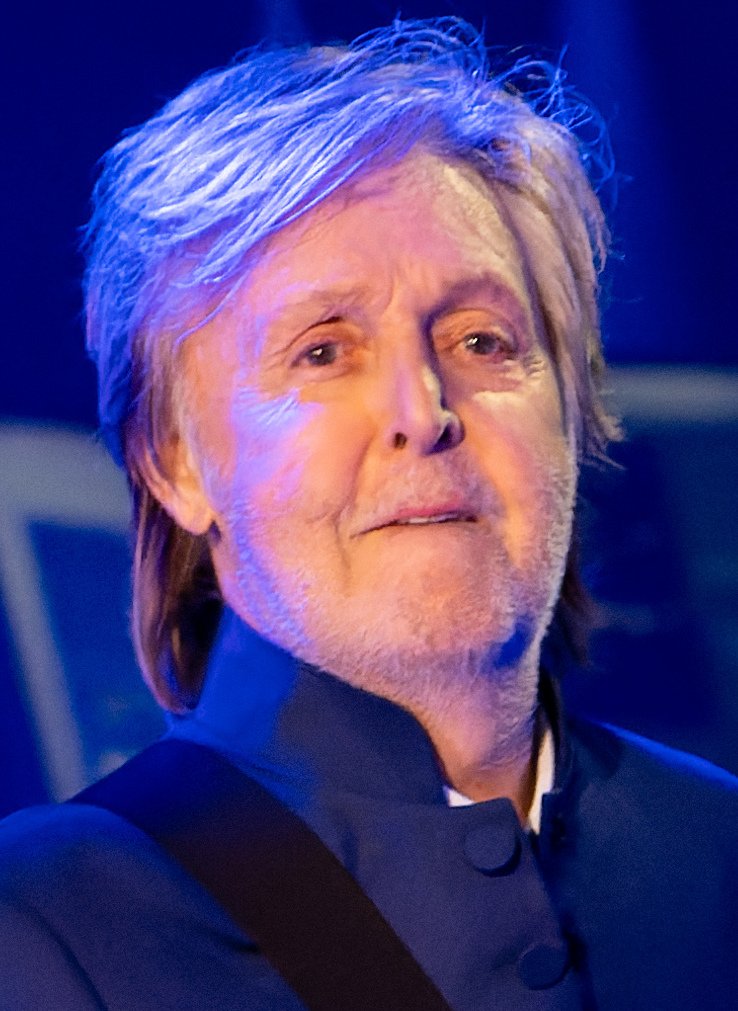
Paul McCartney is the most commercially successful songwriter in popular music history, a co-founder of the Beatles, a founder of Wings, and a solo artist whose career has now lasted more than six decades. His biography begins in post-war Liverpool and runs, without any real interruption, to stadium and festival stages in the present day, where he still performs marathon sets drawn from every phase of his work. Few musicians have been famous for as long, and none has combined songwriting, performing, recording and business ownership quite as continuously.
He became famous with extraordinary speed. The Beatles moved from Liverpool clubs to national fame in 1962 and 1963, and to global fame in 1964, with McCartney and John Lennon forming the songwriting partnership at the centre of the group. When the Beatles ended in 1970 he rebuilt from the beginning, first with solo albums recorded largely at home and then with Wings, who became one of the biggest live and recording acts of the 1970s. A second solo career followed, along with collaborations, classical compositions, painting, poetry and tireless touring.
His present-day status is that of a working musician who also happens to be a historical figure. He headlines major festivals, releases new albums into his eighties, and is received wherever he plays as a living link to the most influential band in popular music. His family, including his wife Nancy Shevell and his five children, several of whom are well known in their own fields, forms the settled domestic background to a professional life that has never really slowed down. This profile sets out the facts of that life — his age, height, family, songs, albums, houses and cars — alongside a careful account of his fortune, where the published sources genuinely disagree.
Why The Beatles Still Tops the Paul McCartney Story
1960–1970: The Beatles
With the Beatles, McCartney co-wrote and sang on a catalogue that transformed popular music: albums including A Hard Day’s Night (1964), Rubber Soul (1965), Revolver (1966), Sgt. Pepper’s Lonely Hearts Club Band (1967), The Beatles (1968), Abbey Road (1969) and Let It Be (1970). His songs from the period include “Yesterday”, “Eleanor Rigby”, “Penny Lane”, “Hey Jude”, “Let It Be” and “The Long and Winding Road”, alongside dozens of others written alone or with Lennon. He was also a driving force in the studio, pushing the group towards new arrangements, instruments and recording techniques, and his bass playing reshaped the role of the instrument in rock music. The group stopped touring in 1966 and split in 1970, amid business disputes that took years to resolve.
1970–1981: Solo Beginnings and Wings
His first solo album, McCartney (1970), was recorded largely by himself at home and included “Maybe I’m Amazed”. Ram (1971), credited with Linda McCartney, was coolly received at the time and has since been reassessed as one of his best records. He then formed Wings, whose albums included Band on the Run (1973) — with its title track and “Jet” — widely regarded as his finest post-Beatles album, plus Venus and Mars (1975) and Wings at the Speed of Sound (1976), featuring “Silly Love Songs” and “Let ‘Em In”. Songs such as “Live and Let Die” (1973), written for the James Bond film of that name, and “Mull of Kintyre” (1977), one of the best-selling singles in chart history, kept him at the top of the charts throughout the decade. Wings ended in 1981.
1982–Today: The Long Solo Career
His solo work of the 1980s included Tug of War (1982), with “Ebony and Ivory”, a duet with Stevie Wonder, and collaborations with Michael Jackson on “The Girl Is Mine” and “Say Say Say”. Later albums such as Flowers in the Dirt (1989), written partly with Elvis Costello, Flaming Pie (1997), Chaos and Creation in the Backyard (2005), Memory Almost Full (2007), New (2013), Egypt Station (2018) and McCartney III (2020) show a songwriter still working in every decade of his life. Alongside the albums came classical works, an oratorio, electronic side projects, books of poetry and lyrics, and live performances on a scale matched by few artists of any age, including headlining sets at Glastonbury and tours well into his eighties. His songs and albums, taken together, form the largest and most durable body of work in popular music.
Paul McCartney Keeps Nancy Shevell Close and the Cameras Out
McCartney’s wife is Nancy Shevell, whom he married on 9 October 2011. Their marriage is his third. His first wife was Linda McCartney, whom he married in 1969 and who was his partner in Wings, his collaborator in vegetarian and animal-welfare campaigning and the mother of most of his children; she died in 1998, a loss he has described as devastating. He then married Heather Mills in 2002, and that marriage ended in divorce in 2008 after proceedings that were reported in exhaustive and often painful detail.
His children number five. Heather was adopted by him during his marriage to Linda and works as a potter and designer. Mary is a photographer, Stella is one of the best-known fashion designers of her generation, and James is a musician who has released his own albums and performed with his father. Beatrice is his youngest child, from his second marriage, and has been raised largely away from publicity. Family Christmases, grandchildren and the ordinary rhythm of a large, close family feature regularly in his interviews, and he has often said that becoming a father, and Linda’s insistence on a normal home life during the Wings years — touring with the children in tow — kept him grounded when fame might have done the opposite.
His parents’ influence is written through his work: Jim McCartney, who died in 1976, gave him music, discipline and a repertoire of old songs he still draws on, while Mary Patricia McCartney, who died in 1956 when he was 14, is commemorated, as he has explained, in the maternal figure of “Let It Be”. His brother Michael completes the immediate family picture: two brothers from Allerton who both made their living in entertainment and who have remained close for more than eighty years.
What the Record Says About Paul McCartney
| What the Record Says About Paul McCartney | Details |
|---|---|
| Born | 18 June 1942, Walton Hospital, Liverpool |
| Age | 84 |
| Height | 5 ft 11 in (1.80 m) |
| Weight | No reliable published figure exists |
| Wife | Nancy Shevell (married 9 October 2011) |
| Children | Five: Heather (adopted), Mary, Stella, James and Beatrice |
| Parents | James “Jim” McCartney (died 1976) and Mary Patricia McCartney (died 1956) |
| @paulmccartney | |
| Net Worth | $1.4 billion (Forbes); $1.2 billion (Celebrity Net Worth) |
His Instagram account, @paulmccartney, carries tour announcements, archive photographs, new music news and occasional glimpses of family life, and it is the quickest route by which most fans now follow his work. For an artist whose fame predates television’s dominance of pop, his presence on modern platforms is notably active and personal in tone.
Home in Walton Hospital: Where the Story Begins
Paul McCartney was born on 18 June 1942 at Walton Hospital in Liverpool, and his birthday is celebrated each year by fans around the world. He was raised first in Speke and later in Allerton, in a working-class household shaped by the war and its aftermath. His father, James “Jim” McCartney, worked as a cotton salesman and led a small jazz band in his spare time, filling the house with music; his mother, Mary Patricia McCartney, worked as a nurse and midwife. Her death in 1956, when Paul was 14, was the defining loss of his childhood and one he has spoken about throughout his life, including in connection with one of his most famous songs.
His sibling was his younger brother Michael, known professionally as Mike McGear, who had his own successful career in music and comedy with the Scaffold before becoming a photographer. The brothers remained close, and the family household — musical, disciplined and, after their mother’s death, held together by their father — gave McCartney both his grounding and his earliest musical education. He learned piano, taught himself guitar (playing left-handed), and absorbed everything from music hall to rock and roll.
At school, at the Liverpool Institute, he met George Harrison on the bus journey in from Speke, and through a school friend he was introduced to John Lennon, joining Lennon’s group the Quarrymen in 1957 after impressing him at a church fete performance. That meeting, between two teenagers from ordinary Liverpool families, is the starting point of the most famous songwriting partnership in popular music, and everything in the career that followed flows from the family background and the city that produced it.
Breaking Down Paul McCartney’s $1.4 billion in Simple Terms
McCartney’s net worth is a case where the published sources genuinely disagree, and where one widely quoted figure must be flagged carefully every time it appears. Forbes puts him at $1.4 billion in its November 2026 assessment — an individual figure. Celebrity Net Worth puts him lower, at $1.2 billion. The Sunday Times Rich List 2026 figure of £1.055 billion is a combined figure for McCartney and his wife Nancy Shevell together; it is not his alone, and it must never be presented as though it were. The combined figure stood at £1.0 billion in 2024 and £1.025 billion in 2025 before reaching £1.055 billion in 2026, in each case covering the couple jointly. On any of these measures he is among the wealthiest musicians in the world, but the honest range is the one the sources give: roughly $1.2 billion to $1.4 billion on individual assessments.
The build-up is unusual because so much of it is ownership rather than salary. His company MPL Communications, which holds publishing rights to a vast catalogue of songs by other writers as well as administering his own interests, is worth at least $250 million according to Forbes. Add his share of the Beatles’ recording and songwriting royalties — income that has flowed for sixty years and increased again in the streaming era — his solo and Wings catalogues, six decades of touring receipts, and property, and the billion-plus totals become comprehensible. Crucially, the early Beatles-era loss of control over their publishing, a famous cautionary tale in the industry, was partly reversed over time through MPL’s acquisitions, so the fortune rests substantially on rights he owns outright.
The Cavendish Avenue Home Paul Has Kept Since the 1960s
His best-known house is in Cavendish Avenue, St John’s Wood, London, bought in the mid-1960s and retained ever since — a large home a short walk from the Abbey Road studios, which has been his London base through every phase of his career. In Sussex he owns the farm at Peasmarsh, the rural retreat where much of his family life with Linda took place and where Wings rehearsed. He also owns a ranch in Arizona, connected to the family’s life in the United States during Linda’s lifetime, and a property in the Hamptons. It is a portfolio assembled over sixty years rather than bought in a single burst, and notably stable by the standards of fortunes this size.
The Aston Martin DB6 Among Paul’s Documented Cars
No authoritative inventory of his car collection exists. Two cars are consistently documented in reliable published accounts: an Aston Martin DB6 and a Lamborghini 400 GT, both from the 1960s, the decade in which his fame and his interest in fine cars began. Beyond those two, lists circulating online are not supported by dependable sources, and this profile states the position plainly rather than repeating them.
The Story Is Far From Over for Paul McCartney
McCartney’s big picture is one of continuity: a boy from Allerton who lost his mother at 14, met John Lennon at a church fete, and went on to co-write the defining catalogue of popular music, then kept writing, recording and touring for another half-century after that band ended. Readers who want the companion version of this story can read Paul McCartney’s net worth profile on Miami Express News, which covers the same ground for an American audience. His influence runs from the structure of the modern pop song to the economics of music publishing itself.
At 84, married to Nancy Shevell, with five children and a fortune assessed individually at between $1.2 billion and $1.4 billion, he remains what he has been since 1963: a working songwriter. The scale of the wealth is remarkable, but in his case it has always been the by-product rather than the point, and the new songs, by his own account, are still the point now.