
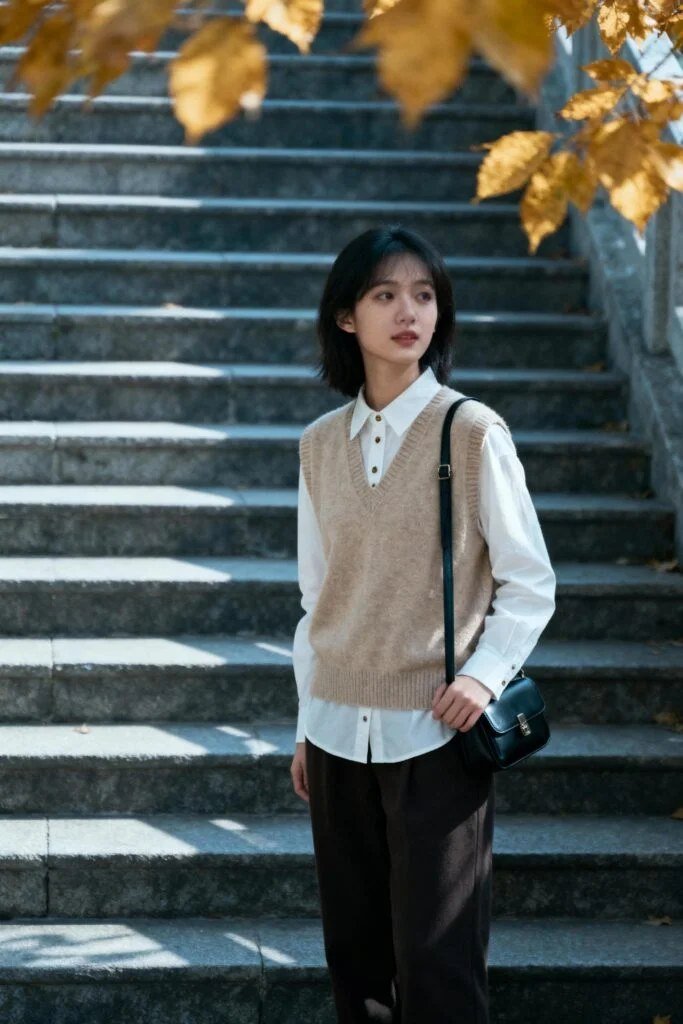
Layering is the answer to British weather — the 8°C morning, 14°C afternoon, freezing office, overheated pub evening. In theory. In practice, many attempts end with the dreaded Michelin-man silhouette: bulky, shapeless, and somehow still cold. Learning how to layer clothes without looking bulky is a genuine skill, and it’s mostly about fabric choices and proportions rather than owning expensive technical gear. So, How do I layer clothes without looking bulky? Here’s what actually works.
How do I Layer Clothes without Looking Bulky — The principle: thin, warm, fitted — in that order
Bulk comes from thick layers stacked on thick layers. The fix is counterintuitive: multiple thin layers are warmer than one thick layer (trapped air between layers insulates), and they look dramatically slimmer. The ideal layering stack:
- Base layer: thin and fitted. A thermal top, a fitted long-sleeve tee, or a thin merino layer. This sits against the skin, so it should be smooth and close-fitting — no bunching. Uniqlo Heattech or merino thermals are the gold standard here: paper-thin, seriously warm.
- Mid layer: the insulation. A fine-knit jumper, a thin fleece, or a lightweight down gilet. This is the warmth engine. Fine knits (merino, cashmere-blend) give far more warmth per millimetre than chunky knits.
- Outer layer: the shield. Your coat — doing the wind and rain work so the layers underneath only handle warmth. See our winter coat guide for choosing one with room for all this.
Three thin layers beat one thick jumper every time — warmer, slimmer, and adjustable through the day (peel the mid-layer in the overheated office, add it back for the commute).
Fabric is everything
The bulky look is almost always a fabric problem. These fabrics give maximum warmth with minimum volume:
- Merino wool: warm, breathable, odour-resistant, and incredibly thin for its insulation. A merino base layer + merino jumper is barely thicker than a T-shirt but handles real cold.
- Cashmere and cashmere blends: the luxury option — very warm, very thin. Blend versions (cashmere-merino) are affordable and nearly as good.
- Technical thermals: Heattech-style synthetic layers are astonishingly effective for the price and thickness.
- Down/synthetic gilets: a thin gilet as a mid-layer adds serious core warmth with zero sleeve bulk — the secret weapon of good layerers.
And the fabrics to be careful with: chunky cable knits (gorgeous, but one is enough — never layer chunky on chunky), thick sweatshirts under fitted jackets (the bunching is inevitable), and anything with too much structure under something else structured.
Proportions: the anti-bulk rules
- Fitted underneath, relaxed on top. Each layer should be slightly looser than the one beneath it. Tight base, easy mid, relaxed outer. Reversing this (baggy underneath, fitted on top) creates the stuffed-sausage effect.
- Mind the lengths. Stagger hemlines deliberately — a shirt peeking below a jumper below a jacket looks intentional; everything ending at the same point looks lumpy. The visible-layer trick (collar, cuffs, hem each showing a different layer) is what makes layering look like style rather than survival.
- Define the waist. Bulk accumulates visually at the middle. A belt over layers, a tucked-in base layer, or a cropped outer layer all restore shape. This matters especially with oversized jumpers — volume on top needs definition somewhere.
- Keep the bottom half slim. Voluminous top + voluminous bottom = tent. If you’re layered up top, go slimmer below (skinny jeans, tailored trousers, leggings with boots).
Layering for specific scenarios
The office: base layer + fine-knit jumper + blazer. Professional, warm, and you can lose the blazer without looking undressed. Our blazer guide covers the outer piece.
Outdoor days: thermal base + fleece or down mid + waterproof outer. Function over fashion, but the thin-layer principle keeps it from looking like expedition gear.
Evenings out: a slip dress or jumpsuit over a thin roll-neck, with tights and boots — layering that looks deliberate and chic rather than bundled. Add a coat and scarf; remove indoors to reveal the actual outfit.
Layering for petite and plus frames
Layering advice is often written for one body type. Here’s how the principles adapt:
Petite frames. The risk: layers overwhelm a smaller frame, making you look bundled rather than styled. The fixes: keep layers cropped or fitted — a cropped jacket over a fitted base shows your shape; favour three thin layers maximum (more than that swamps); use monochrome or tonal dressing (one colour head-to-toe elongates — the eye travels uninterrupted); show ankles and wrists (small windows of skin break up the bundled effect); and choose shorter outer layers — a hip-length jacket beats a knee-length coat for proportion on petite frames. Vertical details (long necklaces, V-necks, vertical stripes) all add visual height. The principles of layered clothing are universal, but the volume budget is smaller — spend it carefully.
Plus frames. The risk: layers add visual bulk where you don’t want it. The fixes: structured outer layers — a tailored coat or blazer over soft layers gives definition that drapey layers alone don’t; dark, matte fabrics for the outer layer (they recede visually); define the waist — a belt over layers, or a tucked base layer, prevents the tent effect; V-necks and open necklines elongate the torso (crew necks stacked on crew necks shorten it); longer outer layers — a knee-length coat creates a long vertical line that’s elegant and slimming; and avoid bulky knits as mid-layers — fine knits give the warmth without the volume. The curvy dress guide’s principles (define the waist, follow the body’s lines) apply to layering too.
Universal truths. Whatever your frame: the fitted-under-loose rule holds (each layer slightly looser than the one beneath); the thinnest warmest fabrics (merino, thermals) are everyone’s friend; and confidence in the outfit matters more than any rule. These adaptations aren’t restrictions — they’re optimisations. The goal is the same for every body: warm, comfortable, and looking like you meant it.
The practical takeaway
Layer without bulk by choosing thin, warm fabrics (merino, thermals, fine knits), stacking fitted-under-loose, staggering hemlines, defining the waist, and keeping the bottom half slim. Multiple thin layers are warmer and slimmer than one thick one — and the ability to peel layers through the day is the real luxury. Master this and British weather stops being a problem and starts being a styling opportunity.

Leave a Reply