
It’s 7:30 on a damp Tuesday morning. You pull out of your street, touch the brakes at the first junction, and out comes a high-pitched squeal loud enough to turn heads. Embarrassing? Absolutely. Dangerous? Sometimes. Worth understanding? Definitely. A squealing car is one of the most common complaints heard in UK garages, and while the cause is often mundane, the range of possibilities runs from “completely harmless” to “book a garage today”. Here’s how to tell which one you’ve got.
The morning squeal: usually just moisture
Let’s start with the sound most British drivers know best: a light squeal or squeak during the first few brake applications of the day, which fades after a few stops. In our climate, this is almost always surface rust. Overnight, moisture in the air forms a microscopically thin layer of rust on the brake discs. The first few times the pads sweep across, they scrape it off — and that scraping squeals. By the time you’ve driven a mile, the discs are clean and the noise is gone.
This is entirely normal and harmless. It’s more noticeable after rain, in coastal areas where salt air accelerates the film, and on cars that sit unused for days. If the squeal reliably disappears within the first few stops and braking feels normal, you can file it under “British weather” and carry on. No garage visit required.
Worn brake pads: the classic warning squeal
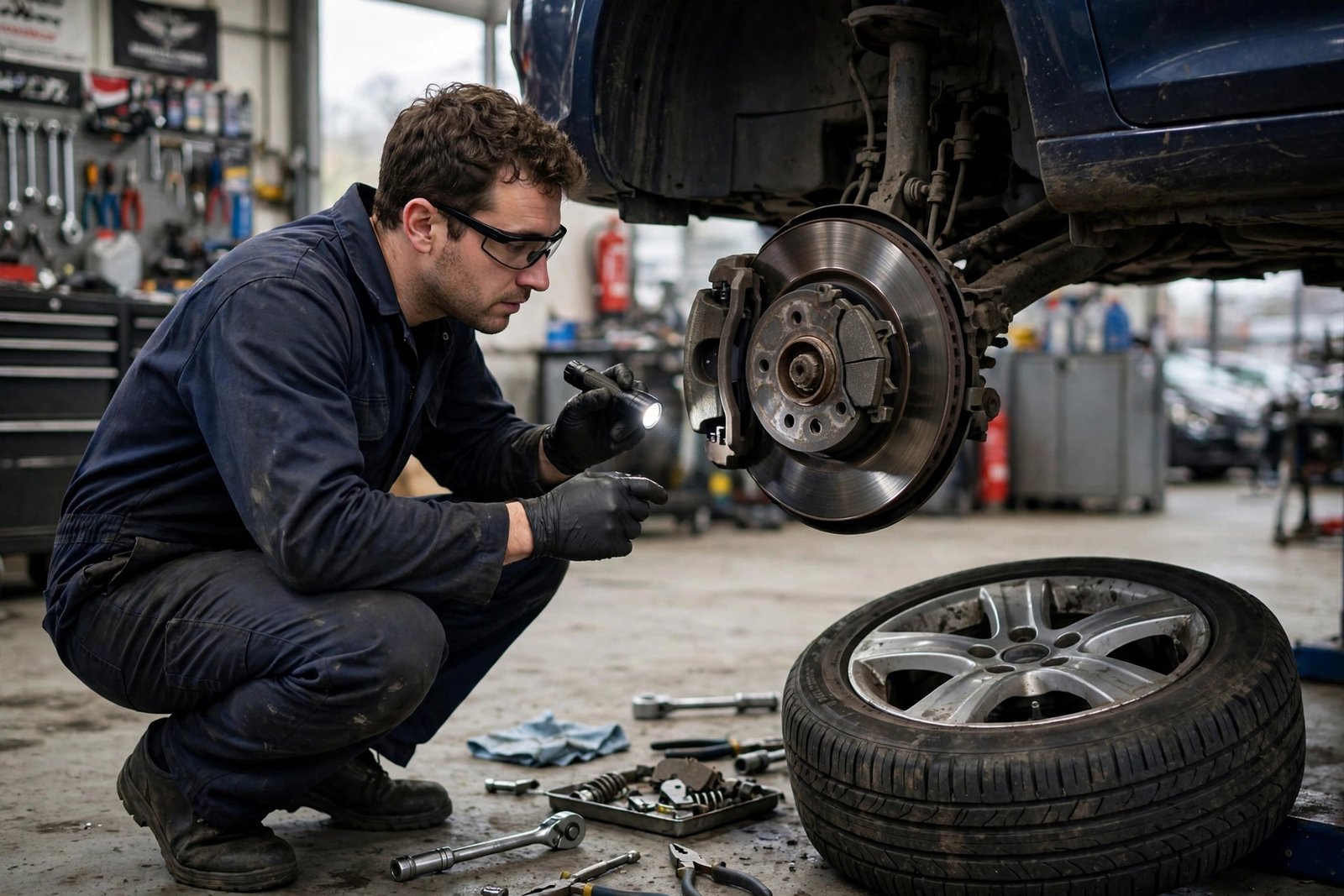
Brake pads are designed to tell you when they’re dying. Most have a small metal wear indicator tab engineered to contact the disc — and shriek — when the pad material wears down to about 2–3mm. It’s a deliberate, impossible-to-ignore alarm, and it’s the single most common cause of persistent squealing.
How to tell: the squeal happens every time you brake (not just in the morning), it’s high-pitched and consistent, and braking may feel slightly less sharp than usual. Some cars also show a dashboard warning light via an electronic wear sensor. Pads typically last 25,000–50,000 miles in UK driving — less for town drivers who brake constantly. Replacement costs £80–£180 per axle at an independent garage, and it’s not a job to defer: worn pads score the discs, turning a cheap pad swap into a discs-and-pads job. The RAC’s brake advice explains the wear signs worth watching for.
Glazed pads and discs: the motorway driver’s squeal
Here’s a cause many drivers haven’t heard of. Brake pads work by transferring a thin film of friction material to the disc. But repeated light braking — the kind you do in crawling motorway traffic or on long gentle descents — can overheat the pad surface and “glaze” it: the friction material crystallises into a hard, shiny layer. Glazed pads squeal because they’re skidding across the disc instead of gripping it, and braking performance drops noticeably.
The fix is usually to replace the pads (and sometimes skim or replace the discs), but the prevention is free: brake firmly and decisively when you need to, rather than dragging the brakes lightly for long periods. On long descents, use engine braking — a lower gear — to spare the brakes entirely. Drivers planning long touring drives through hilly country should know this technique anyway; it saves brakes, fuel and nerves.
Dust, debris and cheap pads
Sometimes the cause is embarrassingly simple: brake dust and road grit trapped between pad and disc. This tends to produce an intermittent squeak rather than a constant squeal, and it often clears on its own. A related culprit is cheap aftermarket pads. Budget pads from no-name brands are notorious for squealing — the friction compound is harder and noisier, and they often lack the anti-squeal shims that quality pads include. If your squeal started right after a budget brake job, the pads themselves are the prime suspect. As with most things on a car, the cheapest option is rarely the cheapest in the end.
When squealing means something serious
Most squeals are benign, but a few demand prompt attention. Book a garage quickly if the squeal comes with any of these:
- Grinding or growling underneath the squeal. That suggests the pads are worn through to metal, and metal-on-metal contact is destroying your discs with every stop.
- The car pulls to one side when braking. This can indicate a sticking caliper or contaminated pads on one side — a genuine safety issue.
- A squeal that turns into a squeak at constant speed, without braking. This can mean a wear indicator in constant contact, or a stone trapped in the brakes.
- Vibration through the pedal or steering wheel along with the noise. That combination points to disc problems — uneven wear or warping — on top of whatever’s squealing.
- A brake warning light on the dashboard. Never ignore this, whatever the noise sounds like.
Squeals that aren’t the brakes at all
Worth knowing: not every under-car squeal is brake-related. A squealing that changes with engine speed rather than braking often comes from the auxiliary drive belt — the rubber belt powering the alternator, air conditioning and power steering. Belt squeal is typically loudest on cold starts and when you switch on the air con or turn the steering to full lock. A worn belt costs £60–£120 to replace and, if it snaps, you’ll lose power steering and battery charging in one go. Wheel bearings produce more of a droning hum that changes when you weave gently left and right. If your “brake squeal” doesn’t change when you brake, look elsewhere.
What to do: a practical sequence
First, characterise the noise. Morning-only and fading? Almost certainly moisture — monitor it. Every time you brake, high-pitched and consistent? Worn pads — book a garage within a week or two. Started after a recent brake job? Suspect cheap pads — take it back and ask what was fitted. Squeal plus grinding, pulling, vibration or a warning light? Book urgently and drive gently until then.
When you do visit a garage, describe the noise precisely: when it happens, whether it’s braking-related, and whether anything else has changed. “It squeals every time I brake, started two weeks ago, pedal feels normal” gets you a faster, cheaper diagnosis than “it’s making a noise”. And if you’re the sort who likes to understand what you’re paying for before the invoice lands, a family day out costs less than most people think — unlike brake repairs, which reward catching early.
One more practical note: some drivers try “brake cleaner” sprays or copper grease as DIY fixes. Brake cleaner can temporarily quiet dust-related squeaks, but never spray anything on discs as a substitute for diagnosis, and never put any lubricant on friction surfaces. Brakes are not a system for improvisation. The MOT test will assess your brakes annually anyway — but waiting for the MOT to discover worn pads is a false economy.
Conclusion
A squealing car in Britain is most often just telling you about overnight moisture on the discs — the automotive equivalent of morning throat-clearing. But a persistent, every-brake squeal is your pads’ designed-in cry for help, and it deserves a garage visit before it becomes a discs-and-pads bill. Learn to distinguish the morning-only squeak from the constant warning squeal, never ignore grinding or pulling, and remember that quality pads fitted properly are quieter, safer and cheaper over time than the budget alternative. Your brakes are trying to communicate — the squeal is the message, and now you can read it.
Frequently Asked Questions
Why does my car squeak only in the morning?
Overnight moisture forms a thin layer of surface rust on the brake discs. The first few brake applications scrape it off, which squeaks. It should disappear within a few stops — this is normal in the UK climate.
How long can I drive with squealing brakes?
If it’s just morning moisture, indefinitely. If it’s the wear-indicator squeal of dying pads, get them checked within a week or two — worn pads damage discs, and the repair bill grows the longer you wait.
Can cheap brake pads cause squealing?
Yes — it’s one of the most common causes. Budget pads often use harder friction compounds and lack anti-squeal shims. If squealing started immediately after a cheap brake job, the pads are the likely culprit.
Is a squealing drive belt dangerous?
A squealing auxiliary belt isn’t immediately dangerous, but a snapped belt means instant loss of power steering, alternator charging and often air conditioning. Replace a noisy belt promptly — it’s a £60–£120 job.

Leave a Reply