
How can you make small rooms feel bigger? Whether it’s a box bedroom, a bijou living room or a London flat where the “dining area” is a table wedged by the door — small rooms are a fact of British life. You can’t change the floor plan (well, mostly), but you can absolutely change how spacious a room feels. It’s part optical illusion, part ruthless editing. Here’s what actually works.
The big principles
Three things make rooms feel small: visual clutter, blocked light, and furniture that fights the space. Everything below addresses one of those three. And the single highest-impact move — before any decorating — is decluttering. A small tidy room feels bigger than a large messy one, every time. See decluttering your home and habits for a tidy home first; they’re the foundation.
How can I make small rooms feel bigger? The proven tricks
1. Light colours (but not necessarily white)
Pale walls reflect light and visually recede. But stark white can feel cold and clinical — warm whites, pale greys, soft sages and muted blues all expand a room while feeling cosier. The real trick: paint walls, skirting and ceiling the same colour (or very close). Removing the visual “edges” where wall meets ceiling makes boundaries blur and the room feel larger.
2. Mirrors — the oldest trick because it works
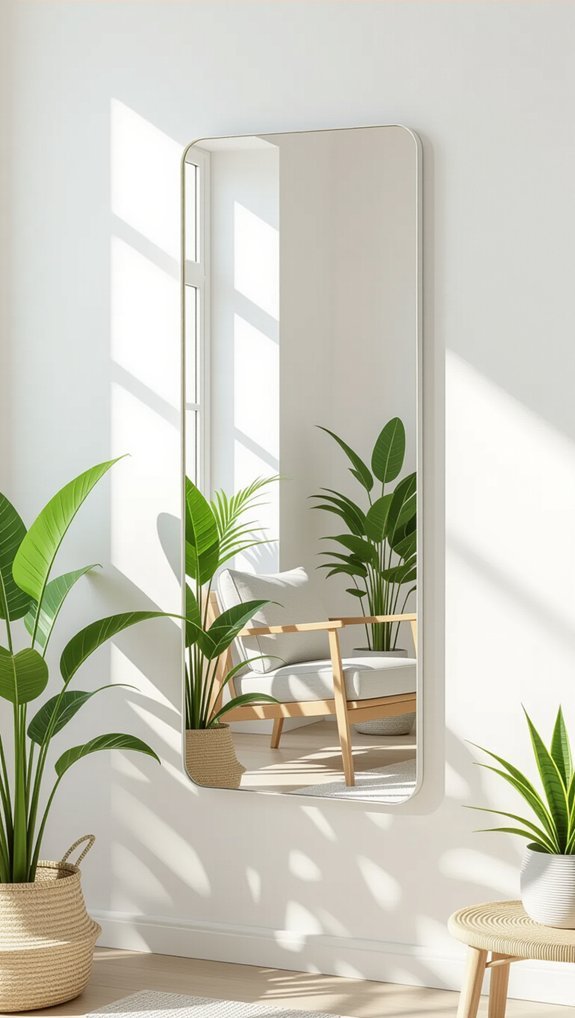
A large mirror opposite or adjacent to a window doubles the light and the perceived depth. Go big: one large mirror beats several small ones. A full-length leaning mirror, a mirrored wardrobe door, or a gallery of mirrors on one wall — all effective. Just avoid placing mirrors where they reflect clutter (they double that too).
3. Furniture: fewer, lighter, legged
- Less furniture, better chosen. One comfortable two-seater beats a cramped three-piece suite. Edit ruthlessly.
- Legs, not bulk. Sofas and chairs on legs show floor underneath, which reads as space. Blocky furniture sitting flat on the floor visually fills the room.
- Right-sized, not small-sized. Counterintuitively, a few properly-sized pieces feel better than lots of tiny “flat-friendly” furniture, which can look like a doll’s house.
- Glass and lucite: glass coffee tables and clear chairs take up visual space without blocking sightlines.
- Multifunctional: storage ottomans, sofa beds, extendable tables, beds with drawers — every piece should earn its footprint twice.
4. Maximise light
- Sheer curtains or blinds instead of heavy drapes; hang curtains high and wide so windows look larger.
- Keep windowsills clear — light needs a clear path.
- Layered lighting: multiple small light sources (lamps, wall lights) instead of one harsh overhead. Lit corners feel like they extend the room.
5. Use vertical space
Small footprint doesn’t mean small storage. Tall bookcases, high shelves, over-door hooks, wall-mounted desks and TV brackets all free floor space. The eye travels up, and the room feels taller. Just keep high shelves tidy — clutter at eye level and above is very visible.
6. Create flow, not barriers
- Clear pathways: you should be able to walk through without sidestepping. If you can’t, something needs to go.
- Rugs that fit: a rug that’s too small visually chops the room up. Go as large as the space allows — front legs of furniture on the rug anchors the zone.
- Consistent flooring between rooms (or at least similar tones) makes spaces flow into each other.
- Pull furniture slightly off walls — counterintuitive, but a few centimetres of breathing room behind a sofa reads as spaciousness, not waste.
Small-room mistakes to avoid
- Too many small decorative objects — visual clutter shrinks rooms fast. Fewer, larger pieces.
- Dark, heavy curtains that eat the window.
- Pushing everything against walls in the belief it “saves space” — it actually emphasises the room’s boundaries.
- Busy, large-scale patterns on walls — small-scale or plain is safer (though one bold feature can add depth if done well).
Specific rooms
- Small bedroom: bedroom calming tips apply doubly — plus under-bed storage and wall-mounted bedside lights instead of table lamps.
- Small kitchen: cupboard organisation, clear counters, light colours.
- Small bathroom: large mirror, glass shower screen instead of curtain, wall-hung storage.
Small-room FAQs
Does dark paint really make rooms smaller? Not necessarily — dark colours can add depth and cosiness, and a dark small room done well feels intimate rather than cramped. The rule is really about contrast: high contrast between walls, ceiling and trim chops up the space; low contrast (even in dark tones) lets it flow. A small room in deep green with matching trim can feel surprisingly spacious.
What’s the one change with the biggest impact? Decluttering, by a mile. Then a large mirror. Then lighting. Those three transform more rooms than all the paint and furniture combined — and the first one is free.
How do I make a small room feel bigger on a budget? The free/cheap moves: declutter ruthlessly, rearrange furniture for clear pathways, take down heavy curtains (or tie them back fully), move the mirror you already own opposite the window, and paint one wall a light colour with leftover paint. Under £50 total, transformative results.
Should I use small furniture in a small room? This is the great debate. The answer: right-sized, not tiny. A properly proportioned two-seater sofa beats both a cramped loveseat (uncomfortable, doll’s-house effect) and an oversized three-seater (eats the room). Measure the room, measure the furniture, and leave 75cm+ for main walkways.
Do rugs make small rooms look smaller? Only if they’re too small. A rug that’s too little visually fragments the floor; one that’s large enough to anchor the furniture unifies it. When in doubt, go bigger — or skip the rug entirely (bare floor reads as continuous space).
Room-by-room quick reference
- Living room: mirror opposite window, legged sofa, one large rug, vertical storage, layered lamps.
- Bedroom: bed with storage underneath, wall-mounted lights, light bedding, clear surfaces — see bedroom guide.
- Kitchen: clear counters, light colours, organised cupboards, under-cabinet lighting.
- Bathroom: big mirror, glass shower screen, wall-hung vanity, light tiles.
- Hallway: mirror, good lighting, minimal furniture — hallways set the spaciousness tone for the whole home.
The practical takeaway
To make small rooms feel bigger: declutter first, use light cohesive colours (walls/skirting/ceiling matched), add a large mirror near a window, choose fewer legged pieces of furniture, maximise natural light with sheer window treatments, exploit vertical space, and keep pathways clear. Avoid visual clutter and heavy window treatments. Start with the declutter and one large mirror this weekend — those two alone transform most small rooms. The design principles overlap with mainstream UK interiors advice if you want more inspiration.




Leave a Reply