
How Can I Reduce My Cholesterol Without Medication?
Your GP says your cholesterol is “a bit high” and suggests lifestyle changes before statins. You nod — then realise you have no idea what actually moves the needle. If you’re asking how can i reduce my cholesterol without medication, here’s the evidence-based answer: several diet and lifestyle changes lower LDL (“bad”) cholesterol meaningfully — some rivalling low-dose statins. None of them is “avoid all fat and eat sadness.” Let’s separate what works from what doesn’t.
First: Understand What You’re Lowering
Quick primer: LDL cholesterol (“bad”) drives artery plaque — this is the number to lower. HDL (“good”) helps clear it — higher is better. Triglycerides (blood fats) matter too, especially with metabolic issues. Total cholesterol alone is a blunt measure; ask your GP for the full lipid breakdown. Lifestyle changes typically cut LDL by 10–20% — significant, though severe elevations usually need medication alongside.
1. Eat Soluble Fibre Daily (The Biggest Dietary Lever)
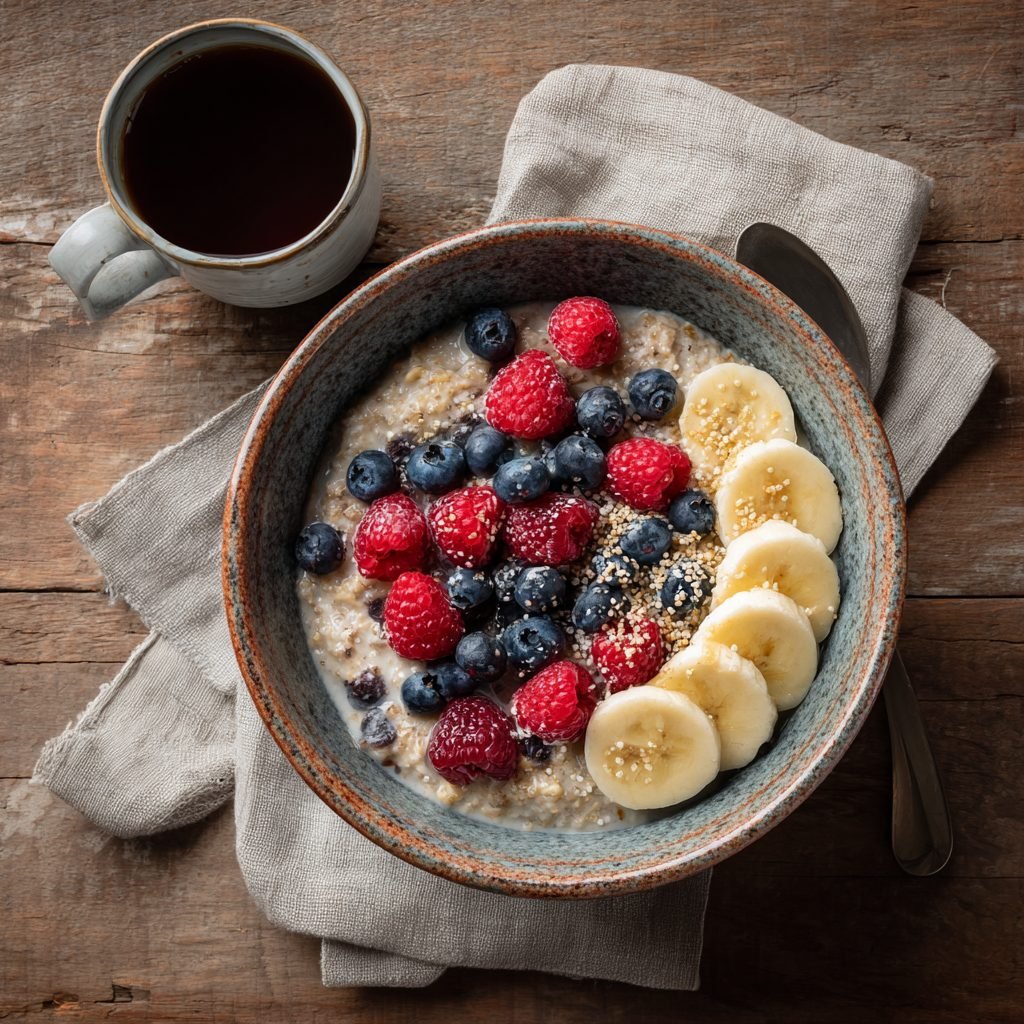
Soluble fibre binds cholesterol in the gut and removes it — it’s the single most effective dietary intervention. Targets: oats (a daily bowl of porridge — the beta-glucan effect is well proven), beans and lentils, barley, fruit (apples, pears, citrus), vegetables, and psyllium husk (a teaspoon in water daily; the evidence is strong and it’s cheap). Aim for 25–30g total fibre daily; most Britons get barely half that.
2. Swap Saturated Fats for Unsaturated
It’s not “fat is bad” — it’s which fat. Replacing saturated fats (butter, fatty meat, cheese, coconut oil, pastries) with unsaturated fats (olive oil, rapeseed oil, nuts, avocados, oily fish) reliably lowers LDL. You don’t need to eliminate cheese; you need the balance to shift. Practical swaps: butter → olive/rapeseed oil for cooking; fatty mince → lean or turkey; cream → yoghurt-based sauces; biscuits → nuts.
3. Eat Oily Fish Weekly (and Nuts Daily)
Oily fish (salmon, mackerel, sardines, trout) 1–2 times weekly: omega-3s lower triglycerides and support overall cardiovascular health. Nuts — a small handful (30g) of almonds, walnuts or pistachios daily — consistently improve lipid profiles in trials. Walnuts have the best evidence of the bunch.
4. Consider Plant Sterols/Stanols
Fortified spreads, yoghurts and drinks containing plant sterols/stanols (Benecol, Flora ProActiv ranges) block cholesterol absorption — 2g daily lowers LDL ~10% in trials. They’re the closest thing to a “functional food” with statin-adjacent evidence. Not cheap, but effective as part of the package.
5. Cut the Real Villains: Trans Fats and Excess Sugar
Trans fats (partially hydrogenated oils — largely removed from UK foods but check labels on some pastries and fried products) raise LDL and lower HDL — uniquely bad. Excess sugar and refined carbs raise triglycerides and lower HDL; sugary drinks are the worst offenders. You don’t need a “low-carb” diet — just less of the white, sweet, processed stuff.
6. Exercise Regularly (HDL’s Best Friend)
Aerobic exercise raises HDL and lowers triglycerides reliably; its direct LDL effect is modest but real. 150 minutes of moderate activity weekly (brisk walking counts) plus some resistance training is the target. Exercise also helps weight, blood pressure and insulin sensitivity — the whole metabolic package improves together. (Need a plan? Our AI workout plan guide builds one in minutes.)
7. Lose Weight If Overweight
Even 5–10% weight loss meaningfully improves cholesterol, especially triglycerides. The mechanism matters less than the result — whatever sustainable eating pattern achieves it (Mediterranean-style eating has the best cardiovascular evidence overall).
8. Quit Smoking and Moderate Alcohol
Smoking lowers HDL and damages artery walls — quitting improves lipids within weeks. Excess alcohol raises triglycerides sharply; moderation (under 14 units/week, spread out) is the target.
9. Drink Green Tea (Modest Bonus)
Small but consistent evidence for modest LDL reduction. It’s not going to replace oats and exercise, but as a coffee alternative it pulls its (small) weight.
10. Manage Stress and Sleep
Chronic stress and poor sleep worsen lipid profiles through hormonal pathways (cortisol, insulin resistance). Not the primary lever, but part of the picture — see our guides to improving sleep naturally and wellbeing tools.
When Lifestyle Isn’t Enough (No Shame In It)
Honest talk: genetics dominate cholesterol for many people. Familial hypercholesterolaemia affects ~1 in 250 — no amount of porridge fixes it. If lifestyle changes for 3–6 months don’t bring LDL into range, or if your overall cardiovascular risk is high (your GP can calculate it), statins are effective, safe for the vast majority, and nothing to be embarrassed about. The goal is healthy arteries, not medication avoidance as an identity. The NHS high cholesterol guidance covers when treatment is recommended. Lifestyle + statin beats either alone — they’re complements, not competitors.
A Cholesterol-Friendly Weekly Shop (UK Supermarket Edition)
Advice is abstract; shopping lists are concrete. Here’s a week’s cholesterol-lowering basket from any major UK supermarket: Grains: porridge oats (the big bag — cheapest health food in Britain), wholemeal bread, brown rice, wholewheat pasta. Proteins: tinned sardines and mackerel, a salmon fillet or two, chicken breast, turkey mince, eggs, red lentils, chickpeas, kidney beans (tinned are fine — rinse them). Fats: extra virgin olive oil, a bag of mixed unsalted nuts, a tub of Benecol/Flora ProActiv spread if your budget runs to it. Fruit & veg: apples, pears, bananas, berries (frozen are excellent and cheap), citrus, plus whatever veg is on offer — aim for variety across the week, with leafy greens twice.
What stays on the shelf: butter (mostly), fatty mince, processed meats, pastries, biscuits, crisps, sugary cereals, coconut oil (the “health halo” fat that’s 90% saturated). The budget reality: this shop costs no more than a standard one — oats, lentils, tinned fish and frozen berries are among the cheapest foods available; the money saved skipping biscuits and ready meals funds the nuts and olive oil. One rule for the whole week: if it comes in crinkly packaging with a long ingredient list, it probably doesn’t help your cholesterol. Shop the perimeter (fresh produce, fish counter, dairy), not the aisles. Your arteries — and your wallet — will thank you.
Practical Takeaway
Reducing cholesterol without medication means: soluble fibre daily (oats, beans, psyllium — the biggest lever), swapping saturated for unsaturated fats, oily fish and a handful of nuts, plant sterol products, cutting trans fats and excess sugar, 150 minutes of weekly exercise, modest weight loss if needed, and no smoking. Expect 10–20% LDL reduction — meaningful, but not always enough: get retested after 3–6 months, and take statins without shame if genetics or risk level demand it. The win is healthy arteries, however you get there.




Leave a Reply