
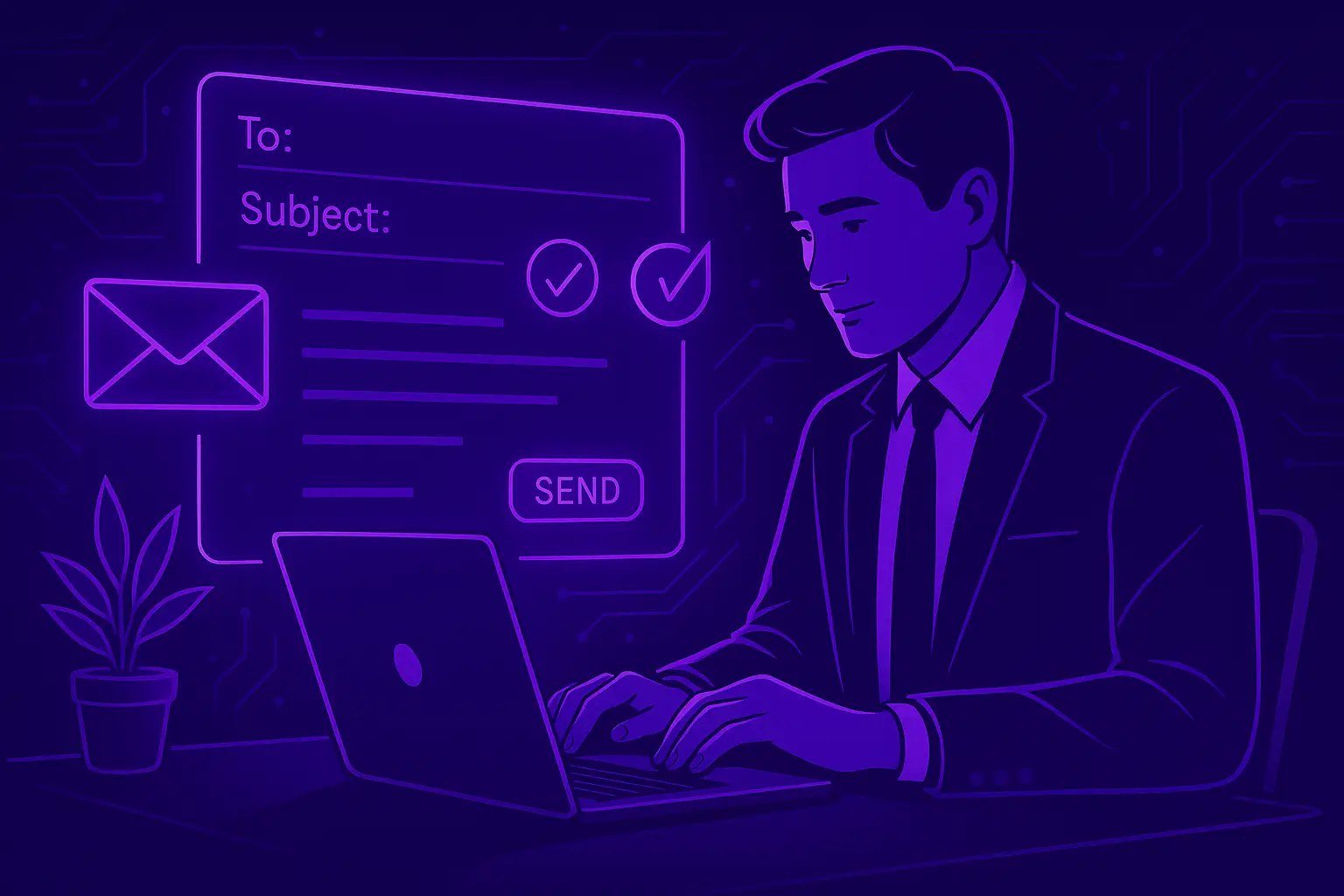
How Can I Use AI to Write Better Emails?
Here’s a confession: I used to spend an embarrassing amount of time staring at blank email drafts. Not the easy ones — the tricky ones. The “chase an overdue invoice without sounding aggressive” ones. The “decline this opportunity but keep the door open” ones. The “explain a delay that’s partly my fault” ones. If you’re wondering how can i use ai to write better emails, it’s probably one of those emails sitting in your drafts right now that’s driving the question. Good news: this is one of the things AI is genuinely excellent at — with the right approach.
The Right Workflow: You Direct, AI Drafts, You Edit
The biggest mistake people make is asking AI to “write an email about X” and sending whatever comes back. That produces generic, slightly off emails that erode trust. The workflow that actually works:
- You provide the raw material: the facts, the context, what you want to happen. Three rough bullet points are plenty.
- AI produces a structured draft with a clear subject line, logical flow and appropriate tone.
- You edit for voice and accuracy: fix anything wrong, adjust anything that doesn’t sound like you, add the human touches AI can’t — the shared joke, the specific reference, the genuine warmth.
Think of AI as a very fast junior colleague who drafts well but doesn’t know your relationships. You’d never let a junior send a sensitive email unsupervised; don’t let AI either. The 3-minute edit is what separates “AI-assisted” from “AI-generated” — and recipients can feel the difference.
Prompts That Actually Work
Vague prompts get vague emails. The formula that works: context + recipient + goal + tone + constraints.
- “Draft a polite but firm email to a client whose £2,400 invoice is 21 days overdue. I want to preserve the relationship — they’re a good long-term client. Keep it under 120 words. Suggest a phone call to discuss.”
- “Write a concise email to my team announcing that Friday’s deadline has moved to Wednesday because of a client request. Acknowledge it’s short notice, explain the reason briefly, thank them. Warm, direct tone.”
- “Help me reply to a job applicant we won’t be hiring. They interviewed well and I’d like to keep them in mind for future roles. Genuine, not corporate.”
Notice each prompt includes the relationship context and the emotional goal — that’s what turns a generic draft into a useful one. For more on this craft, see our guide to writing good prompts for AI chatbots.
Specific Email Types, Sorted
Cold outreach and sales emails
AI is great at structure and terrible at personalisation — which is exactly backwards from what makes cold email work. Use AI for the skeleton (hook, value proposition, call to action), then add the personalisation yourself: the specific observation about their business, the genuine compliment, the relevant detail. An AI-written template with human-added personalisation outperforms both pure-AI and pure-human approaches.
Difficult conversations
Complaints, price increases, resignations, rejections — AI excels here because it stays calm and structured when you’re emotional. Draft when you’re frustrated, let AI produce the measured version, then sleep on it before sending. Some of the best “difficult” emails I’ve seen were AI-drafted and human-refined.
Routine emails
Meeting confirmations, follow-ups, status updates, thank-yous — let AI handle these almost entirely. Better yet, use built-in tools: Gmail’s “Help me write” and Outlook’s Copilot draft these in one click. Save your editing energy for emails that matter.
Long, complex emails
Give AI your rambling brain-dump and ask it to structure it: clear subject line, executive summary up top, details below, explicit next steps. This alone — turning a 400-word ramble into a scannable 150-word email — is worth the price of admission (which is free).
The Etiquette Rules
- Never send AI output unchecked. AI confidently invents facts — dates, figures, names. Verify every factual claim in every draft.
- Don’t use AI for truly personal messages. Condolences, apologies that matter, heartfelt thanks — if the recipient might suspect AI wrote it, the message is worse than useless. Write those yourself.
- Watch for AI tells. Overly formal openers (“I hope this email finds you well”), bullet-point everything, and suspiciously perfect grammar in someone known for typos. If your emails suddenly sound like a different person, dial it back.
- Keep confidential information out. Don’t paste sensitive commercial or personal data into AI tools — see our piece on whether it’s safe to share personal information with AI chatbots.
- Disclose where it matters. For routine business emails, no one expects a disclaimer. For anything where authorship matters (job applications, formal complaints, legal correspondence), AI assistance should be minimal and transparent.
Tools Worth Knowing
Beyond the general chatbots: Grammarly for tone and clarity checks on emails you’ve written; Superhuman or Shortwave for AI triage of heavy inboxes (see our guide to organising your inbox with AI); and the built-in AI in Gmail and Outlook, which is now good enough that many people need nothing else.
AI Emails in Regulated and High-Stakes Contexts
Most business emails are low-stakes. Some aren’t — and AI needs extra care there. Regulated industries (financial services, legal, healthcare): AI-drafted client communications may need compliance review, and some firms restrict which tools can touch client data. Check your firm’s policy before pasting anything into a public chatbot. Legal correspondence: AI can draft structure, but legal meaning lives in precise wording — have qualified eyes on anything creating obligations. HR and disciplinary emails: tone errors here have tribunal consequences; AI drafts need senior human review, always.
Formal complaints (to companies, ombudsmen, regulators): AI helps organise your points, but the complaint must be yours — specific dates, specific facts, your genuine words. Decision-makers discount anything smelling of template. And job applications: recruiters increasingly use AI-detection as a (flawed) filter — but more importantly, a cover letter that could have been written by anyone will be treated accordingly. The rule across all high-stakes email: AI for scaffolding, humans for substance, experts for anything with legal or career consequences. When the email truly matters, the three-minute edit becomes a thirty-minute review — and it’s worth every second.
If you send marketing emails, check the ICO rules on electronic marketing first.
Practical Takeaway
Using AI to write better emails means you supply the facts and the relationship context, AI supplies the structure and the first draft, and you always edit before sending — checking facts, adding your voice, and keeping truly personal messages human-written. Done right, you’ll clear your drafts folder in a third of the time and handle difficult emails with more grace, not less. Done wrong — pasting and sending unchecked — you’ll sound like everyone else’s chatbot. The three-minute edit is the whole game.




Leave a Reply