
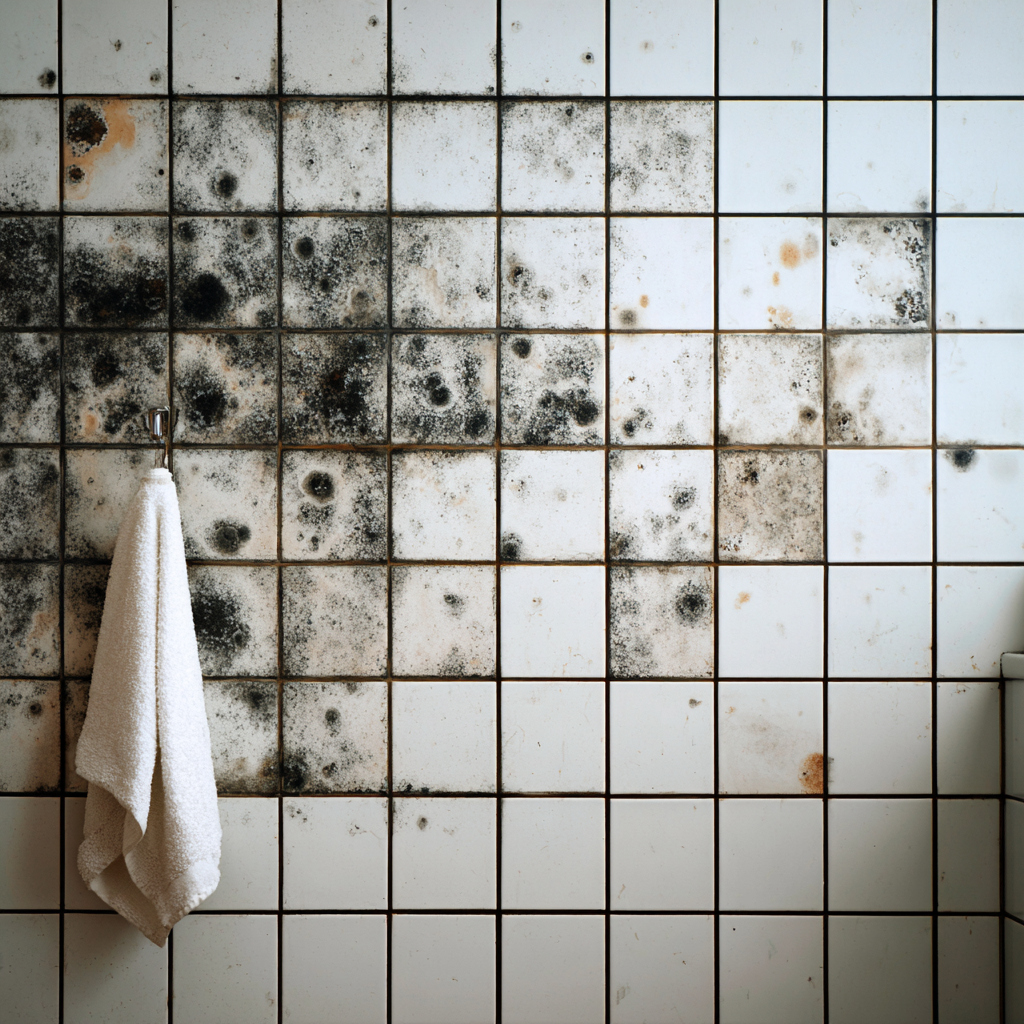
Black spots creeping across your bathroom ceiling aren’t just ugly — they’re a health issue and a warning sign. Here’s how to stop mould in the bathroom for good. Not just clean it (it’ll be back in weeks), but fix the causes so it doesn’t return.
Why bathrooms grow mould
Mould needs three things: moisture, warmth and something to feed on (soap scum, dust, even the paint). Bathrooms provide all three in abundance. Every shower pumps litres of water vapour into the air; if that moisture can’t escape, it condenses on cold surfaces — tiles, ceilings, windows — and mould moves in within 24–48 hours.
Understanding this is key: mould is a ventilation problem, not a cleaning problem. You can bleach it weekly and it’ll keep coming back until you fix the moisture.
Step 1: Remove existing mould safely
- Small areas (under 1m²): spray with a dedicated mould remover (Dettol Mould & Mildew Remover, HG Mould Spray — £4–£6) or white vinegar. Leave 30 minutes, scrub, rinse. Wear gloves and ventilate — the fumes are strong.
- On silicone sealant: if mould is in the silicone (black spots that won’t scrub off), no cleaner will fix it. Cut out the old silicone and replace it — see our regrouting guide for the silicone technique.
- On grout: scrub with a grout brush and mould remover. Badly stained grout may need a proper grout clean or regrouting.
- On ceilings/walls: wash with sugar soap, let dry, then repaint with anti-mould bathroom paint.
- Large areas (over 1m²) or mould that keeps returning despite ventilation: there may be a leak behind the tiles or in the wall. Get a professional to investigate — surface cleaning won’t fix a hidden leak.
Health note: if anyone in the household has asthma, allergies or a weakened immune system, take mould seriously and consider professional remediation for anything beyond small spots. The NHS guidance on mould and damp is worth reading.
Step 2: Fix ventilation (the actual cure)
This is the part that stops it coming back:
- Use the extractor fan — properly. It should run during every shower/bath and for 20 minutes after. If yours doesn’t have a timer/humidistat, fit one (£30–£50 for the fan, or a humidistat switch). Most people turn the fan off too soon — that’s the whole problem.
- Check the fan actually works. Hold tissue to it — it should stick. Old fans lose power; if yours is weak, replace it. Building regs require minimum extraction rates (15 l/s for bathrooms) — many cheap fans don’t achieve this.
- Check where it vents. It must vent outside, not into the loft. Fans venting into lofts cause condensation and rot up there instead.
- Open a window after showering if you have one — even 10 minutes makes a difference.
- Keep the bathroom door closed during and after showering, so moist air doesn’t migrate to cold bedrooms (where it’ll condense and grow mould there instead).
Step 3: Reduce moisture at the source
- Squeegee shower walls and glass after every shower. Thirty seconds, removes most of the water that would otherwise evaporate into the air.
- Hang towels to dry — preferably on a heated towel rail, which dries them fast. Damp towels draped over the bath are mould factories.
- Wipe down the bath/shower tray edges where water pools.
- Fix drips. A dripping tap or leaking shower adds constant moisture. Fix it.
- Don’t dry clothes in the bathroom without serious ventilation — a load of washing releases litres of water into the air.
Step 4: Make surfaces mould-hostile
- Anti-mould paint on ceilings and walls (£25–£35 for 2.5L) — contains fungicide that prevents regrowth. Repaint every 3–4 years.
- Mould-resistant grout and silicone when tiling or resealing.
- Keep it clean. Mould feeds on soap scum and body oils — regular cleaning with a bathroom cleaner removes its food source. A quick weekly wipe-down prevents 90% of regrowth.
- Dehumidifier for chronically damp bathrooms (no window, weak fan) — a small unit (£100–£150) running after showers transforms the worst bathrooms.
When mould indicates a bigger problem
Call a professional if: mould returns within days despite good ventilation, there’s a musty smell you can’t locate, paint is bubbling or plaster is soft (water behind the surface), or you see mould on walls adjoining the bathroom (suggests pipe leaks). Persistent damp can indicate failed tanking, leaking pipes or structural issues — all beyond DIY.
Renters: damp and mould are your landlord’s responsibility under the Homes (Fitness for Human Habitation) Act. Report it in writing, keep records, and contact your council’s environmental health team if they don’t act.
Mould on ceilings: the stubborn case
Ceiling mould is the most persistent bathroom mould — warm moist air rises, condenses on the coldest surface (usually the ceiling), and mould follows. Extra measures for ceilings:
- Improve air circulation: a ceiling fan or even a small oscillating fan after showering moves moist air away from the ceiling. It sounds odd; it works.
- Insulate above: if the bathroom is below a cold loft, the ceiling is colder than the walls — insulating the loft above the bathroom specifically reduces condensation on that ceiling.
- Anti-mould paint is essential here — standard paint on a bathroom ceiling is a mould invitation. Two coats of quality anti-mould paint, recoated every 3–4 years.
- Check for leaks above: mould concentrated in one ceiling patch (rather than spread across it) suggests water from above — a leaking pipe or roof issue, not condensation. Investigate before repainting.
When to call in a damp specialist
DIY handles condensation mould. Call a professional when:
- Mould covers more than 1m² or keeps returning within days despite good ventilation.
- There’s a musty smell with no visible source — suggesting hidden mould behind tiles or in walls.
- Plaster is soft, bubbling or discoloured — indicating water ingress, not condensation.
- You suspect a leaking pipe, failed shower tray seal or roof issue.
A damp survey (£150–£300) identifies the moisture source definitively — money well spent before committing to remedial work. And if you’re renting, report damp in writing to your landlord; persistent damp is their legal responsibility to fix.
The takeaway
To stop mould in the bathroom permanently: clean off what’s there, run the extractor fan during and 20 minutes after every shower, squeegee the shower, fix drips, and repaint with anti-mould paint. Ventilation is the cure; cleaning is just symptom management. Get the moisture out and the mould has nothing to live on.




Leave a Reply