
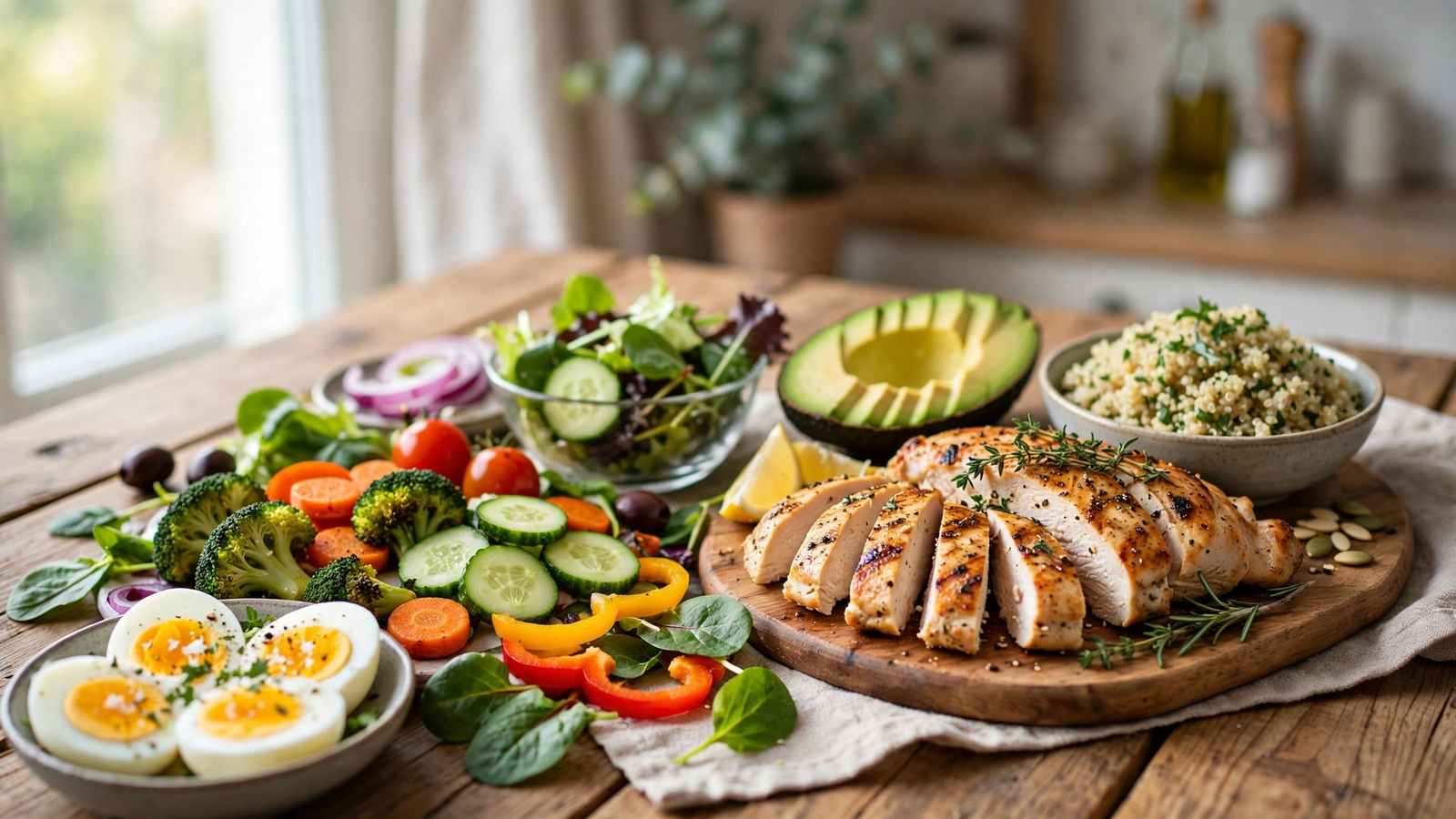
So how much calories for glute gain do you actually need? The short answer is a modest daily surplus plus plenty of protein — and the rest of this guide shows you exactly how to set both. Glutes are muscles, and muscles grow when two things are true: they are challenged with progressively heavier training, and the body has enough energy and protein to build new tissue. Training gets most of the attention, but calories are the fuel that makes growth possible. Eat too little and your glutes stay the same no matter how hard you train; eat far too much and most of the gain is fat. This guide shows you how to find the sweet spot.
The quick answer in detail
- Calorie target: maintenance calories + 250–500 kcal per day.
- Protein target: 1.6–2.2 g per kg of body weight per day.
- Rate of gain: about 0.25–0.5 kg per week on the scales.
- Training: 2–3 glute-focused sessions per week with progressive overload.
- Timeframe: visible changes typically take 8–12 weeks of consistency.
Everything below explains how to personalise these numbers to your body.
Step 1: Find your maintenance calories
Your maintenance level is the number of calories that keeps your weight stable. You cannot set a sensible surplus without knowing it. There are two ways to find it:
- Calculate an estimate. Use an online TDEE (total daily energy expenditure) calculator with your age, height, weight and activity level. As a rough guide, a moderately active woman of 65 kg might maintain on around 2,000–2,200 kcal, and a moderately active man of 80 kg on around 2,600–2,800 kcal — but individual variation is large, so treat calculators as a starting point. Our guide on how to calculate your TDEE walks through this step by step.
- Track for two weeks. Eat normally, weigh yourself 2–3 times per week under consistent conditions, and adjust: if weight is stable, you have found maintenance; if it is drifting, adjust by 200–300 kcal and repeat.
Step 2: Add a lean surplus of 250–500 kcal
Once you know maintenance, add your surplus:
- +250 kcal/day — a lean gain. Slower muscle growth, minimal fat gain. Best if you prefer to stay lean or gain weight easily.
- +400–500 kcal/day — a moderate surplus. Faster growth with some fat gain alongside. Best if you are a hard gainer or new to training.
Example: if you maintain on 2,100 kcal, your glute-gain target is 2,350–2,600 kcal per day. Beginners and those returning to training often grow well at the lower end, because new lifters build muscle more easily.
Avoid the “dirty bulk” trap of eating 1,000+ kcal over maintenance. Research consistently shows that beyond a moderate surplus, extra calories mostly become fat rather than extra muscle — and cutting that fat off later costs you time.
Step 3: Hit your protein target
Protein provides the building blocks for muscle. The evidence-based range for muscle growth is 1.6–2.2 g of protein per kilogram of body weight per day:
| Body weight | Daily protein (1.6 g/kg) | Daily protein (2.2 g/kg) |
|---|---|---|
| 60 kg | 96 g | 132 g |
| 70 kg | 112 g | 154 g |
| 80 kg | 128 g | 176 g |
| 90 kg | 144 g | 198 g |
Spread protein across 3–5 meals with 25–50 g each, since the body uses protein more efficiently in spaced doses. Good UK supermarket options include chicken breast, turkey mince, Greek yoghurt, eggs, tinned tuna, cottage cheese, tofu, lentils and protein powder from Boots, Holland & Barrett or supermarket own brands.
Step 4: Fill the rest with carbs and fats
After protein, the remaining calories come from carbohydrates and fats — the ratio matters far less than the totals. As a practical framework:
- Fats: around 0.8–1 g per kg of body weight daily (roughly 20–35% of calories) to support hormones and health.
- Carbohydrates: whatever calories remain. Carbs fuel hard training sessions, so lifters doing heavy hip thrusts and squats usually perform better with carbs on the higher side.
Base your diet on whole foods — the NHS Eatwell Guide is a solid UK reference for balanced eating — and let the surplus come from extra portions of nutritious food rather than ultra-processed snacks.
Sample day of eating: ~2,400 kcal for glute gain
For someone maintaining on ~2,100 kcal, here is what a 2,400 kcal day might look like using foods from Tesco or Sainsbury’s:
- Breakfast: 80 g porridge oats with 300 ml semi-skimmed milk, a banana and a tablespoon of peanut butter (~650 kcal, 25 g protein)
- Lunch: chicken breast wrap — large tortilla, 150 g chicken, salad, 30 g cheese, light mayo (~600 kcal, 50 g protein)
- Pre-workout snack: Greek yoghurt pot (150 g) with honey and berries (~250 kcal, 20 g protein)
- Dinner: 150 g salmon fillet, 250 g cooked rice, stir-fried vegetables in a little oil (~650 kcal, 40 g protein)
- Evening: 250 ml milk with a scoop of whey or a handful of nuts (~250 kcal, 20 g protein)
Total: roughly 2,400 kcal and 155 g protein. Adjust portions up or down to hit your own numbers. For more on protein targets, see how much protein per day you need to build muscle.
Training matters as much as calories
Calories without the right training build fat, not glutes. The essentials:
- Train glutes 2–3 times per week with at least one rest day between sessions.
- Prioritise compound lifts: hip thrusts, Romanian deadlifts, squats, lunges and step-ups. These move the most weight through the glutes.
- Apply progressive overload: gradually add weight, reps or sets over weeks. If you lifted the same as last month, your glutes have no reason to grow.
- Eat around training: a protein- and carb-containing meal 2–3 hours before and after training supports performance and recovery.
Beginners should start with bodyweight and light dumbbell versions to learn form first — our roundup of the best glute exercises for beginners is a good starting point.
Common mistakes that stall glute growth
- Eating at maintenance or in a deficit while expecting growth. A small surplus is non-negotiable for most people.
- Too little protein. Hitting calories with mostly carbs and fats leaves muscle-building potential on the table.
- Dirty bulking. A 1,000 kcal surplus of takeaways builds fat far faster than muscle.
- Programme hopping. Switching routines every two weeks prevents progressive overload. Stick with one programme for 8–12 weeks.
- Poor sleep. Muscle is built during recovery; consistently sleeping under 7 hours blunts growth and raises hunger hormones.
- Weighing daily and panicking. Weight fluctuates with water, food and hormones. Track the weekly average trend instead.
If you want a deeper look at balanced nutrition principles, the British Nutrition Foundation publishes clear, evidence-based guidance for UK readers.
Frequently asked questions
Can I grow my glutes in a calorie deficit?
Beginners and people with higher body fat can sometimes build muscle while losing fat (body recomposition), but it is slow and unreliable. For dependable glute growth, a small calorie surplus works far better for most people.
How long until I see glute results?
Strength gains often appear within 3–4 weeks, but visible size changes typically need 8–12 weeks of consistent training and eating. Take progress photos monthly in the same lighting — the mirror lies day to day, photos tell the truth month to month.
Do I need supplements for glute gain?
No. Creatine monohydrate (3–5 g daily) has good evidence for supporting strength and muscle, and protein powder is convenient — but neither replaces a proper calorie surplus and training programme. Everything else is optional.
What if I am gaining weight too fast?
If the scales climb more than about 0.5 kg per week for several weeks, trim 150–200 kcal from your daily target. If strength is stalling and weight is static, add 150–200 kcal. Adjust every 2–3 weeks based on the trend, not single weigh-ins.
Will eating more just make my stomach bigger?
Some fat gain alongside muscle is normal in a surplus, and where your body stores it is largely genetic. Keeping the surplus modest (250–500 kcal) and training hard directs the majority of the gain toward muscle. A short cutting phase later can remove any extra fat if you want.
To sum up: find your maintenance, add 250–500 kcal, eat 1.6–2.2 g of protein per kilo, train glutes hard 2–3 times weekly, and give it 12 weeks. That simple formula is what actually builds glutes — everything else is detail.




Leave a Reply