
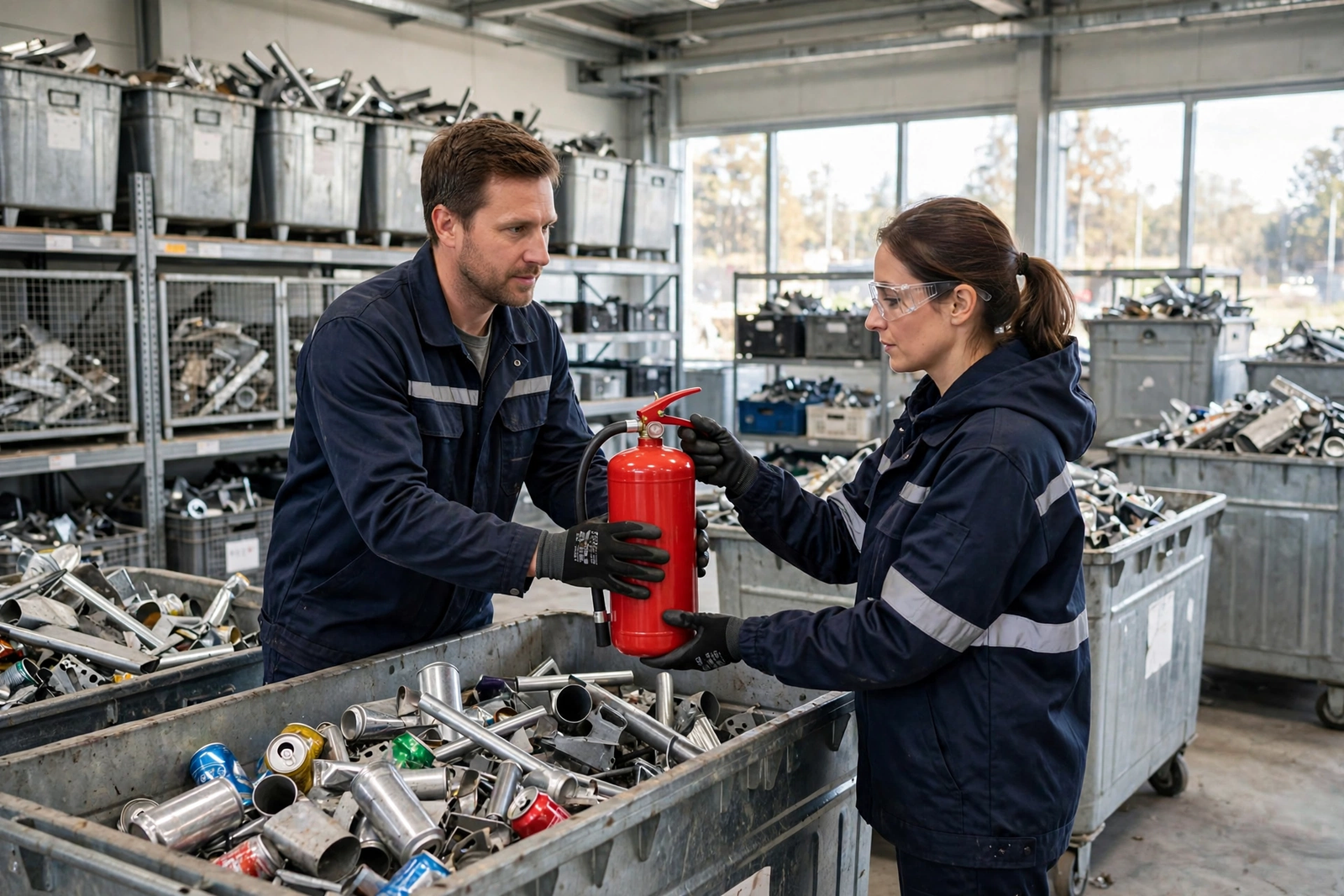
Quick answer: To dispose of a fire extinguisher in the UK, never put it in your household bin. Take it to your local household waste recycling centre (tip) — most accept extinguishers free of charge — or return it to the supplier or a fire safety company, many of which offer a collection or disposal service. Empty extinguishers can sometimes go in scrap metal recycling.
Fire extinguishers do not last forever. Most have a service life of 5–15 years, and once expired, discharged, or damaged, they need safe disposal. But a fire extinguisher is a pressurised container holding chemicals or gas — it cannot go in your wheelie bin, and dumping it is illegal and dangerous.
This guide explains exactly how to dispose of a fire extinguisher in the UK, what the rules are, how to tell when yours needs replacing, and what to do with different types.
Why You Can’t Bin a Fire Extinguisher
Three reasons:
- Pressure: Even an “empty” extinguisher can retain residual pressure. In a refuse lorry’s compactor, that can cause an explosion.
- Chemicals: Dry powder, foam, CO₂, and wet chemical agents are pollutants that must not enter landfill or waterways.
- The law: Under UK waste regulations, pressurised containers are classed as hazardous waste. Businesses must use a licensed waste carrier; households must use proper disposal routes.
The gov.uk guidance on hazardous waste sets out the legal framework, though household disposal via the local tip is the practical route for most people.
Step-by-Step: Disposing of a Fire Extinguisher
Step 1: Check the extinguisher’s condition
Look at the pressure gauge (green = charged, red = needs attention), the service label, and the manufacture date. If it is out of date, has been partially discharged, is corroded, or the pin/seal is broken, it is time to dispose of it. Do not attempt to “test fire” an old extinguisher to empty it — the discharge can be dangerous and messy, and it does not make the container non-hazardous.
Step 2: Find your local recycling centre
Search your council’s website for your nearest household waste recycling centre (HWRC) and check whether it accepts fire extinguishers — most do, free of charge for householders. You can find local recycling and waste services on gov.uk. Some councils ask you to book a slot, so check before travelling.
Step 3: Transport it safely
Keep the extinguisher upright in the car boot, secured so it cannot roll around. Make sure the safety pin is in place. Do not leave extinguishers loose in a hot car for extended periods.
Step 4: Hand it to staff at the tip
Do not just throw it in a skip. Tell the site staff what it is — they will direct you to the correct container, usually the pressurised-container or hazardous waste section.
Alternative Disposal Routes
Return to the supplier
Many fire safety companies and extinguisher suppliers will take back old units when you buy a replacement — some do it free, others charge a small fee (£5–£15). If you are buying a new extinguisher anyway, ask about trade-in or take-back at the point of sale.
Fire extinguisher servicing companies
Local fire protection firms often run disposal or collection services, particularly for businesses with multiple units. Search for a BAFE-approved company near you for a compliant option.
Scrap metal dealers (empty units only)
A fully discharged, depressurised steel extinguisher body is just scrap metal and can go to a metal recycler. But “fully discharged” means professionally depressurised — do not assume an old extinguisher is empty because the gauge reads zero. When in doubt, use the recycling centre route.
Your local fire station (ask first)
Some fire stations accept old extinguishers, but this varies widely and many no longer do. Phone ahead rather than turning up with one.
Disposal by Extinguisher Type
- Dry powder (ABC): The most common home type. The powder is an irritant — do not release it indoors. Dispose via recycling centre.
- CO₂: Contains pressurised carbon dioxide. Never discharge indoors in an enclosed space (asphyxiation risk). Recycling centre or supplier take-back.
- Foam: Contains chemical foam concentrate. Keep out of drains and waterways. Recycling centre.
- Wet chemical (kitchen): Contains alkaline chemicals. Recycling centre.
- Water: The least hazardous, but still a pressurised container — recycling centre, not the bin.
- Old halon extinguishers: Halon is banned and ozone-depleting. These need specialist hazardous waste handling — contact your council’s hazardous waste service or a licensed carrier. Do not discharge them.
Businesses: Your Legal Duties
If you are disposing of extinguishers from a business premises, the rules are stricter. Commercial fire extinguishers are business waste, and you must:
- Use a licensed waste carrier — check their registration.
- Complete a waste transfer note or hazardous waste consignment note.
- Keep records for at least three years.
Fines for illegal dumping of hazardous business waste are severe. Most fire safety maintenance contracts include disposal of expired units — check yours before arranging anything separately.
When to Replace Your Fire Extinguisher
- Every 5 years: Most manufacturers recommend replacement or professional extended servicing at 5 years; many UK fire safety advisers suggest replacement at 5–10 years for home units.
- After any use: Even a short burst means it needs refilling or replacing — a partially discharged extinguisher cannot be relied on.
- Gauge in the red: Loss of pressure means it will not work properly.
- Visible damage: Dents, corrosion, cracked hoses, or broken seals.
- Missing service history: In workplaces, extinguishers need annual servicing by a competent person.
What Does Disposal Cost?
- Household recycling centre: Usually free.
- Supplier take-back with new purchase: Often free or £5–£10.
- Standalone collection service: £10–£30 per unit depending on area and quantity.
- Business hazardous waste collection: Varies; often bundled into servicing contracts.
Frequently Asked Questions
Can I put a fire extinguisher in the bin?
No — never put a fire extinguisher in your household rubbish or recycling bin. Pressurised containers can explode in refuse lorries and the chemicals are hazardous. Take it to your local household waste recycling centre instead.
How do I empty a fire extinguisher before disposal?
You don’t need to — and shouldn’t try to discharge it yourself just for disposal. Recycling centres and suppliers accept charged units. Attempting to empty a powder extinguisher creates a huge mess and a breathing hazard; discharging CO₂ indoors is dangerous.
Where can I take an old fire extinguisher near me?
Your local council tip (household waste recycling centre) is the easiest option for most people — check your council’s website to confirm they accept them. Alternatively, ask the company you buy your replacement from about take-back.
Do fire extinguishers expire?
Yes. Most last 5–15 years depending on type and maintenance. Check the manufacture date and service label; workplace units need annual professional servicing. An expired extinguisher may fail when you need it most.
What should I do with a very old brass or vintage extinguisher?
Vintage extinguishers (especially carbon tetrachloride or halon types) can contain highly toxic chemicals. Do not open or discharge them. Contact your council’s hazardous waste service for specialist collection advice.
For more home safety guides, see how to test your smoke alarm and a home fire safety checklist.
A final tip: when you drop off your old extinguisher, buy its replacement the same week. Homes without a working extinguisher are far more vulnerable, and a new 1kg dry powder unit costs under £20 at most UK hardware shops — cheap insurance for your household’s safety.



Leave a Reply