
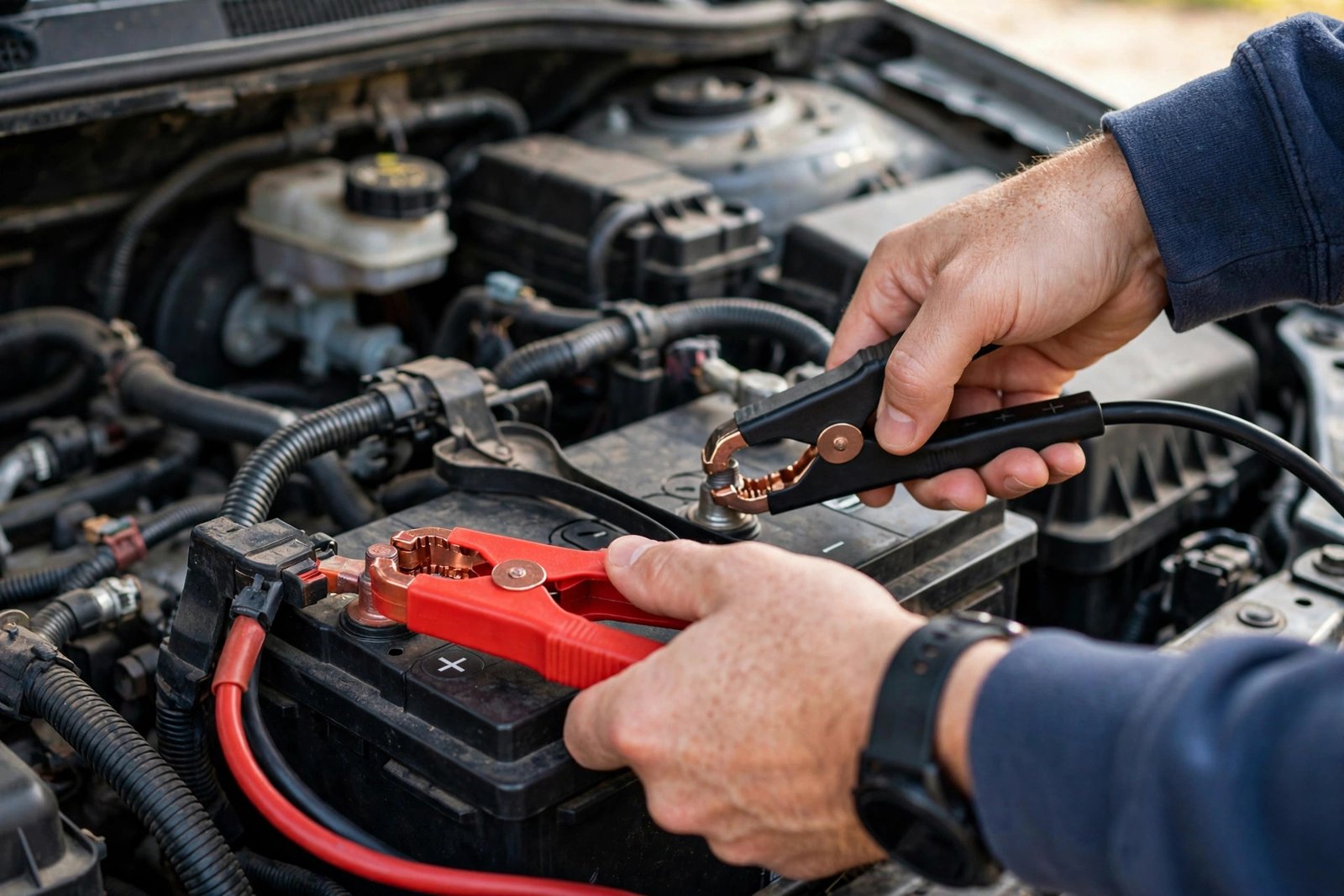
Click. Click-click-click. Nothing. A flat battery is the most common cause of UK breakdowns — and one of the most fixable, if you know the safe procedure. Jump-starting a car by yourself is entirely possible with the right equipment and method, but done wrong it can damage electronics, cause battery explosions, or injure you. This guide covers the safe way to do it solo: with jump leads and a helper vehicle, or — better for lone drivers — with a portable jump starter pack.
First: is a jump start the right fix?
Jump starting helps when the battery is flat but otherwise healthy — lights left on overnight, an ageing battery in cold weather, or a car unused for weeks. It will not fix: a battery with a cracked case or leaking acid (replace, do not jump); a completely dead cell (the car may start then die again); or non-battery faults (if the engine cranks strongly but will not fire, the problem is fuel, spark or immobiliser — not the battery). Check the battery terminals for heavy corrosion (white/green crust) — clean them first, as corrosion alone can mimic a flat battery. If the car is under warranty or you have breakdown cover, calling for help is often smarter than DIY — the RAC and AA attend millions of battery callouts yearly.
Method 1: portable jump starter (best for solo drivers)
A lithium jump starter pack (£40–£100) is the lone driver’s best friend: pocket-sized, holding charge for months, and capable of starting most petrol cars and smaller diesels without a second vehicle. Keep it charged (top up every 3–6 months — a flat jump starter is bitter irony) and stored in the car, not the house. The procedure: connect red clamp to the positive (+) terminal, black clamp to an unpainted metal earth point on the engine block (not the negative terminal — see safety below), switch the pack on, wait 30 seconds, then start the car. Remove clamps in reverse order once running. It is genuinely a two-minute job — which is why every solo driver should carry one. Like maintaining any battery-powered device, the principles in extending battery life apply to keeping the pack healthy.
Method 2: jump leads with another vehicle
Without a pack, you need jump leads and a willing helper vehicle with a similarly-sized (12V) battery. Position the cars close but not touching, both engines off, all electrics off (lights, heaters, wipers). Connect in this exact order:
- Red lead: positive (+) terminal of the FLAT battery
- Red lead (other end): positive (+) terminal of the GOOD battery
- Black lead: negative (−) terminal of the GOOD battery
- Black lead (other end): an unpainted metal earth point on the flat car’s engine block — a bracket or bolt, well away from the battery
Start the good car, let it idle for 2–3 minutes, then start the flat car. If it does not start within 10 seconds of cranking, stop — repeated cranking overheats the starter. Once running, remove leads in exact reverse order (4, 3, 2, 1), being careful clamps never touch each other or bodywork. Keep the jumped car running for at least 20–30 minutes (a proper drive, not idling) to recharge the battery.
Why the earth point matters
Connecting the final clamp to the engine block rather than the battery negative terminal keeps any spark away from the battery, which can vent explosive hydrogen gas — especially when flat and being charged. This is the step most people get wrong and the one that prevents the (rare but real) battery explosions. It also provides a better electrical path in many cars. Memorise it: positive-positive, negative-earth, spark away from the battery.
Safety warnings that actually matter
Never jump-start a visibly damaged, leaking or frozen battery — replace it. Do not lean over the battery while connecting; wear eye protection if you have it. Keep the leads’ clamps from touching each other (a short circuit across a good battery is violent). Do not jump-start with mismatched voltages (never use a 24V truck system on a 12V car). Modern cars with sensitive electronics and start-stop systems prefer the jump-pack method — voltage spikes from donor vehicles can theoretically damage ECUs, though proper procedure minimises this. And if the battery is under three years old and keeps going flat, the battery is not the problem — get the charging system and parasitic drains checked. Having the right kit in the car matters generally — see essential tools to keep handy for the broader preparedness mindset.
After the jump: what next?
A successful jump start is a reprieve, not a repair. Drive for at least 30 minutes (longer in winter) to recharge, then assess: if the battery is over 4–5 years old, replace it proactively (£60–£150 fitted for most cars) rather than waiting for the next failure — preferably before winter, when weak batteries die. If a newish battery went flat, find the cause: lights left on (driver error, learn and move on), or a parasitic drain/alternator fault (needs a garage). Consider a trickle charger (£25–£40) if the car sits unused for weeks — it maintains the battery indefinitely and prevents the problem entirely. And test the battery’s health at the next service; most garages check free on request.
Preventing the next flat battery
The best jump start is the one you never need. Prevent repeat failures: replace batteries proactively at 4–5 years old (before winter, when cold kills weak batteries); use a trickle charger (£25–£40) if the car sits unused for weeks; double-check lights and interior electrics when parking — modern cars warn you, but habits beat warnings; and have the charging system tested if a healthy battery keeps dying (a failing alternator or parasitic drain needs a garage, not another jump). A £100 battery replaced on your schedule beats a £100 battery plus a ruined morning replaced on its schedule.
Conclusion
Jump-starting a car safely by yourself comes down to: a charged portable jump pack in the boot (the solo driver’s essential), or jump leads plus the positive-positive-negative-earth connection order with sparks kept from the battery. Verify the battery is jumpable (not damaged or leaking), follow the sequence exactly, run the car for 30 minutes after, then address the underlying cause — usually an ageing battery ready for replacement. Learn the procedure once, keep the equipment in the car always, and the most common breakdown becomes a five-minute inconvenience rather than a ruined morning.
Frequently Asked Questions
Can you jump start a car by yourself?
Yes — a portable lithium jump starter pack (£40–£100) lets you jump-start solo in two minutes with no second vehicle. Keep it charged and in the car.
What is the correct order for jump leads?
Red to flat battery positive, red to good battery positive, black to good battery negative, black to an earth point on the flat car’s engine block (not the battery terminal). Remove in reverse order.
Why connect the last lead to the engine block?
To keep connection sparks away from the battery, which can vent explosive hydrogen gas. It is the key safety step most people skip.
How long should I run the car after jump starting?
At least 20–30 minutes of proper driving (not idling) to recharge the battery. Then address the cause — batteries over 4–5 years old should be replaced proactively.
Can jump starting damage my car?
Done correctly, no. Incorrect procedure risks voltage spikes to sensitive electronics, short circuits, or battery explosion — which is why the connection order and earth point matter. Modern start-stop cars prefer jump packs over donor vehicles.



Leave a Reply