Phil Collins: Net Worth, Age, Children and the Career That Built the Fortune
How a Chiswick Drummer Made the Name
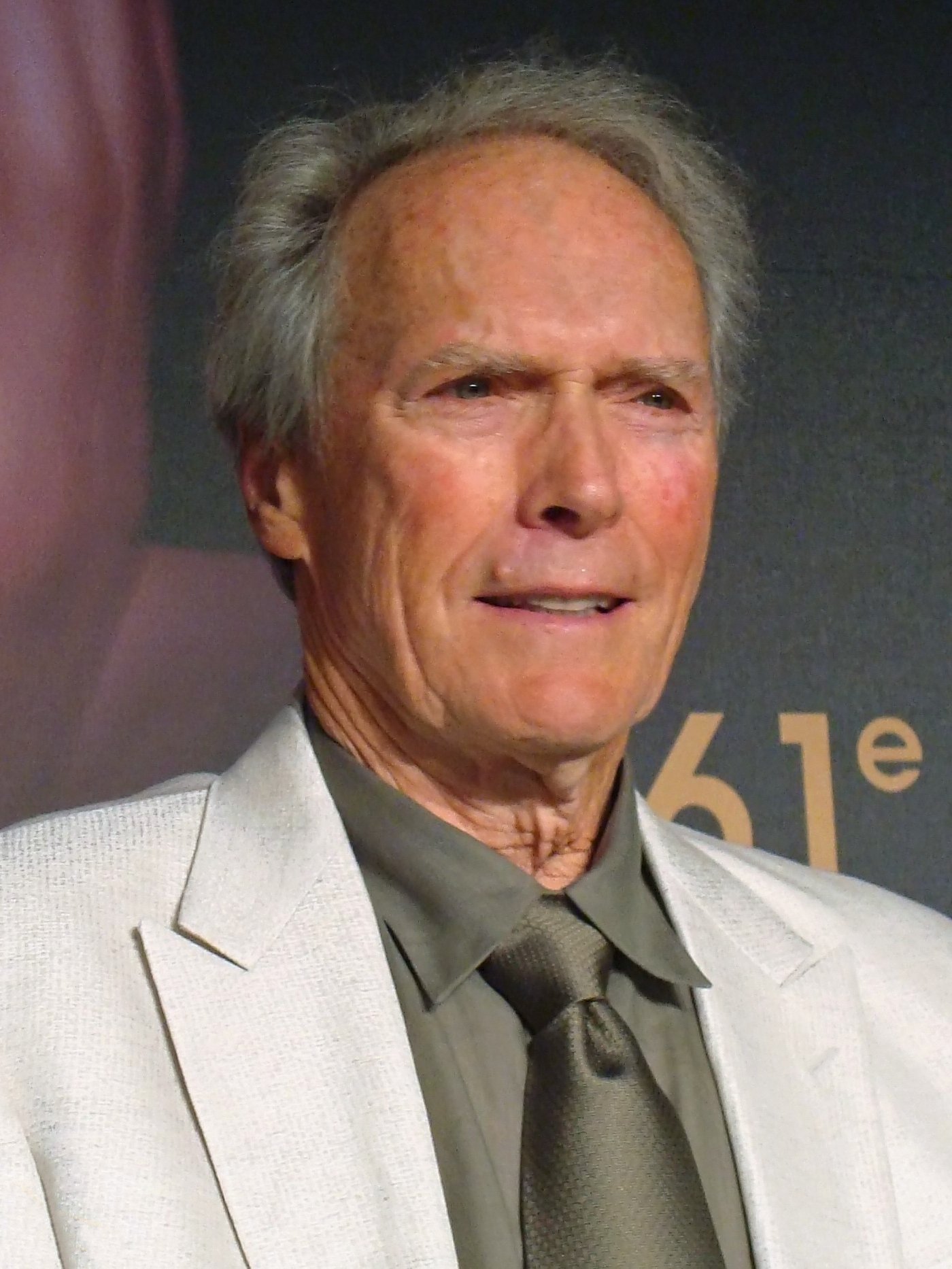
Phil Collins is the drummer who stepped forward to the microphone and became one of the best-selling solo singers of his generation, while never entirely leaving the band that made his name. With Genesis he played the drums and, after 1975, sang the leads; on his own he made a run of albums and singles in the 1980s that seemed to be everywhere at once. Few performers have held two careers of that size at the same time, and fewer still have kept both going for half a century.
His biography is also a story of work rate. Through the busiest years he was recording with Genesis, making solo records, producing other artists and playing sessions, all with a plain, unfussy manner that made the scale of it easy to underestimate. The voice helped: warm, direct and instantly recognisable, it could carry a ballad or a stadium chorus with equal ease.
Today he is 75, retired from drumming and living with the lasting effects of injury, yet still very much a public figure. In November 2026 he was inducted into the Rock & Roll Hall of Fame as a solo artist, appearing in person to accept the honour — a present-day fact worth underlining, because false reports about him circulate regularly and are simply wrong. He is alive, he spoke at that ceremony, and he told the audience they had not heard the last of him.
From 1970 to 2026: The Jobs That Built the Name
1970 to 1975 — The Drummer in Genesis
Collins joined Genesis in 1970 and made his first album with the band, Nursery Cryme, in 1971. The early Genesis records — Foxtrot, Selling England by the Pound and The Lamb Lies Down on Broadway among them — built a devoted following for intricate, theatrical progressive rock, with Collins’s drumming admired for its precision and musicality. He also sang occasional backing vocals, and his voice was already a distinctive part of the group’s sound.
1975 to 1980 — Stepping to the Front
When Peter Gabriel left Genesis in 1975, the band auditioned singers and found, to general surprise, that the best candidate was already in the room. Collins became lead singer while continuing to drum on record, and A Trick of the Tail in 1976 proved the new line-up could succeed. The band’s sound broadened through Wind & Wuthering and …And Then There Were Three…, and the single Follow You Follow Me gave Genesis a first major hit in 1978. Collins had become a frontman almost by accident, and he turned out to be a natural at it.
1981 — Face Value and In the Air Tonight
His solo career began in 1981 with Face Value, an album drawn in part from the breakdown of his first marriage and built around one of the most famous drum sounds ever recorded. In the Air Tonight, with its slow build and explosive drum entry, became his signature song and remains one of the defining recordings of the decade. The album topped charts and established that Collins the solo artist was not a side project. It was the start of a second, enormous career running alongside the band.
1982 to 1985 — Hello, I Must Be Going! and No Jacket Required
Hello, I Must Be Going! followed in 1982, and in 1985 No Jacket Required took his solo success to its commercial peak, carrying songs such as Sussudio and One More Night and winning major awards including the Grammy for Album of the Year. In the same period he produced records for other artists and played drums on sessions far beyond his own work. For a stretch of the mid-1980s, Collins seemed to be on every chart at once — with Genesis, on his own, and behind other people’s hits.
1986 to 1991 — Invisible Touch and…But Seriously
Genesis reached their own commercial summit with Invisible Touch in 1986, whose title track gave the band a number one single in the United States. Collins balanced that with …But Seriously in 1989, a more reflective solo album that produced Another Day in Paradise, a song about homelessness that became one of his biggest hits and showed the serious turn his writing could take. We Can’t Dance, in 1991, was the last Genesis studio album of his first long tenure with the band.
1993 to 2002 — Both Sides, a Departure and a Return to the Kit
Both Sides, in 1993, was his most personal solo record, written and largely played by Collins himself. In 1996 he left Genesis to concentrate on solo work, releasing Dance into the Light that year and Testify in 2002. The hits slowed, as they do for almost every artist of his vintage, but the catalogue kept selling and the tours kept filling large rooms.
2007 to 2022 — Reunions, Retirement and a Final Tour
Genesis reunited for the Turn It On Again tour in 2007, but a spinal injury that year left Collins with nerve damage that steadily limited his drumming; he underwent repeated operations, including five on his knee. He announced a retirement, then returned with the Not Dead Yet tour, singing seated while his son played drums. Genesis’s The Last Domino? tour closed in March 2022, with Collins telling the audience it was the band’s final show. Readers can also read Sinéad O’Connor’s net worth profile, which covers another defining voice of the same era.
2026 — A Solo Hall of Fame Induction
On 14 November 2026 Collins was inducted into the Rock & Roll Hall of Fame as a solo artist at the Peacock Theater in Los Angeles, his second induction after entering with Genesis in 2010. He arrived with his family, walked with the aid of two canes, did not perform, and said he was a well man now. In an August 2026 interview he spoke of being sober after a period in hospital in April 2024 linked to drinking, and in January 2026 he disclosed that he has round-the-clock live-in nursing care. His drumming days, he has said, are probably done — but the induction itself, in person, is the clearest possible answer to the false reports that periodically claim otherwise.
A Chiswick Upbringing and the First Push Toward Fame
Philip David Charles Collins was born on 30 January 1951 in Chiswick, London. His birthday falls at the end of January, and he turned 75 in January 2026. His father, Greville Philip Austin Collins, worked as an insurance agent and died in 1972, when his son was 21. His mother, Winifred June Collins, née Strange, worked as a theatrical agent and lived until 2011. Between them, his parents gave him an ordinary suburban upbringing with an unusual doorway into performance: his mother’s work placed young performers and their world within the family’s daily orbit.
Collins was on stage as a youngster, taking stage roles while still at school, and the experience taught him early how rehearsals, audiences and professional productions worked. Music, though, was the stronger pull. A toy drum kit given to him as a small boy grew into a proper kit and then into an obsession; he practised relentlessly and was performing with local bands while still in his teens. Drumming was, from the start, the job he intended to do.
By the late 1960s he was a working musician, playing with groups including Flaming Youth, who released an album in 1969. The turning point came in 1970, when he answered an advertisement placed by a band called Genesis, who were looking for a drummer. He got the job — a place in a band he would serve for decades, first from behind the kit and later from the front of the stage.
Private Life in Chiswick, Born 1951
On the question readers most often ask — who is Phil Collins’s partner now — the verified answer is plain: he has no confirmed current partner. That is the position recorded here, and it is not upgraded by proximity or helpfulness. At his Hall of Fame induction he thanked Lindsay Evans, who is credited as his assistant; she is recorded in this profile as his assistant only, and nothing more is claimed for her role. In his August 2026 interview Collins said he would love to be in love again, a remark that sits comfortably with the record: at present, no partner is confirmed.
His earlier marriages are a matter of long public record. He married Andrea Bertorelli in 1975 and they divorced in 1980. He married Jill Tavelman in 1984 and they divorced in 1996. He married Orianne Cevey in 1999; they divorced, with a settlement following in 2008, reconciled in 2016, and separated finally in 2020. A long relationship with Dana Tyler, running from about 2007 to 2016, also ended. None of those relationships is presented here as current.
Collins has five children. With Andrea Bertorelli came Joely, whom he adopted, and Simon, himself a drummer and singer. With Jill Tavelman came Lily, whose own career has made her a familiar face in her own right. With Orianne Cevey came Nicholas, known as Nic, who took the drum stool on his father’s later tours and with Genesis on the final tour, and Matthew, the youngest of the five. The family turned out in support at his induction in November 2026.
His parents complete the family picture given in the table below. His father, Greville, died in 1972, before Genesis had properly broken through, while his mother, June, lived to see the whole arc of his success before her death in 2011. It was June’s work as a theatrical agent that first put performance within the young Collins’s reach, and the drum kit that arrived in childhood did the rest. On social media, his verified Instagram account is @officialphilcollins, the account referenced in the table.
How Touring Turned a Drummer into a Fortune
Celebrity Net Worth puts Phil Collins’s net worth at $350 million, in a snapshot dated 6 November 2026, and a live re-read of that figure on 22 November 2026 agreed with it. That is the figure used throughout this profile, attributed to Celebrity Net Worth at every mention. It is a third-party estimate of wealth accumulated over more than fifty years of recording, touring, songwriting and production, and it is presented here on exactly that basis — as an estimate, not an audited account.
Two large numbers connected with his name need careful labelling, because neither of them is his net worth. In 2022 a catalogue transaction with Concord was reported at $300 million; that deal was a joint transaction covering Collins together with Tony Banks and Mike Rutherford — his Genesis bandmates — and it is a sale price for a shared body of work, not a personal fortune and not a payment to Collins alone. Separately, Forbes listed his earnings for 2020 at $45 million in its Celebrity 100 coverage; that is one year’s earnings, money earned in a single year, and it is labelled as such here rather than treated as wealth.
What underpins the estimate is the breadth of the income his career generated at its height and has gone on generating since. Eight solo studio albums and a long Genesis catalogue, much of it written or co-written by Collins, produce continuing songwriting income. The solo tours of the 1980s and 1990s played to enormous audiences, the Genesis reunion tours of 2007 and 2021–22 did the same, and production and session work added further strands. Together, they are the basis on which the $350 million estimate rests.
The Miami Beach House: $33 Million In, $40 Million Out
The best-documented property chapter of Collins’s life is his Miami Beach house, bought in 2015 for a reported $33 million and sold in 2021 for a reported $40 million. Those are reported transaction prices, and they belong to a completed chapter: the house is no longer his. His principal home is in Switzerland, in the Lake Geneva area, where he has long been based; a home studio there was referenced in his own remarks around the November 2026 induction. No combined property total is claimed in this profile, because none has been reliably published.
The Verified Record of a Chiswick Drummer
| The Verified Record of a Chiswick Drummer | Details |
|---|---|
| Full Name | Philip David Charles Collins |
| Born | 30 January 1951, Chiswick, London |
| Birthday | 30 January |
| Age | 75 |
| Height | 5 ft 6 in (1.68 m) |
| Weight | No reliable published figure exists |
| Partner | No confirmed current partner |
| Children | Five — Joely, Simon, Lily, Nicholas and Matthew |
| Parents | Greville Philip Austin Collins and Winifred June Collins (née Strange) |
| Songs | Including In the Air Tonight, Sussudio, One More Night and Another Day in Paradise |
| Albums | Eight solo studio albums, from Face Value (1981) to Going Back (2010), alongside his Genesis catalogue |
| House | Principal home in Switzerland, in the Lake Geneva area; a Miami Beach house was sold in 2021 |
| @officialphilcollins | |
| Net Worth | $350 million — Celebrity Net Worth |
A note on the details above: figures for his weight circulate on aggregator pages at around 65 kg, but no authoritative source supports any such number, so the table states the gap honestly rather than repeating an invented figure. His height is the commonly listed 5 ft 6 in. Everything else in the table is drawn from the verified record set out in the sections above, and his net worth is dealt with in full, with its source named, in the section that follows.
What Comes Next for a Drummer from Chiswick
Phil Collins’s career is, in the end, two careers that each would have been enough. As Genesis’s drummer he helped define a genre; as its singer he took the band to stadiums; and as a solo artist he outsold almost everybody, with songs that have never really left the airwaves since the day they were released. The Hall of Fame induction of November 2026, as a solo artist, formally recognised the second of those careers — and his presence there, in person, settled the question of his current status more plainly than any statement could.
At home the picture is quieter: no confirmed current partner, five children, and a life based in Switzerland shaped in recent years by injury, recovery and round-the-clock nursing support. The fortune attributed to him by Celebrity Net Worth — $350 million — reflects the work, not the quiet. On his own words at the induction, he is a well man now, and readers have not heard the last of him.