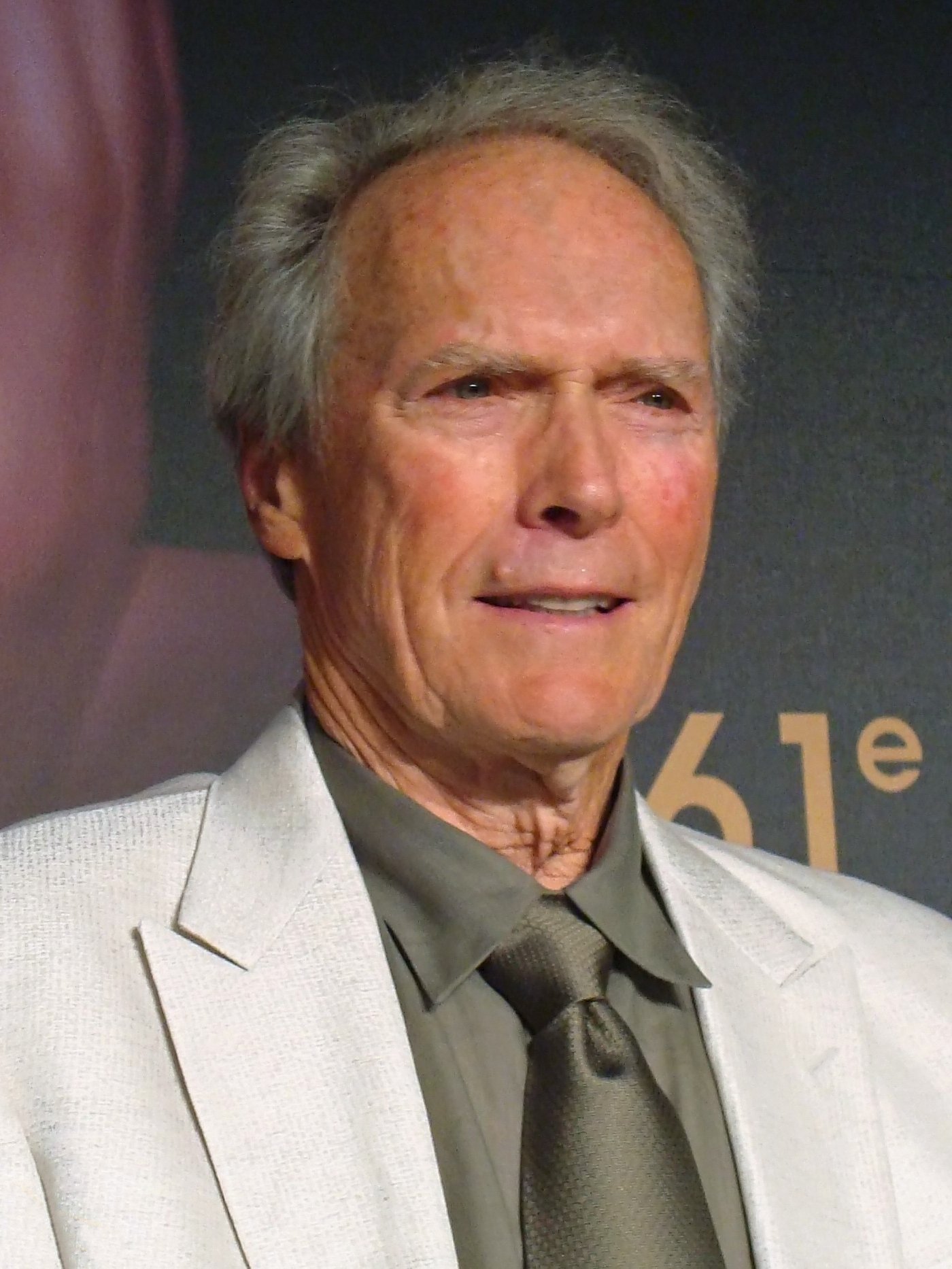
How Much Money Does Tom Jones Have? Net Worth, Career and Family
A Welsh Voice That Has Carried Across Seven Decades
Sir Tom Jones is the Welsh singer whose voice has carried across seven decades, from the working men’s clubs of the South Wales valleys to the largest stages in Las Vegas and London. He is, quite simply, one of the most durable popular singers Britain has produced: a baritone of unusual power, a catalogue of songs that several generations can sing from memory, and a career that has never really stopped. Younger listeners know the later records and the festival appearances; their grandparents knew the same voice in 1965.
His biography is remarkable for its span as much as its success. He married at sixteen, worked ordinary jobs while singing in clubs at night, and was nearly thirty before the hits settled into a lasting career. There were fallow years in the 1970s and 1980s when fashion moved away from him, and then a genuine second act from the late 1980s onwards that restored him to the charts and, eventually, to national-treasure status. Through all of it, the voice itself never faded, and that is the foundation everything else rests on.
Today he is 86, widowed, a father of two sons, and still touring in 2026, with his Come Gather Round dates in the autumn of that year drawing the kind of reviews performers half his age would envy. A small number of those autumn dates in California were postponed on doctors’ advice while he recovered from flu and rescheduled into early November, a reminder of his age and, at the same time, of a schedule that remains that of a working singer. That is the story so far: a miner’s son from Treforest who became, and stayed, Sir Tom Jones.
Born Thomas John Woodward in Treforest, Pontypridd
Thomas John Woodward was born on 7 June 1940 in Treforest, Pontypridd, in South Wales. His birthday falls in early June, and it makes him 86 in November 2026. He was raised in a terraced street in a coal-mining community, the son of Thomas Woodward, a coal miner, and Freda Woodward, née Jones, whose maiden name he would later take for the stage. The family was not wealthy, and the valleys of his childhood were shaped by the pit, the chapel and the club.
Music was there from the start. He sang in the school choir and at family gatherings, absorbing the gospel, soul and rock and roll records that reached Wales from across the Atlantic. His schooling was interrupted by tuberculosis, which kept him in bed for the better part of two years in his early teens — a long, dull convalescence during which listening to music became more than a pastime. When he recovered, he left formal education behind early and took work where he could find it, including factory and building jobs, while singing at night.
At sixteen he married Melinda Trenchard, known as Linda, on 2 March 1957 in Pontypridd; both were sixteen years old. Their first son, Mark, was born the following month, in April 1957. The young family lived modestly while Jones sang with local groups, most notably Tommy Scott and the Senators, building a fierce local reputation in the clubs of South Wales. A London manager, Gordon Mills, heard him, signed him and renamed him Tom Jones, after the popular novel and its recent adaptation — a stage name taken, fittingly, from his mother’s family name and a very Welsh literary hero.
It’s Not Unusual, Delilah, Kiss, and a Knighthood
1964 to 1966 — It’s Not Unusual and the Breakthrough
His first records made little impression, and then, in early 1965, came It’s Not Unusual, a brassy, swaggering recording that reached number one in the United Kingdom and the top ten in the United States. It established the formula at a stroke: the big voice, the tight arrangements, the sense of a singer enjoying himself enormously. What’s New Pussycat followed the same year, and in 1966 Green, Green Grass of Home, a country song sung as a homesick Welshman’s lament, became his biggest seller of the decade and a signature he has never put down.
1967 to 1971 — Delilah and the Las Vegas Years Begin
Delilah arrived in 1968, a dramatic tale of jealousy and murder sung at full tilt, and became one of his most requested songs for the rest of his career — so much so that Welsh rugby crowds adopted it as an anthem. I’ll Never Fall in Love Again, Help Yourself and Love Me Tonight kept the hits coming, and by the end of the 1960s he was a headline attraction in Las Vegas, playing residencies that suited his style perfectly: dinner jackets, perspiration, and a voice that filled the room without effort. In 1971 She’s a Lady gave him another major American hit and completed a run of records that made him one of the best-known singers in the world.
1972 to 1987 — The Leaner Years
The 1970s were harder. Chart fashions changed, his records leaned towards country material, and although the live work never dried up — the clubs, the casinos and the touring circuit kept him busy and well paid — the hit singles largely stopped. He recorded steadily, including country albums that found a loyal audience, and a 1977 recording, Say You’ll Stay Until Tomorrow, reached number one on the American country chart. It was a respectable, hard-working middle chapter rather than a collapse, but by the mid-1980s he was widely filed under nostalgia, a label the next chapter would remove.
1988 to 1999 — Kiss, the Comeback and Reload
The comeback began in 1988 with Kiss, his exuberant cover of the Prince song recorded with the Art of Noise, which returned him to the top three on both sides of the Atlantic and introduced him to a generation who knew him only as their parents’ singer. Albums followed that treated him as a contemporary artist again. Then, in 1999, came Reload, an album of duets with younger performers, which reached number one in the United Kingdom, sold in the millions and produced Sex Bomb, a hit across Europe that became a late signature song. At nearly sixty, he was a chart artist again on his own terms.
2000 to 2026 — Knighthood, Late Albums and Still Touring
The honours caught up with the career: he was appointed an OBE in 1999 and knighted in 2006 for services to music. His later albums took a rootsier direction — Praise & Blame in 2010, all gospel and blues, was among the most praised records of his life, and Spirit in the Room and Long Lost Suitcase continued in that vein, while Surrounded by Time in 2021 made him, at eighty, the oldest man to top the United Kingdom albums chart with a new recording. In the autumn of 2026 he was on the road again with the Come Gather Round tour, twenty dates across the United States completed by late October. The late work matters because it is not a victory lap: it is a singer still choosing demanding material and still singing it properly. Readers interested in another male vocalist whose late career rests on the same refusal to coast may enjoy Chris Stapleton’s net worth profile elsewhere in this network.
A Figure Read Directly From the Tracker’s Own Page
Celebrity Net Worth puts Tom Jones’s net worth at $300 million, read directly from that tracker’s own page, and that is the figure carried in this profile, attributed to that source at every mention. The disagreements need stating openly. No competing total from Forbes exists — Forbes publishes no net-worth figure for him — and no individual figure for him is published in the Sunday Times Rich List. A lower total of $250 million circulates widely in round-ups drawn from non-permitted sources; it is noted here only as unattributed circulation, not adopted, because no methodology stands behind it.
One figure that is often misused in discussions of his wealth is his record sales: more than 100 million records sold worldwide across his career. That is a measure of the scale of the career, not a sum of money he holds, and it is treated here as sales only. Records sold in 1965 do not sit in a bank account in 2026; what they did was generate the fees, royalties and touring value from which a fortune of this kind is actually built, year by year, across sixty years of work.
The shape of that building is visible in the career itself. The 1960s hits brought the first serious money; the Las Vegas residencies of the late 1960s and 1970s were famously lucrative for headline performers and kept the income high even when the charts cooled; the comeback from 1988 onwards restored recording income at the highest level, with Reload selling in the millions; and the touring of his seventies and eighties has played to large rooms at premium prices. None of those strands is separately valued in any permitted source, and no figure for any of them is invented here — the $300 million attributed above is the tracker’s estimate of the whole, and it is presented as an estimate, not an audited account.
Linda Jones, Married at Sixteen, Fifty-Nine Years Together
Jones’s wife was Melinda Jones, known to everyone as Linda, née Trenchard, whom he married on 2 March 1957 in Pontypridd when both were sixteen. Their marriage lasted fifty-nine years, through obscurity, fame, Las Vegas and long separations imposed by touring, and it is one of the most enduring in popular music. Linda largely stayed out of the spotlight, preferring life away from the cameras, and Jones consistently described her as the steady centre of his life.
Linda Jones died of lung cancer on 10 April 2016 at Cedars-Sinai in Los Angeles. Jones is not currently married and has not remarried since her death, and this profile records the position plainly so that the wife label in his searches is understood correctly: Linda was his wife, and he remains her widower. Reports that have occasionally linked him with other names since 2016 have never amounted to a confirmed relationship and are not treated as fact here.
He has two sons. Mark Woodward, born in April 1957 to Tom and Linda, has managed his father’s career for most of his adult life and remains the central figure in his professional affairs. His second son, Jonathan Berkery, was born in 1988; his mother is Katherine Berkery, and a court ruled in 1989, after DNA testing, that Jones was his father — a finding Jones disputed for many years before accepting it in 2008. There is no relationship between father and second son, and the record is stated here without decoration, as the family itself has left it.
His parents were Thomas Woodward (1910–1981), the coal miner whose working life in the pits defined the family’s circumstances, and Freda Woodward (1914–2003), née Jones. After Linda’s death, Jones sold the Los Angeles property they had shared and settled back in London, a move he described as coming home. On social media, his verified Instagram account is @realsirtomjones, where tour news and archive photographs are posted for his followers.
Tom Jones in Brief: Pontypridd, the Voice and Family
| Tom Jones in Brief: Pontypridd, the Voice and Family | Details |
|---|---|
| Full Name | Thomas John Woodward |
| Born | 7 June 1940, Treforest, Pontypridd, Wales |
| Birthday | 7 June |
| Age | 86 |
| Height | 5 ft 10 in (1.78 m) |
| Weight | No reliable published figure exists |
| Wife | Late wife Melinda “Linda” Jones (née Trenchard), married 2 March 1957, died 10 April 2016; he is not currently married and has not remarried |
| Children | Two sons — Mark Woodward (born April 1957) and Jonathan Berkery (born 1988) |
| Parents | Thomas Woodward (1910–1981) and Freda Woodward (1914–2003), née Jones |
| Songs | Includes It’s Not Unusual, Green, Green Grass of Home, Delilah, What’s New Pussycat, She’s a Lady and Sex Bomb |
| Albums | Includes Along Came Jones, Green, Green Grass of Home, Delilah, Reload, Praise & Blame and Surrounded by Time |
| Nationality | Welsh |
| @realsirtomjones | |
| Net Worth | $300 million — Celebrity Net Worth |
A note on the details above: his height is given as 5 ft 10 in, the consensus listing; isolated listings of 1.77 m and even 5 ft 6 in circulate and are treated here as outliers. For his weight, no reliable published figure exists, so the table says so plainly rather than repeating a number no authority stands behind. His nationality is Welsh, as the table records — a point of pride he has underlined throughout his career.
A Voice Outlasting Fashion
Tom Jones’s career is, in the end, a story about a voice outlasting fashion. He has been a chart star in the 1960s, a Las Vegas fixture in the 1970s, a nostalgia act in the eyes of the 1980s, a comeback story in the 1990s and a critically praised recording artist in his seventies and eighties — and through every phase the instrument itself never diminished. At 86, widowed since 2016 and still touring in the autumn of 2026, he occupies a position few popular singers have ever reached: genuinely active, genuinely respected, and still filling rooms.
The fortune attributed to him by Celebrity Net Worth — $300 million — should be read as the estimate it is, with the lower circulating figure noted and set aside for want of a source. What is not in dispute is the career underneath it: more than 100 million records sold, a knighthood, and a working life that began in the clubs of the South Wales valleys before he was out of his teens. The valleys produced many fine singers. They produced only one Sir Tom Jones.