
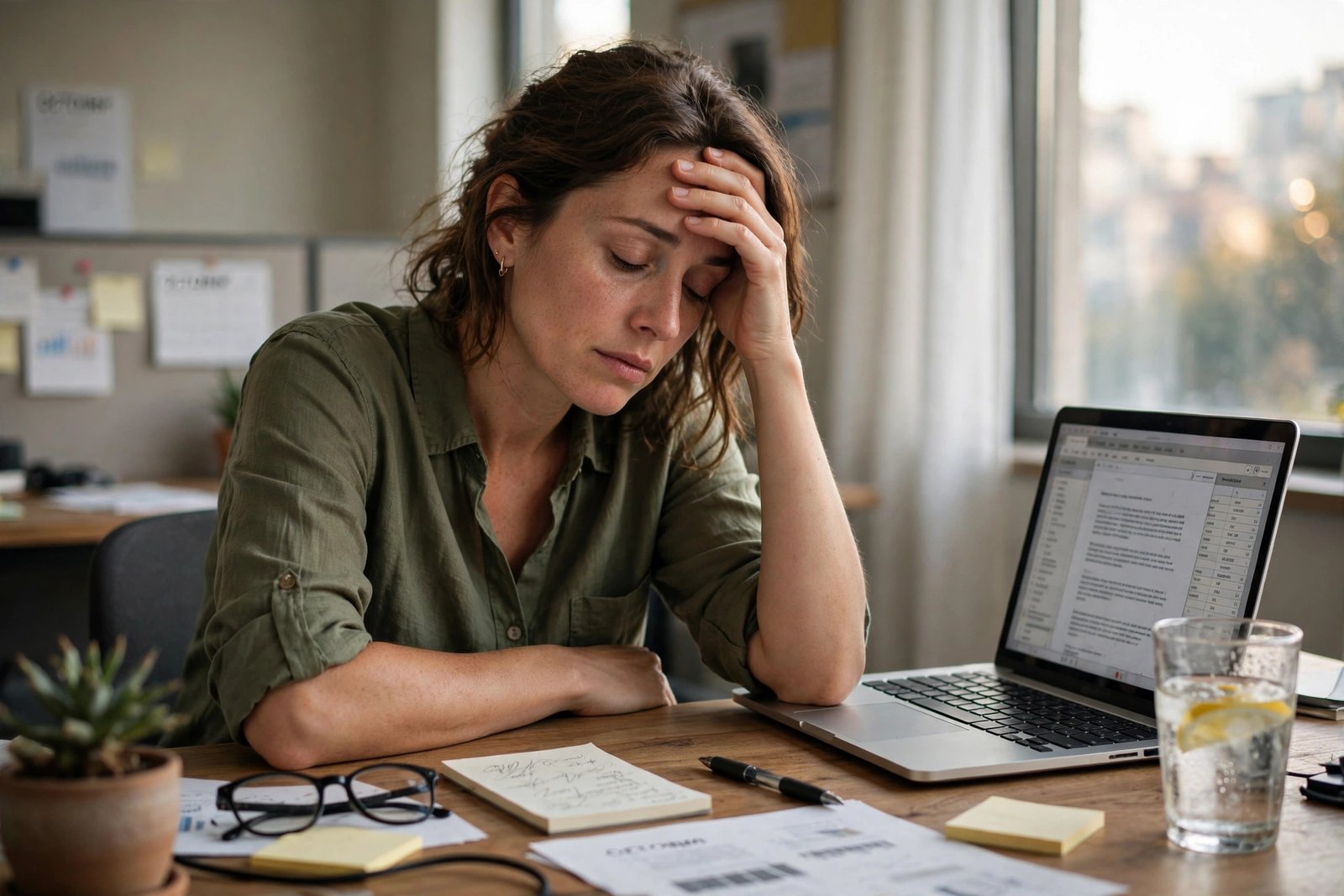
It’s 3pm. You’ve been fine all morning, and now there’s a dull band tightening around your forehead, or a throb behind one eye, and you know exactly how the rest of the day is going to feel. If you’re wondering what causes headaches every afternoon, you’re describing one of the most predictable patterns in medicine — and the regularity is actually good news, because predictable headaches usually have fixable triggers.
What Causes Headaches Every Afternoon — The usual afternoon suspects
Afternoon headaches are rarely random. They’re your body’s end-of-day invoice for things that happened (or didn’t happen) in the first half of the day. Run through this list honestly:
- Dehydration. The number one culprit. You had coffee at 8am, maybe a glass of water at lunch, and nothing since. Even mild dehydration shrinks brain tissue slightly and triggers pain receptors. If your headache eases within 30 minutes of drinking a big glass of water, you’ve found your answer.
- Caffeine timing. That morning coffee wears off around early afternoon, and for regular drinkers the withdrawal starts as a headache. It’s not that you need more coffee — it’s that your brain has scheduled a complaint. A small, earlier top-up or a gradual cut-down both work better than the 3pm triple espresso.
- Eye strain. Six hours of screen time with no breaks tires the eye muscles and triggers tension headaches. If your headache sits behind the eyes or across the forehead, this is a strong candidate — especially if your desk setup has you craning at a low screen.
- Skipped or sad lunch. Low blood sugar from skipping lunch — or a lunch that was basically sugar and refined carbs — produces a reliable mid-afternoon headache. Your brain runs on glucose and it files complaints promptly.
- Tension build-up. Stress accumulates in the neck, shoulders and jaw through the day. By afternoon, the muscles are in spasm and referring pain upward. Anxiety and tension are frequent co-conspirators here.
The posture connection
I’d put money on posture being involved in most desk workers’ afternoon headaches. The forward-head position — chin jutting towards the screen — loads the small muscles at the base of the skull enormously. They fatigue over hours, and the resulting “cervicogenic” headache feels like a tight band around the head, often worse on one side. It typically builds through the day and eases with rest, which is exactly the afternoon pattern.
The fix is the same one that helps your back: screen at eye level, shoulders dropped, and movement every 30 minutes. Chin tucks (pulling your chin straight back to make a double chin, ten reps) directly target the muscles involved. Boring? Yes. Effective? Remarkably.
When it’s actually migraine
Some “afternoon headaches” are migraines in disguise. Clues: throbbing pain (often one-sided), nausea, sensitivity to light or sound, or visual disturbances beforehand. Migraines love routine triggers — the same sleep disruption, missed meal or stress pattern each day — which is why they can seem to keep office hours. If this sounds familiar, read our guide on treating a migraine at home; the approach is quite different from tension headaches.
A two-week detective plan
Rather than guessing, track it. For two weeks, note: time the headache starts, what you ate and drank, sleep the night before, screen hours, and stress level. Patterns jump out fast — “every day I skip lunch” or “only on days with back-to-back video calls” tells you exactly what to change. I did this myself and discovered my headaches were 90% dehydration plus a monitor that was four inches too low. Two changes, problem gone.
Meanwhile, the basics cover most cases: drink water steadily through the day (keep a bottle visible on your desk), eat a proper lunch with protein, take screen breaks every 20–30 minutes, and do something physical at lunch — even a ten-minute walk. The NHS page on headaches covers the main types and when self-care is appropriate.
When to see your GP
Most afternoon headaches are benign and fixable, but see your GP if headaches are new and you’re over 50, if the pattern suddenly changes, if they’re severe or the worst you’ve ever had, if they come with vision changes, weakness, slurred speech, confusion, or a rash — or if you’re needing painkillers most days (in which case read about daily painkiller use, because medication-overuse headache is a real and ironic trap). Sudden “thunderclap” headache warrants urgent care.
Food and drink triggers hiding in your day
Beyond dehydration and posture, specific foods and drinks trigger afternoon headaches in susceptible people — and they’re all common in the average workday:
Aged cheese and processed meats. These contain tyramine, a compound that affects blood vessels and is a well-documented headache trigger. That ploughman’s lunch with mature cheddar, or the salami sandwich, could be the culprit. You don’t need to eliminate them forever — but if headaches cluster on cheese-heavy days, you’ve found a lead worth testing.
Red wine (and alcohol generally). The lunchtime glass of wine is an obvious suspect — alcohol dilates blood vessels and dehydrates simultaneously, a double hit. But even small amounts affect sensitive people, and the effect is worse on an empty stomach. If Friday-afternoon headaches follow Thursday-evening drinks, the connection is worth noting.
Chocolate. Contains both caffeine and beta-phenylethylamine, both potential triggers. Cruel, because the 3pm chocolate bar is also many people’s coping mechanism — the thing you’re using to treat the afternoon slump might be contributing to the headache. Try swapping it for a non-chocolate snack for two weeks and compare.
MSG and processed foods. The evidence on MSG is mixed, but some people are genuinely sensitive — and processed lunch foods (instant noodles, flavoured crisps, ready meals) combine MSG with high salt and various additives. A week of simple whole-food lunches is a useful experiment.
Artificial sweeteners. Aspartame is reported as a trigger by a subset of headache sufferers. If your afternoon involves diet drinks or sugar-free gum, it’s worth a two-week elimination test.
Skipped meals generally. Beyond specific triggers, the pattern of what you eat matters as much as whether. A lunch of pure refined carbs (white bread, crisps, sugary drink) spikes blood sugar and crashes it by mid-afternoon — and the crash brings a headache. Protein and fibre at lunch (chicken salad, lentil soup, eggs on wholegrain) produce stable energy instead. Our breakfast guide covers the same principle for mornings — stable blood sugar all day means fewer headaches all day.
The elimination approach: don’t cut everything at once (you’ll never know what worked). Remove one suspect for two weeks, track headaches, then reintroduce. Tedious? Slightly. Effective? Enormously — most people find one or two clear triggers and can ignore the rest.
The practical takeaway
Afternoon headaches are usually your day’s bill coming due: dehydration, caffeine withdrawal, eye strain, missed lunch, or tension from desk posture. Track for two weeks, fix the obvious triggers, and most people’s 3pm headache simply stops showing up. If it doesn’t — or if any red-flag symptoms appear — get it checked rather than suffering through.




Leave a Reply