
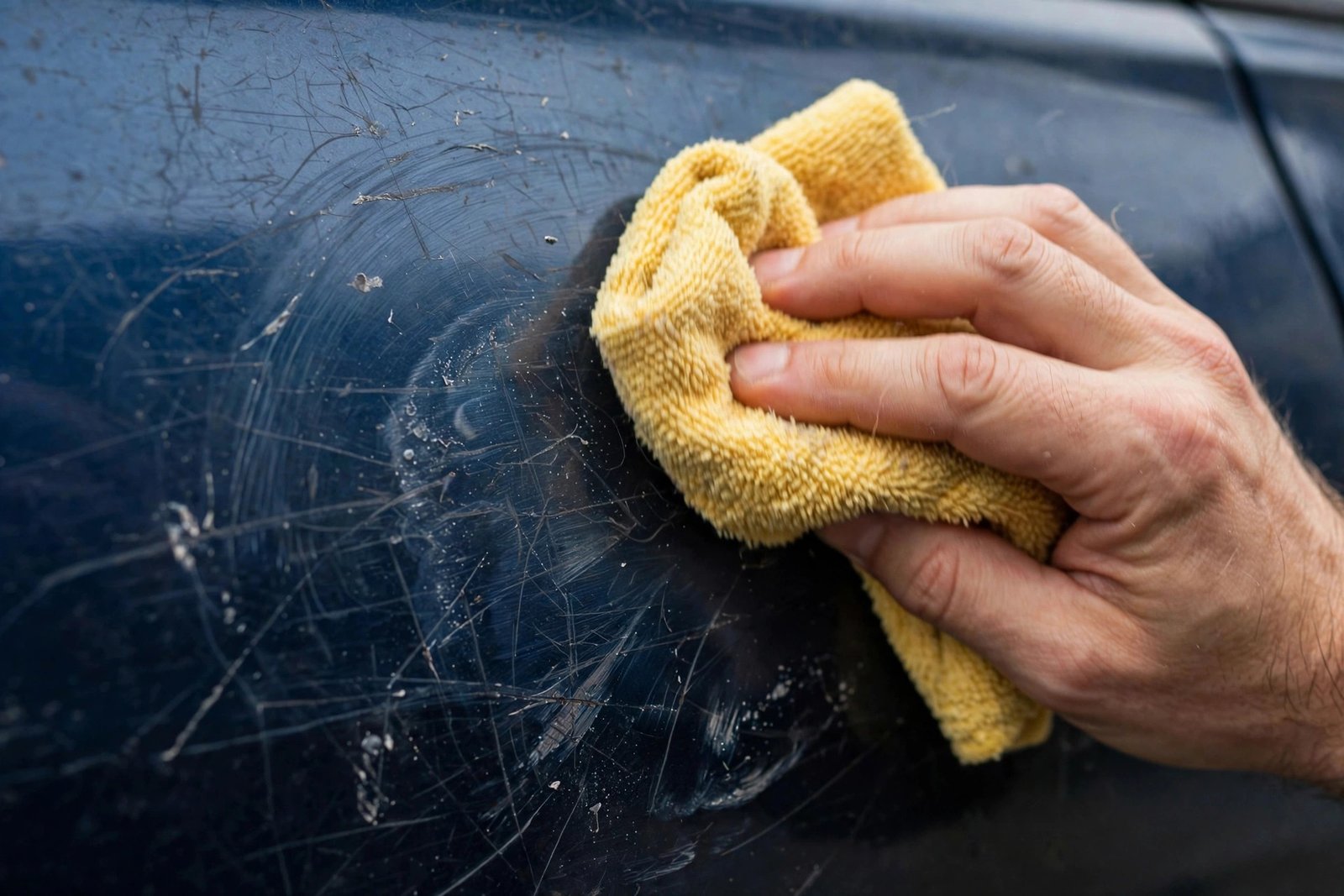
You spot it in the supermarket car park: a fresh scratch down the door, courtesy of someone’s runaway trolley — or was it there last week? Either way, it’s now all you can see. Before you ring a body shop for a £200+ quote, know this: most minor scratches can be removed or dramatically improved at home for under £20, in an afternoon. The trick is diagnosing how deep the scratch is, because depth determines the fix.
Step 1: diagnose the depth (the fingernail test)
Run your fingernail gently across the scratch. If your nail doesn’t catch, the scratch is in the clear coat only — the transparent protective layer over the colour. These are the easiest to fix and the most common (car wash swirls, light brush scratches, trolley kisses). If your nail catches slightly, it’s through the clear coat into the colour coat — fixable, but needs more work. If you can see bare metal or grey primer, it’s through everything — that needs touch-up paint, not polishing.
Also check the colour of the scratch: white or light-coloured scratches are usually clear-coat damage (the white is the fractured clear coat scattering light). Dark scratches that match the primer or metal underneath are deeper. This two-minute diagnosis saves you from using the wrong method — polishing a scratch that’s down to metal just makes shiny metal.
Fixing clear-coat scratches: polishing
For scratches your nail doesn’t catch, the fix is machine or hand polishing with a cutting compound. What you’re doing: levelling the clear coat around the scratch until the scratch’s edges disappear. You’ll need:
- A cutting/polishing compound (Meguiar’s Ultimate Compound, Autoglym Super Resin Polish, or similar — £10–£15)
- Microfibre cloths (or a dual-action polisher if you have one — faster and more even)
- Masking tape to protect adjacent trim
Wash and dry the area first — polishing dirt into paint creates new scratches. Apply a small amount of compound to the cloth, work it into the scratch with firm, overlapping motions (or slow passes with the polisher), and check progress frequently. The scratch will fade gradually; stop when it’s gone or when improvement plateaus. Finish with a finer polish and then wax or sealant to protect the freshly worked clear coat. Deep swirl marks across a whole panel respond to the same treatment — it’s just more of it.
Fixing colour-coat scratches: touch-up paint
For scratches your nail catches but that haven’t reached primer, touch-up paint is the answer. Get the exact colour match: your car’s paint code is on the door jamb sticker, under the bonnet, or in the service book. Order a touch-up pen or small bottle from the dealer (£10–£20) or a specialist like Chipex — generic “silver” from a motor factor won’t match.
The method: clean the scratch with isopropyl alcohol, apply the paint in thin layers with the pen’s fine tip or a cocktail stick (not the brush — it’s too blobby), letting each layer dry. Build it up just proud of the surface, then after 24–48 hours, level it gently with 2000-grit wet sandpaper and polish. Patience beats talent here: three thin coats beat one thick one every time. The result won’t be invisible under scrutiny, but from a normal viewing distance, a well-done touch-up disappears.
Scratches down to primer or metal: act fast
Bare metal exposed to British weather starts rusting within days — and rust under paint spreads invisibly until it bubbles. This is the one scratch category where speed matters. Clean the area, apply a rust-inhibiting primer if any corrosion has started (a fibreglass pencil removes light surface rust), then touch-up paint in layers as above, finishing with clear-coat lacquer from a touch-up kit. If the scratch is long or the panel is heavily damaged, this is where a professional smart repair (£80–£150 for a localised repair) beats DIY — mobile smart-repair technicians do excellent work for a fraction of body-shop prices.
What not to do
- Don’t use coloured “scratch remover” waxes as a fix. They fill scratches temporarily with pigmented wax that washes out in weeks. Fine as a stopgap before proper repair, not a solution.
- Don’t polish through the clear coat. Modern clear coats are thin (30–50 microns). Aggressive machine polishing by an inexperienced hand can burn through to colour — check your progress constantly.
- Don’t ignore scratches to the metal. Cosmetic today, rust repair tomorrow. A £15 touch-up pen now beats a £300 rust repair later.
- Don’t expect perfection on metallic paints. Metallic and pearlescent finishes are hard to blend; touch-ups on solid colours disappear far more easily. Adjust expectations accordingly.
The same methodical approach that fixes paintwork applies to keeping the whole car looking sharp — having the right basic tools and working patiently beats rushing with the wrong ones, whether it’s paint or plumbing.
Prevention: fewer scratches in the first place
Most scratches are preventable. Park away from other cars when you can (the far end of the car park is free exercise), avoid automatic car washes with brushes (they’re swirl-mark factories — hand wash or touchless instead), use proper wash technique (two buckets, grit guards, microfibre mitts), and be careful with bags, keys and zips near paintwork. A coat of wax or sealant every few months doesn’t prevent scratches, but it makes the paint more resistant to light marring and makes proper correction easier. If you take pride in the details, professional-level finishing technique is a transferable skill — the patience it teaches works on cars too.
For the record on what “professional” costs when DIY isn’t enough: a full panel respray at a body shop runs £200–£400, while mobile smart repairs for localised damage are £80–£150. Knowing these numbers helps you decide where the DIY line sits for your scratch. The MOT test doesn’t assess cosmetic scratches, by the way — but sharp, corroded edges from damaged bodywork can occasionally draw an adviser’s attention, another reason to deal with deep scratches promptly.
Conclusion
Removing scratches from car paint at home comes down to one diagnosis and matched methods: clear-coat scratches polish out with compound, colour-coat scratches need touch-up paint in thin layers, and scratches to metal need prompt primer and paint before rust starts. Under £20, an afternoon, and a bit of patience handles 90% of the scratches that ruin your car’s looks. The body shop will still be there for the other 10% — but you’ll be amazed how rarely you need it once you know the fingernail test. The AA’s driving advice covers keeping your car’s bodywork and paintwork in good condition.
Frequently Asked Questions
Can I remove car scratches with toothpaste?
Toothpaste is a very mild abrasive that can reduce the appearance of extremely light clear-coat marks, but it’s inconsistent and no substitute for proper polishing compound. For real results, use a dedicated cutting compound (£10–£15).
How do I find my car’s paint code?
It’s on the door jamb sticker, under the bonnet, or in the service book — usually a 3–4 character code. Give this code when ordering touch-up paint for an exact match.
Will a scratch down to the metal rust?
Yes — exposed steel starts corroding within days in British weather. Treat it promptly: clean, prime if needed, and touch up. A £15 touch-up pen now prevents a £300 rust repair later.
How much does professional scratch repair cost in the UK?
Mobile smart repairs for localised damage: £80–£150. Full panel respray at a body shop: £200–£400. DIY with touch-up paint: under £20.
Leave a Reply