

Electric cars have crossed the threshold from early-adopter novelty to mainstream default — and the sub-£30,000 bracket is where the action is for ordinary British buyers. In 2026, this price band buys you a genuinely good EV: 200+ miles of real-world range, rapid charging, and running costs that embarrass petrol equivalents. But the choices are multiplying fast, and the differences between contenders — range, charging speed, equipment, residuals — matter enormously. Here is what £30,000 actually buys in the UK electric car market right now, and how to choose.
What £30,000 gets you in 2026
The market has segmented neatly. Around £22,000–£26,000: compact EVs like the Dacia Spring, Citroën ë-C3 and MG4 entry models — honest transport with 150–200 miles of range, ideal as second cars or city runabouts. At £27,000–£30,000: the sweet spot — MG4 Long Range, BYD Dolphin, Renault 5 E-Tech, Fiat 600e and base-model VW ID.3s — offering 200–280 miles of range, proper motorway ability and decent equipment. All qualify for the UK’s EV incentives framework; check current grants at gov.uk plug-in grants, as support schemes evolve. The key insight: the £30,000 EV of 2026 outperforms the £40,000 EV of 2022 — waiting has been rewarded.
The leading contenders
MG4: the value benchmark
The MG4 remains the car every rival is measured against: from around £27,000, sharp handling, 200–320 miles of range depending on battery, and a 7-year warranty that embarrasses legacy brands. Its weaknesses — fiddly infotainment, firm ride — are real but forgivable at the price. For most buyers, the MG4 Long Range is the default answer to “best EV under £30k,” and it takes serious beating.
BYD Dolphin: the tech pick
BYD’s Dolphin brings blade-battery tech, a rotating touchscreen, and generous equipment at similar money to the MG4. Build quality impresses; the dealer network is growing but still thinner than established brands — worth considering for servicing convenience. Its heat-pump efficiency gives it an edge in British winters, where cold-weather range loss affects all EVs.
Renault 5 E-Tech: the desirable one
The retro-styled Renault 5 is the EV people buy with their hearts: gorgeous design, French charm, and 190–250 miles of range from around £23,000–£29,000. It proves affordable EVs need not be appliances. Practicality trails the MG4 slightly, but desirability leads by miles — and strong residuals are likely as a future classic.
Others worth shortlisting
The Citroën ë-C3 (£22,000ish) is the budget champion — basic but honest, with exceptional comfort. The Fiat 600e adds Italian style for similar money. Used options multiply choice: £30,000 buys a nearly-new Tesla Model 3, VW ID.4 or Kia Niro EV — bigger, longer-range cars at the cost of being second-hand. Do not dismiss used: EVs have fewer wear items than petrol cars, batteries degrade slowly, and a 2-year-old EV is often the smartest £30,000 spend. The value logic mirrors other tech purchases — as with buying refurbished tech, letting someone else take the depreciation hit is often the clever move.
What actually matters: beyond the brochure
Real-world range, not WLTP
Ignore headline WLTP figures; real-world range is typically 75–85% of WLTP, dropping to 60–70% in cold motorway winter driving. For most buyers, 200+ miles real-world covers everything except long holiday runs — and rapid charging (see below) handles those. Match range to your actual use: the 150-mile city car is perfect if it never leaves town, and paying £5,000 more for range you never use is wasted money.
Charging speed and battery care
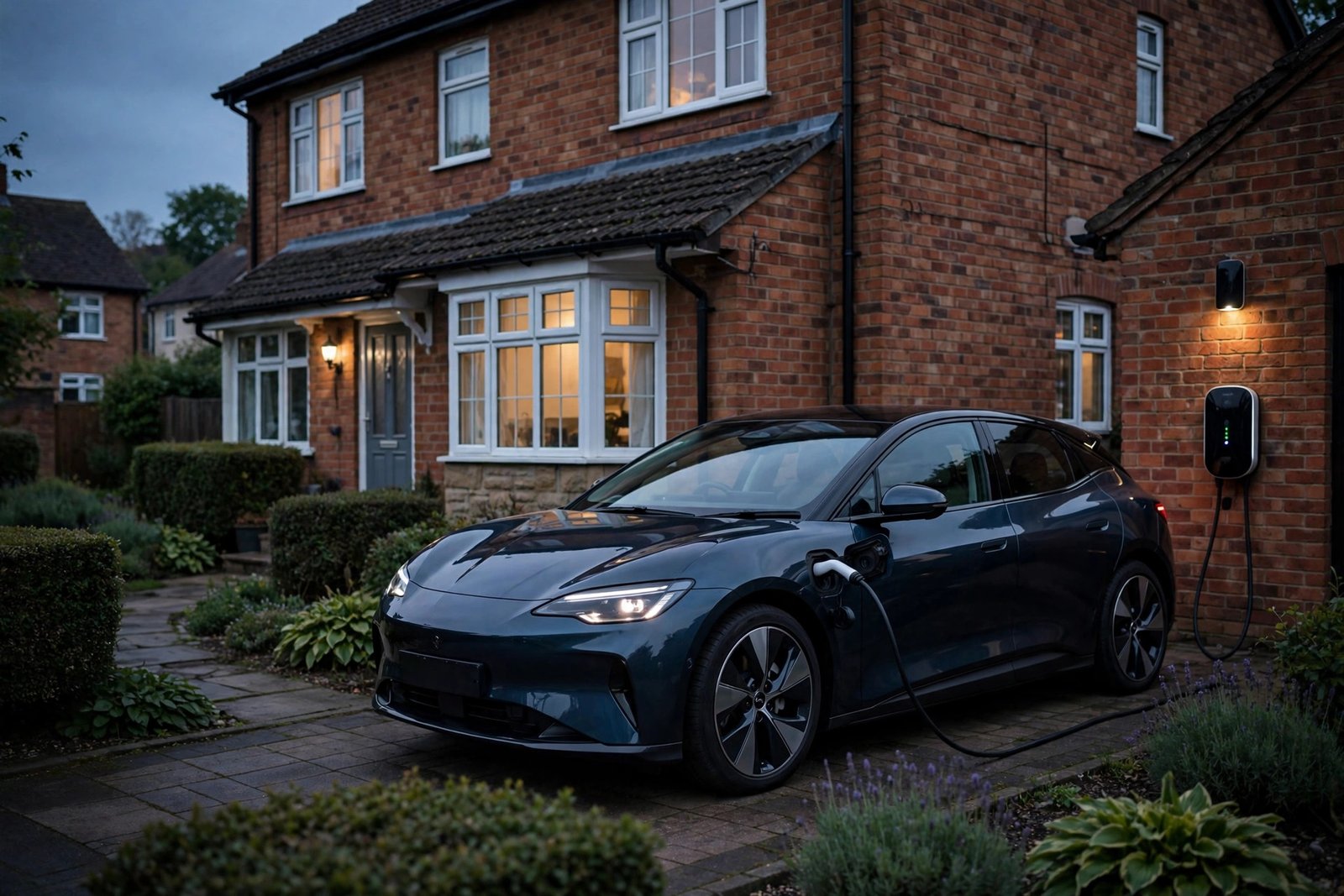
Peak DC rapid-charging speed (100–140kW for this class) determines how painless long trips are: 10–80% in 25–35 minutes is the benchmark. Home charging (7kW wallbox, ~£800–£1,200 installed) is transformative — waking to a “full tank” every morning at 7–10p/kWh overnight rates makes public charging an occasional inconvenience rather than a lifestyle. Battery longevity is a non-issue for most: modern batteries degrade 1–2% annually, and 8-year/100,000-mile battery warranties are standard. Basic battery care — the same principles as extending your phone battery’s life — applies: avoid sitting at 100% for days, and DC-rapid-charge regularly but not exclusively.
Running costs: the real win
This is where EVs crush petrol: “fuel” at 2–3p per mile on overnight home charging versus 12–18p for petrol; servicing roughly half the cost (no oil, fewer brakes thanks to regeneration); and currently favourable tax treatment. The Zapmap charging database shows the UK’s rapidly growing public network for the minority of charging done away from home. Total cost of ownership over 4 years typically favours the EV by thousands — the purchase premium pays back through running costs.
What to watch out for
Insurance can surprise: some EVs sit in high insurance groups, so get quotes before committing. Check your home’s charging feasibility — no driveway means relying on public charging, which changes the economics (though workplace and lamppost charging are growing). Verify the heat pump option in cold climates — it is worth the extra. And consider residuals: the market is evolving fast, so choose mainstream models with strong demand rather than obscure ones that may depreciate harshly.
Test-driving: what to actually check
Specifications only tell half the story, so test-drive your shortlist back-to-back on the same day. Check: real-world comfort over speed bumps and poor surfaces (British roads are the ultimate reviewer), infotainment usability while driving (fiddly touchscreens are a daily irritation), rear visibility and parking ease, boot practicality with your actual lifestyle in mind, and motorway refinement at 70mph — where some budget EVs get noisy. Ask the dealer for an extended or 24-hour test drive; many now offer them, and living with the car overnight reveals charging, comfort and practicality truths that a 20-minute loop never will.
Conclusion
The best electric car under £30,000 in the UK is, for most buyers, the MG4 Long Range — unmatched value, range and warranty — with the BYD Dolphin for tech lovers, the Renault 5 for the style-conscious, and nearly-new used options for maximum car per pound. Focus on real-world range matched to your use, home charging feasibility, and total ownership costs rather than sticker price. Test-drive at least three contenders back-to-back before deciding — specifications tell you what a car does, but only driving tells you whether you will love it. At £30,000 in 2026, you are not compromising by going electric — you are getting the better car.
Frequently Asked Questions
What is the best electric car under £30,000 in the UK?
The MG4 Long Range is the benchmark for value, range (200–320 miles) and warranty. Alternatives: BYD Dolphin (tech), Renault 5 E-Tech (style), Citroën ë-C3 (budget), or a nearly-new used Tesla Model 3/ID.4 for more car per pound.
How much does it cost to charge an electric car at home?
Around 2–3p per mile on overnight tariffs (7–10p/kWh) — roughly £400–£600 a year for average mileage, versus £1,500–£2,000 in petrol for the same distance. A 7kW wallbox costs £800–£1,200 installed.
What is the real-world range of a £30,000 EV?
Typically 150–280 miles depending on model — about 75–85% of the WLTP figure, less in cold winter motorway driving. Match the range to your actual usage rather than buying maximum range “just in case.”
Are electric car batteries reliable?
Yes — modern batteries degrade only 1–2% per year, and 8-year/100,000-mile battery warranties are standard. Battery failure outside warranty is rare; degradation, not failure, is the realistic long-term pattern.
Is it cheaper to buy a used electric car?
Often yes — £30,000 buys a nearly-new larger EV (Tesla Model 3, ID.4, Niro EV) with minimal wear, since EVs have fewer wearing parts than petrol cars. Check battery health reports where available.


Leave a Reply