
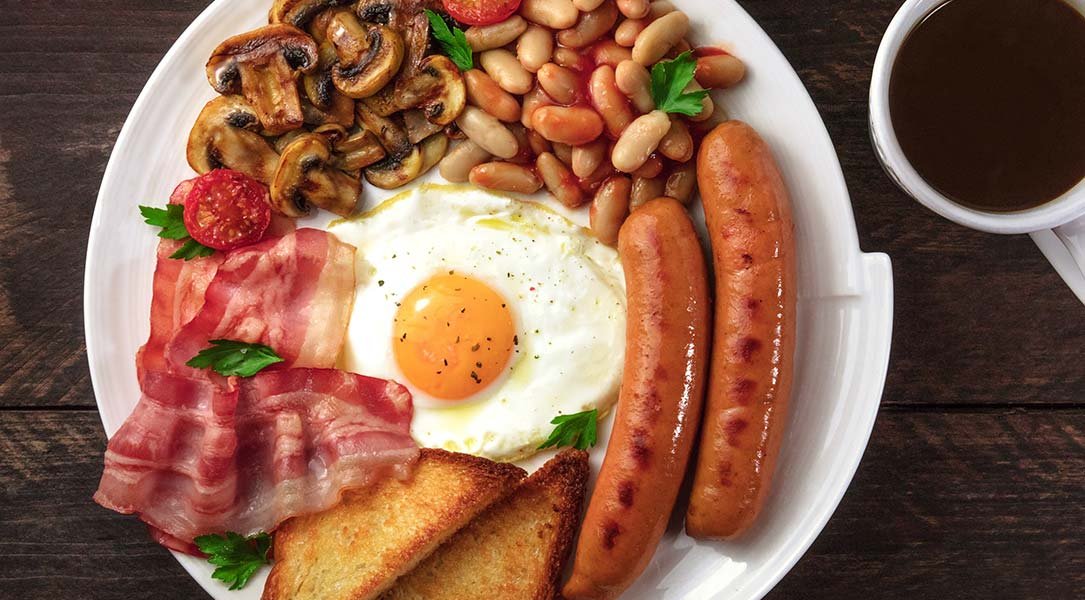
A proper full English breakfast is not just food — it’s a national institution, a hangover cure, and a weekend ritual. But there’s a world of difference between a magnificent fry-up and a sad plate of lukewarm beige. Here’s how to make a proper full English breakfast at home, with every component done right and everything hitting the plate hot at the same time.
What goes on a proper full English
The canon (debates rage, but this is the consensus):
- Back bacon — 2–3 rashers, smoked or unsmoked
- Pork sausages — proper butcher’s sausages, not the 8%-pork budget kind
- Eggs — fried is traditional, though scrambled and poached have their defenders
- Baked beans — Heinz, obviously. This is not up for debate.
- Grilled tomatoes — halved, with a pinch of salt and pepper
- Mushrooms — fried in butter
- Toast or fried bread — fried bread for the full experience, toast for the sensible
- Black pudding — the divisive one. Traditional in the North; optional elsewhere
- Hash browns — technically an American interloper, now widely accepted
- Tea or coffee — strong tea in a proper mug
What doesn’t belong: chips (that’s a different meal), avocado (delicious, but it’s brunch), and anything “deconstructed.”
The equipment and prep
You need: one large frying pan (or two), a grill, and a warm oven (set to 100°C) for holding things. The secret to a proper fry-up isn’t cooking skill — it’s timing. Everything must finish together. Read the order of battle below twice before you start.
The order of battle (timing is everything)
Work backwards from serving. Total time: about 25 minutes.
- T-25 min: Oven on low (100°C). Put your plates in to warm — cold plates kill a fry-up stone dead.
- T-20 min: Sausages in. They take longest. Grill on medium or fry slowly, turning regularly. Never prick sausages — the juices stay in, the flavour stays in. Low and slow for 15–20 minutes until cooked through and golden.
- T-15 min: Bacon under the grill. 3–4 minutes per side. You want crisp edges but not cremated. If using the frying pan, it can share with the sausages once they have space.
- T-12 min: Mushrooms and tomatoes. Mushrooms sliced or whole in butter with salt — 5–6 minutes. Tomatoes cut-side up under the grill with salt, pepper and a drop of oil — they need 8–10 minutes to soften properly.
- T-10 min: Beans on. Low heat, stir occasionally. Some people add a knob of butter or a dash of Worcestershire sauce — both are excellent ideas.
- T-8 min: Black pudding and hash browns. 3–4 minutes per side in the pan.
- T-5 min: Fried bread (if using). In the bacon fat, 1–2 minutes per side until crisp and golden. This is the artery-clogging crown jewel — embrace it.
- T-3 min: Eggs last. Always last — they wait for no one. Hot oil or butter, crack in, spoon hot fat over the whites to set them, 2–3 minutes for perfect fried eggs with runny yolks and set whites. Season with salt and pepper.
- T-0: Toast in the toaster while you plate everything else. Serve immediately on the warm plates.
Component masterclass
Sausages
Buy the best you can afford — 70%+ pork minimum, proper butcher’s if possible. Cumberland, Lincolnshire or a good pork and apple. Cook them gently; high heat splits the skins and you lose the juices. They’re done when firm to the touch with no pink inside.
Bacon
Back bacon is the English standard (streaky is American). Dry-cure if you can find it — less water, less shrinkage, better flavour. Grill rather than fry for even cooking, or fry in its own fat. Crispy edges, still slightly yielding in the middle.
Eggs
For fried: get the fat properly hot first or the whites go rubbery. Baste with hot fat for set whites and runny yolks. For the full Cornish café experience at home — well, nearly.
Beans
Heat gently and don’t let them catch. The controversial additions: a teaspoon of brown sugar, a knob of butter, or a splash of HP sauce stirred through. All legitimate.
The tea
Strong builder’s tea — two bags if you’re feeling fragile — milk, no nonsense. Coffee is acceptable but tea is traditional. Orange juice is for hotels.
Regional variations worth knowing
- Full Scottish: adds tattie scones, haggis and sometimes fruit pudding.
- Ulster Fry: soda bread and potato farls fried alongside — magnificent.
- Full Welsh: adds cockles and laverbread (seaweed). An acquired taste, deeply traditional.
The healthy-ish version
Grill everything instead of frying, use lean bacon with the fat trimmed, poach the eggs, load up on tomatoes and mushrooms, and skip the fried bread. It won’t be quite the same religious experience, but it’s 70% of the pleasure for 40% of the calories. For everyday eating, our guide to eating healthily on a tight budget keeps the fry-up as a weekend treat where it belongs.
Where to buy: butcher vs supermarket
For a fry-up, sourcing matters more than for most meals:
- Sausages: the butcher wins by a mile. Supermarket premium ranges are decent; budget sausages (under 60% pork) are mostly rusk and regret. Ask your butcher what’s good this week.
- Bacon: dry-cured from a butcher or farm shop shrinks less and tastes more of bacon. Supermarket “dry cure” varies wildly — check the ingredients for added water.
- Black pudding: proper Lancashire black pudding (from Bury or Ramsbottom) is a different food from the supermarket tube. Worth seeking out.
- Eggs: free-range, as fresh as possible. The yolk colour and flavour difference is real.
- Beans: Heinz. From anywhere. Some things aren’t worth overthinking.
A butcher’s fry-up selection for two costs £12–£18 versus £8–£12 at the supermarket — and the difference on the plate justifies it for a weekend treat.
For a tested recipe with exact timings, BBC Good Food’s full English breakfast recipe is a reliable reference that matches the method above.
The takeaway
A proper full English breakfast is about quality ingredients and military timing: sausages low and slow, bacon grilled, eggs last, plates warm, everything hot at once. Get the order right and you’ll produce a fry-up that rivals any café — and you’ll understand why the rest of the world is quietly jealous of our breakfast.

Leave a Reply