
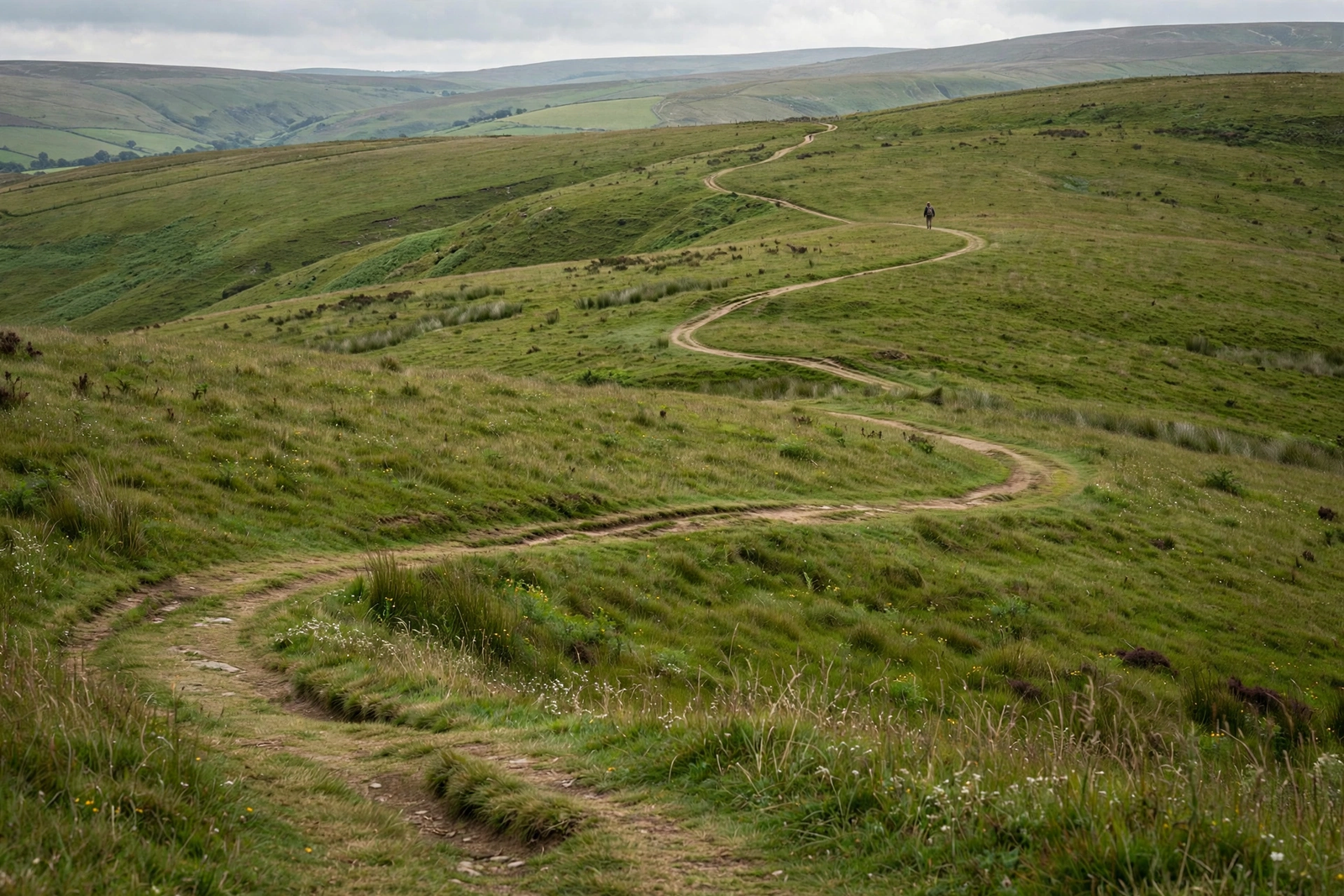
Seven miles is a proper walk — the kind of distance that counts as a day out rather than a stroll. It is roughly the length of many popular UK circular walks, charity walks, and hiking routes. Whether you are training for an event, planning a weekend ramble, or just curious, here is exactly how long 7 miles takes on foot.
How Long to Walk 7 Miles: By Pace
- Slow stroll (2 mph / 3.2 km/h): 3.5 hours
- Average pace (3 mph / 4.8 km/h): 2 hours 20 minutes
- Brisk walk (3.5–4 mph / 5.6–6.4 km/h): 1 hour 45 minutes – 2 hours
- Very brisk (4.5 mph / 7.2 km/h): about 1 hour 33 minutes
These times assume continuous walking on flat ground without stops. In the real world, add 15–30 minutes for rests, photos, navigation checks, and hills. For a shorter benchmark, see how long it takes to walk two miles.
7 Miles in Context
- Kilometres: 7 miles = 11.27 km
- Steps: roughly 14,000–16,000 steps for the average adult
- Time comparison: about a quarter of a marathon’s distance
- Famous equivalents: slightly longer than the London Monopoly board walk, roughly the length of many National Trail day sections
If you are building toward bigger step counts, our guide on how far 20,000 steps is shows what even longer days look like.
Factors That Add Time
- Hills: The single biggest factor. A hilly 7-mile route can take 30–60 minutes longer than a flat one. Naismith’s rule (used by UK hillwalkers) adds 30 minutes per 300 m of ascent.
- Terrain: Muddy footpaths, sand, snow, or rocky trails slow you significantly versus pavement.
- Breaks: A 7-mile walk deserves at least one proper rest. Budget 10–20 minutes per break.
- Navigation: Checking maps, wrong turns, and stiles/gates all add minutes.
- Group pace: Groups walk at the pace of the slowest member. Solo walkers are typically 10–15% faster.
- Load: A day pack with water, food, and waterproofs adds effort. Keep it as light as practical.
A realistic planning estimate for a mixed-terrain 7-mile UK walk with a lunch stop: 3–3.5 hours total.
Calories Burned Walking 7 Miles
- 55 kg (8.7 stone): around 380–450 calories
- 70 kg (11 stone): around 490–580 calories
- 85 kg (13.4 stone): around 590–700 calories
- 100 kg (15.7 stone): around 700–820 calories
Hills increase the burn substantially — a hilly 7-miler can burn 30–50% more than a flat one. If you are walking for weight loss, pair it with sensible eating; see how many steps it takes to lose a pound for the numbers.
Step-by-Step: Planning Your 7-Mile Walk
- Choose your route. Use OS Maps, AllTrails, or Komoot to find a 7-mile circular route. Check the elevation profile — 200 m+ of climbing makes it a moderate walk.
- Check the weather. The Met Office forecast is essential. Pack waterproofs even if it looks fine — this is Britain.
- Time your start. Allow your walking time plus an hour of buffer. In winter, start early to finish in daylight.
- Pack essentials: water (at least 1 litre), snacks, phone + portable charger, waterproof jacket, and a basic first aid kit.
- Wear broken-in footwear. Never do 7 miles in new boots. Blisters at mile 5 are miserable.
- Tell someone your plan. Share your route and expected return time, especially for rural walks.
- Pace yourself. Start slightly slower than feels natural. You should finish feeling pleasantly tired, not destroyed.
- Fuel during the walk. Eat a snack around the halfway mark — bananas, trail mix, or a sandwich.
Training Up to 7 Miles
If 7 miles sounds daunting, build up over 3–4 weeks:
- Week 1: 2–3 walks of 2–3 miles
- Week 2: 2–3 walks of 3–4 miles, including one longer weekend walk
- Week 3: Walks of 4–5 miles, with a 6-mile weekend walk
- Week 4: You are ready for 7 miles
Increase weekly distance by no more than 10–15% to avoid overuse injuries like shin splints or knee pain. If you are starting from scratch, our guide to starting a fitness journey covers the foundations.
Is Walking 7 Miles Good Exercise?
Excellent. A brisk 7-mile walk delivers around 2–2.5 hours of moderate-intensity activity — more than the NHS weekly target of 150 minutes in a single outing. Benefits include improved cardiovascular fitness, stronger legs and core, better mood and sleep, and meaningful calorie burn.
For ongoing fitness, one long weekly walk plus shorter walks on other days is a superb routine. Add 2 days of strength work (see how many sets per workout) and you have a complete programme. If you travel often, read how to stay fit while travelling to keep the habit alive.
What to Wear for a 7-Mile Walk
Clothing can make or break a long walk. The golden rule: no cotton — it holds sweat, causes chafing, and gets cold when wet.
- Base layer: Moisture-wicking synthetic or merino wool top. Merino regulates temperature brilliantly and resists odour.
- Legs: Walking trousers or leggings. Avoid jeans — they chafe badly after a few miles, especially when damp.
- Socks: Proper walking socks (Bridgedale, Smartwool) are the single best blister prevention. Bring a spare pair on long walks.
- Footwear: Broken-in walking shoes or boots with good grip. Trainers are fine for dry pavement routes.
- Waterproof: Always pack a waterproof jacket in the UK, whatever the forecast says. A packable one weighs almost nothing.
- Layers: Dress in layers you can add or remove. You will warm up significantly after the first mile.
- Sun protection: Cap and sunscreen on bright days — 2+ hours of exposure adds up even in Britain.
Common 7-Mile Walk Mistakes
- New footwear: The number one cause of ruined walks. Break shoes in over 2–3 weeks first.
- No food or water: Dehydration and low blood sugar cause headaches and fatigue that feel like poor fitness but are just poor fuelling.
- Starting too fast: Adrenaline makes the first mile feel easy. Hold back — you will thank yourself at mile 6.
- Ignoring the weather window: Check the Met Office the morning of, not just the night before. Conditions change fast, especially on exposed routes.
- No blister kit: Compeed blister plasters weigh nothing and save walks. Put one on at the first hot spot, not after the blister forms.
- Walking alone without telling anyone: Always share your route and expected return time for rural walks.
FAQs
How many steps is 7 miles?
Approximately 14,000–16,000 steps for the average adult, based on roughly 2,000–2,250 steps per mile. Shorter people will take more steps; taller people fewer. For the per-mile maths, see how many steps are in a mile.
Can a beginner walk 7 miles?
A reasonably healthy beginner can walk 7 miles, but should build up to it over a few weeks rather than attempting it as a first walk. Start with 2–3 mile walks and increase gradually. Wear proper footwear, bring water and snacks, and choose a flat route for your first attempt.
How long does it take to walk 7 miles on a treadmill?
About 2–2.5 hours at 3–3.5 mph, the same as outdoors on flat ground. Treadmills eliminate hills, wind, and navigation, so times are very predictable. Set a 1% incline to better simulate outdoor effort.
Is walking 7 miles a day too much?
For most healthy adults, no — though 2+ hours of daily walking is a big time commitment. It is fine as an occasional long walk or during a walking holiday, but for daily exercise, 30–60 minutes is more sustainable. Listen to your joints: persistent knee, hip, or foot pain means you should scale back.
What should I eat before a 7-mile walk?
Eat a normal balanced meal 1–2 hours before (porridge, toast and eggs, or similar). Bring 200–400 calories of snacks for during the walk — trail mix, bananas, flapjacks, or sandwiches. Drink water regularly rather than waiting until you are thirsty.



Leave a Reply