
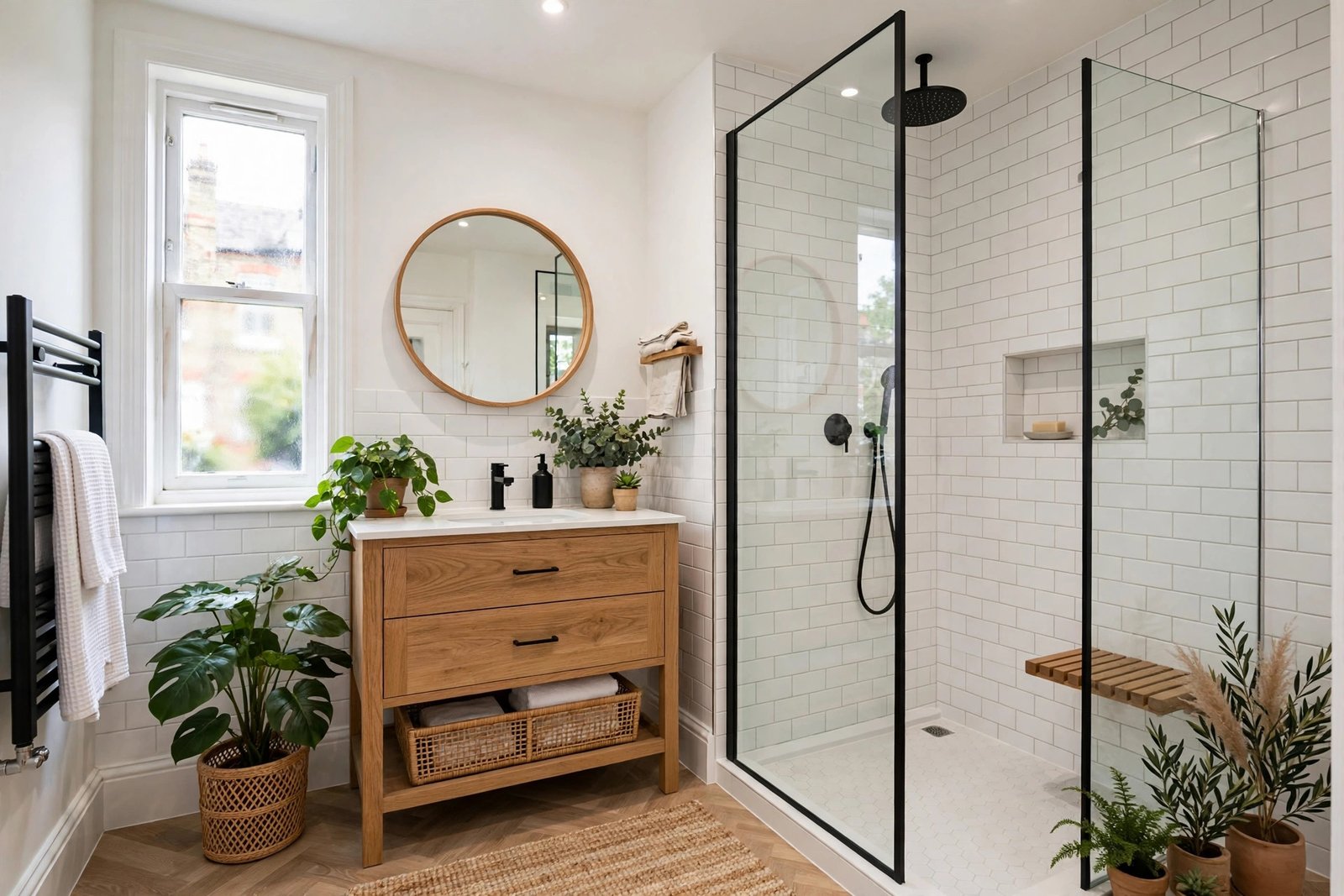
The bathroom is the smallest room in the house and, pound for square metre, the most expensive to renovate. A full bathroom refit in the UK can cost anywhere from £3,000 for a budget refresh to £15,000+ for a high-end transformation — and the difference between those figures is rarely obvious until you are halfway through. Whether you are updating a tired avocado suite or creating a spa-like retreat, understanding where the money goes is the difference between a project that delights and one that drains. Here is the complete 2026 cost breakdown.
The headline figures
As a rough guide: a budget bathroom renovation (new suite, tiling, flooring, keeping the existing layout) costs £3,000–£6,000. A mid-range refit (quality fittings, new layout, proper waterproofing, good tiles) runs £6,000–£10,000. A high-end renovation (designer sanitaryware, walk-in shower, underfloor heating, premium tiles) starts at £10,000 and climbs past £15,000 for larger bathrooms. Labour typically accounts for 40–50% of the total — bathroom fitting is skilled, fiddly work involving plumbing, electrics, tiling and waterproofing in a tiny space. The Which? bathroom cost guides corroborate these bands with independent survey data.
These figures assume you are not moving the soil stack or major plumbing runs — relocating the toilet or soil pipe adds £1,000–£3,000+ in plumbing and building work. Keeping the layout is the single biggest cost saver in bathroom renovation.
Where the money goes: line by line
Sanitaryware: £800–£3,500
The suite itself — bath or shower, toilet, basin — ranges from £400 for a budget acrylic set to £3,000+ for designer pieces. Mid-range suites from established UK brands (£800–£1,500) offer the best value: reliable, good-looking, with readily available spares. Wall-hung toilets and basins cost more to buy and install but make small bathrooms feel larger and cleaning easier. Do not economise on taps and wastes — cheap brassware fails first and floods most expensively.
Tiling and flooring: £1,000–£4,000
Tiling is where budgets quietly explode. Basic ceramic tiles cost £15–£30/m²; designer porcelain or natural stone runs £50–£150+/m² — and a typical family bathroom needs 20–40m² of tiling. Labour for tiling (£40–£60/m²) often exceeds material costs. Money-saving moves: tile only the wet areas (shower, behind the bath) and paint the rest with quality bathroom paint; choose standard-format tiles over intricate mosaics (labour-intensive); and consider luxury vinyl flooring (£20–£40/m² fitted) over stone — warm, waterproof and convincing.
Plumbing and electrics: £1,500–£4,000
Behind the pretty tiles lies the expensive infrastructure. Moving pipework, installing a new shower pump or unvented cylinder, rewiring for proper bathroom zones, extractor fans (a legal requirement for windowless bathrooms) and shaver sockets all add up. Electrics in bathrooms must meet strict regulations — use a Part P-registered electrician, not a general handyman. Underfloor heating (£500–£1,500 electric mat systems) is a luxury that transforms winter mornings and is cheap to add during a refit, ruinously expensive afterwards.
Labour: the fitter’s fee
A bathroom fitter or project-managed team charges £2,500–£6,000 in labour for a full refit depending on region and complexity — London and the South East at the top. Get three detailed written quotes, check references and recent work, and agree a payment schedule tied to milestones (never pay more than 25–30% upfront). Checkatrade and similar platforms help verify tradespeople, but personal recommendations remain gold. Our broader cost data at bathroom renovation costs in the UK is the companion reference for this guide.
Saving money without regretting it
The smart savings: keep the layout (saves £1,000–£3,000 in plumbing); refresh rather than replace where possible — regrouting tiles and respraying a sound bath (£300–£500) can transform a bathroom for under £1,000; buy ex-display suites (30–50% off); do the demolition and painting yourself; and schedule work for tradespeople’s quieter periods (late winter) when quotes soften. If you are renovating multiple rooms, kitchen renovation costs follow similar logic — and bundling both with one team can secure a discount.
The false economies: skipping tanking/waterproofing in wet areas (leaks destroy ceilings below — £5,000+ of damage from a £300 saving); the cheapest fitter (rework costs double); unbranded sanitaryware with no spares availability; and tiling over problems rather than fixing substrates. Bathrooms punish corner-cutting more visibly than any other room.
Timeline and disruption
A full bathroom refit takes 2–4 weeks of active work, plus lead times for ordering suites and tiles (2–6 weeks). If it is your only bathroom, plan accordingly: a chemical toilet is grim for a fortnight, so schedule around access to alternatives (gym, relatives). Agree a written schedule with your fitter including start date, milestones and completion date — and add a week of buffer. Dust gets everywhere regardless of sheeting; seal the bathroom door and accept it.
Does it add value?
A well-executed bathroom renovation typically returns 50–80% of its cost in added property value — it rarely pays for itself directly, but an outdated bathroom actively deters buyers and drags down offers. The value case is strongest for the worst bathroom in an otherwise good house: bringing it up to standard removes a buyer objection worth more than the renovation cost. Renovate for your own enjoyment primarily; treat any value uplift as a bonus, not the business case.
Accessibility and future-proofing
If you plan to stay in your home long-term, consider designing the renovation for ageing in place — it costs little extra during a refit and a fortune to retrofit later. Level-access (walk-in) showers, wall-hung toilets at comfort height, grab-rail-ready stud walls (noggins installed behind tiles for future rails), lever taps instead of twist handles, and non-slip flooring all make the bathroom safer for decades. These features also broaden your buyer pool when selling: Britain’s population is ageing, and accessible bathrooms are a genuine selling point. A bathroom designed for a lifetime is the opposite of a fashion-driven refit that dates in five years.
Conclusion
Renovating a bathroom in the UK costs £3,000–£6,000 at budget level, £6,000–£10,000 mid-range, and £10,000–£15,000+ for high-end — with layout changes, tiling choices and labour rates driving the variation. Keep the layout, waterproof properly, invest in brassware and fitting quality over designer tiles, and get three quotes from verified tradespeople. And plan the project timeline around your household’s tolerance for disruption: a well-sequenced refit with materials ordered in advance finishes in weeks, while a chaotic one drags for months. Do the planning, and the smallest room in the house becomes the one you are proudest of.
Frequently Asked Questions
How much does a new bathroom cost in the UK?
£3,000–£6,000 for a budget refit, £6,000–£10,000 mid-range, £10,000–£15,000+ high-end. Labour is 40–50% of the total; keeping the existing layout is the biggest single saving.
How long does a bathroom renovation take?
2–4 weeks of active work, plus 2–6 weeks lead time for ordering suites and tiles. Plan for disruption if it is your only bathroom.
Can I renovate a bathroom for £3,000?
Yes, at budget level: keep the layout, choose a basic suite, tile only wet areas, and do demolition and painting yourself. Respraying the bath and regrouting tiles can refresh for under £1,000.
Does a new bathroom add value to a house?
Typically 50–80% of cost is reflected in value — it rarely pays for itself directly, but an outdated bathroom deters buyers and depresses offers, so the real return is in saleability.
Should I hire a bathroom fitter or separate trades?
A single bathroom fitter or managed team is simpler and usually cheaper overall than coordinating plumber, electrician and tiler separately — but verify references and agree milestone-based payments.




Leave a Reply