
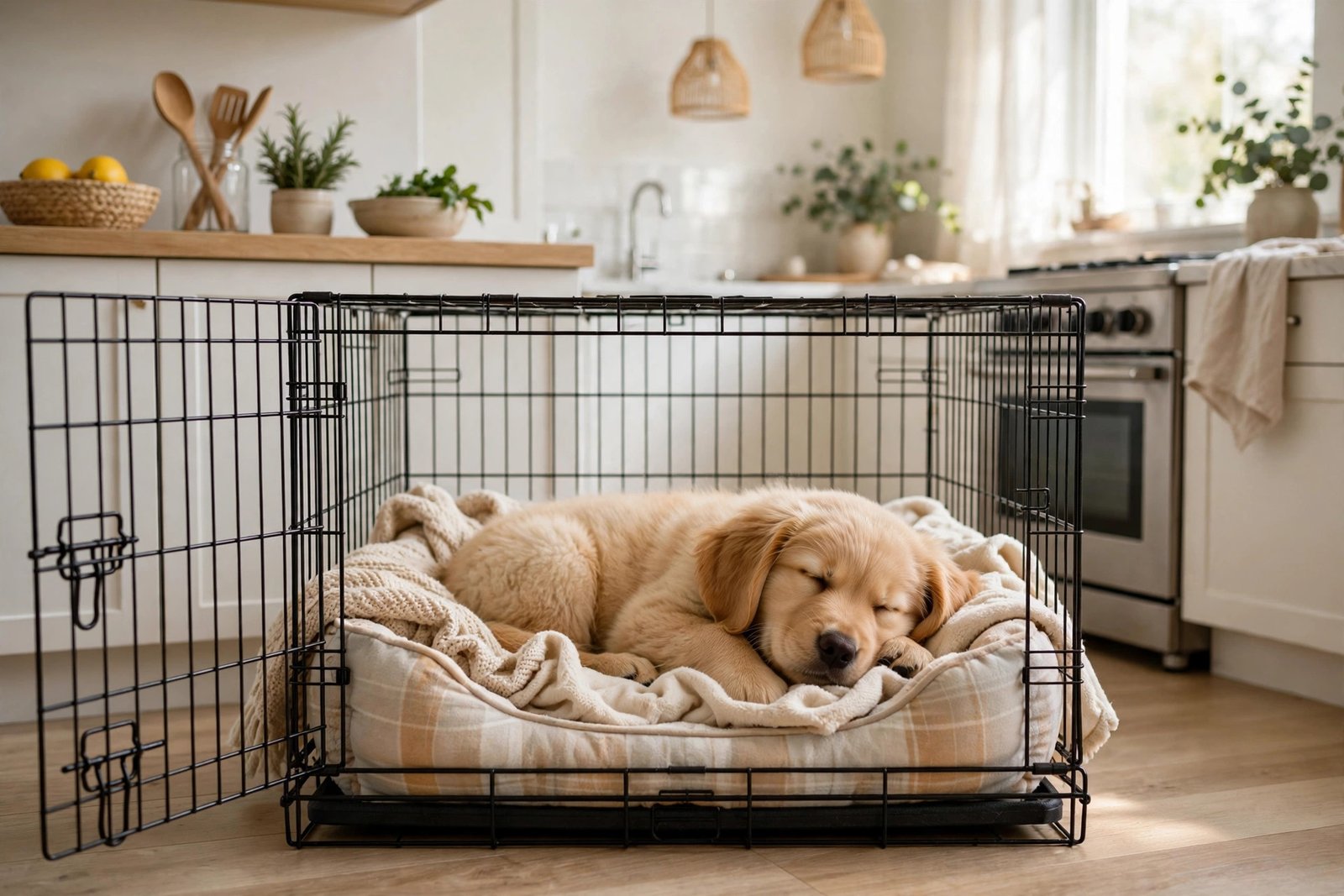
The first night with a new puppy: you place the tiny trembling creature in its beautiful new crate, close the door, turn off the light — and the howling begins. Within minutes you’re sitting on the kitchen floor at 2am, questioning every decision you’ve ever made, while the puppy performs an aria of abandonment. Every puppy owner knows this concert. The good news: crate training doesn’t have to involve the crying — or at least, not much of it.
Done right, a crate becomes your puppy’s favourite place: their den, their bedroom, their safe retreat. Here’s the gentle, crying-minimal method UK trainers actually recommend.
Why crate train at all?
Dogs are den animals — given the choice, most seek small, enclosed sleeping spots. A crate taps into that instinct, giving your puppy a secure territory in a big scary house. The practical benefits are enormous: faster house training (dogs avoid soiling their den), safe containment when you can’t supervise (protecting both puppy and your skirting boards), easier travel, and a portable “home” for vet stays or holidays. It’s also a kindness to your puppy: the world is overwhelming, and a den is calming. The Kennel Club and RSPCA both endorse crate training when done positively — the key word being positively. A crate must never be used as punishment.
Setting up for success (before the crying starts)
The right crate
Big enough to stand, turn and lie stretched out — no bigger (excess space invites toileting in one corner, sleeping in the other; use the divider panel that comes with most crates). Wire crates suit most puppies (ventilated, foldable); plastic airline-style crates feel more den-like for nervous pups. Add vet bedding (warm, washable, non-chewable-ish) and leave the door off or fixed open for the first days.
Location, location
Start the crate where the family is — the kitchen or living room, not an isolated utility room. Puppies cry hardest from loneliness, not from the crate itself. Once settled (usually 2–4 weeks), you can gradually move it to its permanent spot if desired. For the first week, many owners sleep near the puppy — an airbed by the crate beats weeks of 3am howling for everyone.
The no-crying method: step by step
Days 1–3: the crate is a treat dispenser
Don’t close the door at all. Scatter high-value treats and feed meals inside the crate with the door open — let the puppy wander in and out freely. Every good thing happens in the crate; nothing bad ever does. Play crate games: toss a treat in, praise the entry, let them exit. You’re building an association (crate = amazing) before asking for any confinement.
Days 4–7: door closed for seconds
Feed meals with the door closed, opening it the instant they finish. Gradually extend: 30 seconds, a minute, five minutes — always with a stuffed Kong or chew, always opening before distress starts. The rule: end every session while the puppy is still happy. You’re stretching their comfort zone millimetre by millimetre, never snapping it.
Week 2: short absences
Close the door with a Kong, step out of sight for a minute, return calmly (no big hellos — arrivals should be boring). Build to 15, 30, 60 minutes. Vary your routine so departures don’t become a predictable anxiety trigger: pick up keys and sit down; put on shoes and make tea. If crying starts, you’ve progressed too fast — drop back a step. Progress isn’t linear; regression after a bad night is normal.
Nights: the gentle approach
For the first week, set alarms for toilet breaks every 2–3 hours (young puppies physically can’t hold it longer — Blue Cross guidance suggests roughly one hour per month of age). Carry the puppy out silently, no play, straight back to the crate with a small treat. Most puppies sleep through by 12–16 weeks with this routine. A ticking clock or heartbeat toy mimics littermates; an old t-shirt of yours provides comforting scent.
When crying happens anyway (troubleshooting)
Some crying is normal — stay calm and analytical. Crying at bedtime: usually protest, not distress — wait for a pause (even a breath), then quietly reward the silence; never open the door mid-wail or you teach that crying works. Crying after hours of quiet: probably needs the toilet — take them out. Escalating panic (drooling, biting bars, hurting themselves): stop — this may be genuine separation anxiety needing a slower programme or professional help, not tougher love. Never shout at, spray, or bang the crate — fear poisons the association you’re building. And never leave a puppy crated all working day: maximum crate time is roughly 2–4 hours for young pups (plus nights with breaks); longer needs a puppy pen, dog walker or daycare. If you’re renting, sort the housing first — our pet-friendly accommodation guide covers landlord negotiations.
How long until it’s “done”?
Most puppies accept the crate happily within 2–4 weeks of consistent training; reliable all-night sleeping typically by 4–5 months. Keep crating until around 12–18 months (through the chewing adolescence), then trial freedom gradually — many dogs choose to keep sleeping in their crate with the door open for life. That’s success: the crate graduates from containment to beloved bedroom. Budget for the journey realistically — quality crates, bedding and Kongs are one-off costs, but the monthly savings that fund pet ownership deserve a plan from day one.
Travelling and holidays with a crate-trained dog
Crate training pays dividends far beyond the home. A crate-trained dog settles in the car (secured crates are far safer than loose dogs — and it’s an offence to drive with an unrestrained animal that could distract you), sleeps calmly in unfamiliar holiday cottages, and handles vet stays with less stress because the crate is a familiar safe space. For car travel, secure the crate so it can’t slide, cover it partially to reduce visual stimulation on long journeys, and never leave a dog in a car in warm weather — temperatures turn lethal in minutes, even with windows cracked. When visiting friends or family, bringing the crate means your dog has their own bedroom anywhere: no midnight wandering, no chewed skirting boards, no anxious pacing. It’s one of those rare training investments that keeps paying off for the dog’s entire life.
The bottom line
Crate training without the crying comes down to: going slowly (days of open-door positivity before any confinement), building duration in tiny increments, managing nights with scheduled toilet breaks, and never using the crate as punishment. The 2am concerts aren’t a rite of passage — they’re a sign the programme moved too fast. Slow down, and your puppy won’t just tolerate the crate; they’ll love it. Which means you’ll love it too — especially at 2am, when the house is silent.
Frequently Asked Questions
How long does crate training take?
Most puppies accept the crate within 2–4 weeks; reliable overnight sleeping by 4–5 months. Rushing the process causes most problems — slow and positive wins.
Should I ignore my puppy crying in the crate?
Distinguish protest whimpers (wait for a pause, then reward quiet) from genuine distress or toilet needs (respond promptly). Never open the door during full crying — it teaches that crying works. Escalating panic needs a slower approach, not ignoring.
How long can a puppy be left in a crate?
Young puppies: 2–4 hours maximum during the day (plus nights with toilet breaks). Never crate a puppy for a full working day — use a pen, walker or daycare for longer absences.
Where should the crate go at night?
Start near you (bedroom or nearby) for the first weeks — isolation causes most night crying. Move it gradually to its permanent spot once the puppy is settled.
Is crate training cruel?
No, when done positively — dogs are den animals and most come to love their crate as a safe retreat. It becomes cruel only if used as punishment or for excessive confinement.



Leave a Reply