
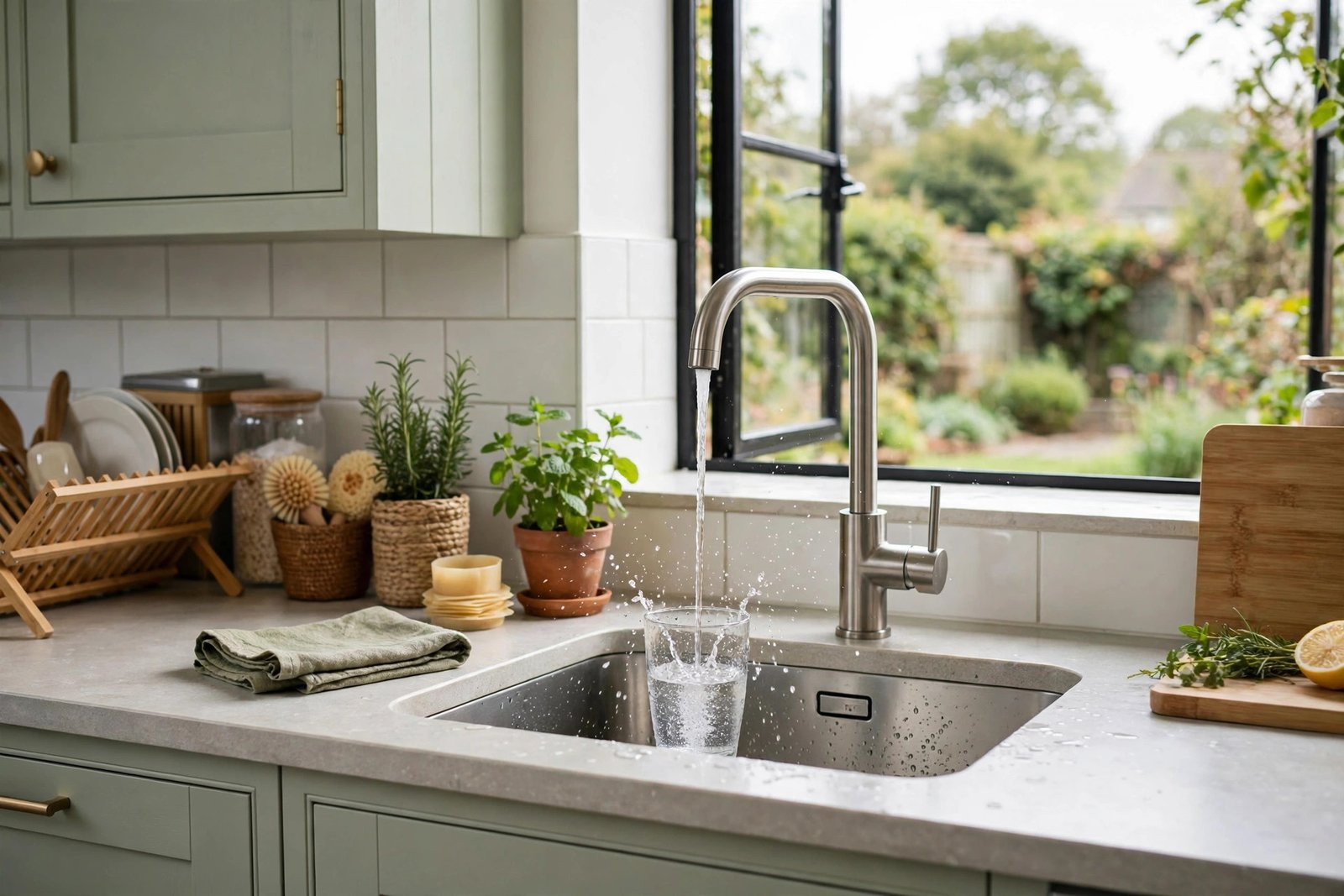
Britain is famous for rain, so it feels strange to talk about saving water. Yet the south-east of England is officially classed as water-stressed, and the average Brit uses around 140 litres of water a day — nearly double what water companies say is sustainable. The good news is that learning how to save water at home without trying hard in the UK does not mean muddy wellies or five-second showers. Most of the biggest savings come from tiny, fit-and-forget changes to your taps, toilet, and garden. Here is how to cut your usage — and often your bill — with almost no effort.
Why Water Saving Matters in a Rainy Country
It rains a lot, but most of it falls in the wrong places at the wrong times. The water-stressed south-east, home to millions, gets less rainfall per person than parts of Australia. Population growth, leaky Victorian pipes, and climate-driven dry spells mean water companies are planning new reservoirs and, in some areas, considering hosepipe bans as a regular summer feature. Using less water also saves energy — roughly a fifth of the average home’s energy bill goes on heating water. So cutting your winter heating bills and saving water are two sides of the same coin. Water UK’s water-saving advice sets a national target of 110 litres per person per day by 2050, and every household that gets close helps keep bills and restrictions down for everyone.
The Toilet: Your Biggest Silent Water User
Flushing accounts for about a third of household water use — roughly 30% — and older toilets can use 9 to 13 litres per flush. The laziest fix in the book: ask your water company for a free “save-a-flush” bag or cistern displacement device. Almost every UK water supplier will send one free of charge, and fitting it takes ten seconds — just drop it in the cistern. It saves around a litre per flush, which adds up to thousands of litres a year for a family of four. If you are replacing a toilet, look for a dual-flush model with a 4/6-litre split, now standard in new builds. And the classic advice still holds: only flush when you need to. It is not glamorous, but no single habit saves more water with less thought.
Showers, Taps, and the Magic of Aerators
A ten-minute power shower can use over 100 litres — more than a bath. You do not need to give up long showers entirely, but two effortless tweaks help enormously. First, fit a water-efficient shower head. Modern eco heads use air-infusion technology so the pressure feels identical while using 7–8 litres a minute instead of 12–15. Many water companies give these away free through their websites. Second, screw aerators onto your taps — small mesh fittings that mix air into the flow, cutting tap use by up to half with no noticeable difference. A dripping tap, meanwhile, can waste over 5,000 litres a year; replacing a washer costs pennies and takes minutes. Small leaks are worth fixing fast, and your supplier may even help locate hidden ones for free.
The Kitchen Habits That Add Up
The kitchen offers some of the easiest wins. Always run the dishwasher and washing machine full — half loads are the enemy. A modern dishwasher uses around 10 litres per cycle, far less than washing the same dishes by hand under a running tap (which can use 40+ litres). If you hand-wash, fill a bowl instead of running the tap. Keep a jug of tap water in the fridge rather than running the tap until it runs cold — you will drink more water too, and how much water you should actually drink each day matters for your health as well as your bill. Catch the cold water that runs before your shower warms up in a bucket and use it for houseplants. These are not sacrifices; once they become routine, you will not even notice them.
Garden Smarter, Not Thirstier
Gardens are where water use explodes in summer — a sprinkler can use as much in an hour as a family uses in a day. The effortless alternative is a water butt connected to your downpipe: it collects free rainwater for plants, costs £30–£50 (often subsidised by water companies), and needs no plumbing skills. Water plants in the cool of the evening to cut evaporation, and mulch beds with bark or compost to lock moisture in the soil — this also suppresses weeds, saving you effort twice over. Choose drought-tolerant plants like lavender, sedum, and ornamental grasses, which thrive in British summers with barely any watering. If you must use a hose, a trigger gun is far better than an open hose, and watering cans beat both for precision.
Check Whether a Water Meter Would Save You Money
Here is a financial angle many renters and homeowners miss: if you use less water than average, a meter almost always saves money. The Consumer Council for Water estimates metered customers can save significantly, and you can trial one for up to two years in England and Wales — if your bills go up, you can switch back. Single occupants, couples who work full-time, and anyone with a water-efficient home are the biggest winners. Even on an unmetered rate, using less water helps: it reduces the energy you pay to heat it and strengthens the case against future bill rises. Pair water saving with other low-effort eco habits, like buying second-hand clothes online, and your household footprint shrinks without any lifestyle pain.
Frequently Asked Questions
How much water does the average UK household use?
Around 140 litres per person per day, according to industry figures — well above the 110-litre target. A family of four typically uses over 200,000 litres a year, most of it in the bathroom.
Will saving water actually lower my bill?
If you are on a water meter, yes — directly. If you pay fixed rates, you save on the energy used to heat water instead. Either way, requesting a meter trial (free, reversible for two years) is worth considering if your usage is below average.
Are water-saving gadgets really free from suppliers?
Very often, yes. Most UK water companies offer free save-a-flush bags, shower heads, tap aerators, and sometimes garden kits through their websites. Search your supplier’s name plus “free water saving devices.”
Does a hosepipe ban mean I cannot water my garden at all?
Not entirely — bans typically restrict hosepipes and sprinklers, but watering cans and water butts are usually still allowed. A water butt is the best insurance against summer restrictions.
What is the single biggest water saver for a busy household?
A cistern displacement device in an old toilet plus a water-efficient shower head. Together they can save a family 30,000+ litres a year for about ten seconds of total installation effort.
Saving water at home does not require virtue, vigilance, or giving up anything you enjoy. Fit the free gadgets, fill the machines, butt the rainwater, and let the savings happen in the background. The average household can realistically cut a quarter of its water use without noticing any difference in comfort — and on a meter, that is money back in your pocket every single quarter. In a country where the south-east is drier than Sydney per person, those quiet, effortless changes are exactly what the future needs.

Leave a Reply