
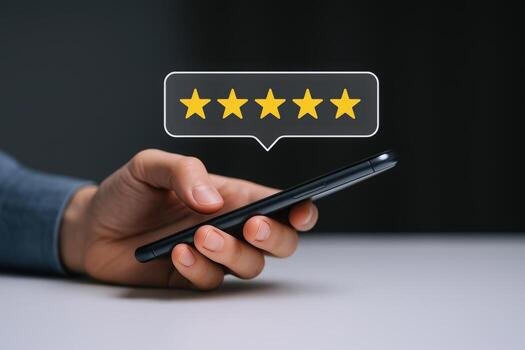
What is the best way to get Google reviews for my business? Google reviews are the closest thing to free money in local business: they determine whether you appear in the map pack, whether searchers choose you over competitors, and how much they trust you before first contact. Businesses with 50+ recent 5-star reviews get dramatically more enquiries than identical businesses with 5 reviews — I’ve seen it transform local trades overnight. Yet most businesses collect reviews passively and slowly. Here’s the systematic, ethical approach that actually works.
Why reviews matter so much (the mechanics)
- Local rankings: review count, rating and recency are major local SEO factors — they directly affect whether you appear in Google’s map results for “[service] near me”.
- Click-through: star ratings in search results lift click rates enormously — 4.8 stars with 120 reviews beats 5.0 stars with 6 reviews, because volume signals legitimacy.
- Conversion: ~90% of consumers read reviews before choosing local businesses. Your reviews are your silent salesperson.
- Feedback loop: reviews tell you what customers actually value — invaluable business intelligence, free.
What is the best way to get Google reviews for my business? The core system
1. Claim and complete your Google Business Profile first. You can’t get reviews on a listing you don’t control. Complete every section — photos, hours, services, description. See our cheap marketing guide for the setup.
2. Get your review link. In your Business Profile dashboard, there’s a “share review form” option generating a short direct link. Shorten it if needed. This link is your most valuable marketing asset — put it everywhere.
3. Ask at the moment of maximum happiness. Timing is everything: ask right after delivery, when the customer is delighted — not a week later when the glow has faded. For trades: as you’re packing up, “Would you mind leaving us a quick Google review? It really helps.” For hospitality: with the bill. For services: in the completion email.
4. Make it effortless. Every bit of friction halves response: send the direct link (not “find us on Google”), use QR codes on receipts/cards/vans linking straight to the review form, and tell them it takes 60 seconds. Consider NFC tap-to-review cards (£10–£20 for a pack) — tap phone, review form opens. Genuinely effective.
5. Ask everyone, systematically. Build it into your process: a step in your job-completion checklist, an automated follow-up email/SMS 24 hours after service (“How was everything? [review link]”). The businesses with hundreds of reviews don’t have happier customers — they have a system.
6. Follow up once. One polite reminder a week later doubles conversion. More than once becomes pestering.
What to say (scripts that work)
- In person: “We’re a small local business and Google reviews really help us — would you mind leaving one? It takes about a minute.” (Mentioning you’re small/local increases compliance — people like helping.)
- By text/email: “Hi [name], thanks for choosing us! If you were happy with [service], we’d really appreciate a quick Google review: [link]. It helps other local customers find us.”
- After a compliment: whenever a customer praises you verbally — “That’s so kind — would you mind putting that in a Google review? It would mean a lot.” Strike while the sentiment is hot.
- What NOT to say: never offer incentives for reviews (against Google’s policy — reviews can be removed and your listing penalised), never ask only happy customers selectively in a way that manipulates (asking everyone is fine; cherry-picking is against policy), and never write fake reviews (obvious, illegal, and reputation-destroying if caught).
Handling negative reviews (inevitable — handle well)
- Respond to every review, positive and negative. Response rate itself signals a business that cares — and 90% of businesses don’t bother, so it differentiates you.
- For negatives: respond quickly, calmly, professionally. Acknowledge, apologise for the experience (not necessarily admitting fault), take it offline (“please call us on [number] so we can put this right”). Never argue publicly — future customers judge you on the response more than the complaint.
- A few negatives among many positives actually help — perfect 5.0 ratings look fake; 4.6–4.9 with hundreds of reviews looks real and trustworthy.
- Flag genuinely fake reviews (competitors, spam) through Google’s reporting — removal isn’t guaranteed but worth attempting.
- Learn from patterns: three reviews mentioning slow communication means fix communication, not the reviews.
Keeping the momentum
- Recency matters: a steady stream of new reviews outranks a big old batch. The system must run continuously, not as a one-off campaign.
- Showcase reviews: screenshot great ones for Instagram/social (see our Instagram growth guide), display them on your website, quote them in proposals. Reviews are marketing assets — use them.
- Track and celebrate: watch your rating and count monthly; share milestones with the team. What gets measured gets managed.
- Extend to other platforms once Google is strong: Trustpilot, Facebook, Checkatrade/TrustATrader for trades. But Google first — it’s where customers look.
Reviews as a competitive weapon
Here’s the strategic view most businesses miss: reviews aren’t just social proof — they’re a competitive moat. When a searcher compares three local plumbers, the one with 180 recent reviews wins before anyone reads a word — volume signals reliability at a glance. Building that lead takes months of systematic asking, which means competitors can’t copy it overnight. It’s the most defensible marketing asset a local business can own: ads stop the day you stop paying, but reviews compound forever. Prioritise accordingly: the business that asks for reviews from day one builds an advantage that widens every month. Check competitors’ review counts quarterly — not to obsess, but to know the number you’re chasing. Then beat it through consistency, not tricks. In local business, the review leader usually becomes the market leader. It’s that simple, and that hard.
The bottom line
What is the best way to get Google reviews for my business? A system, not luck: complete your Business Profile, get your direct review link, ask every customer at the moment of delight, make it frictionless (direct link, QR codes, tap cards), follow up once, and respond to every review. No incentives, no fakes, no cherry-picking — just consistent asking. The businesses dominating local search aren’t better than you; they just ask more often. Start asking today.
Google’s review link help shows how to get your link.


Leave a Reply