
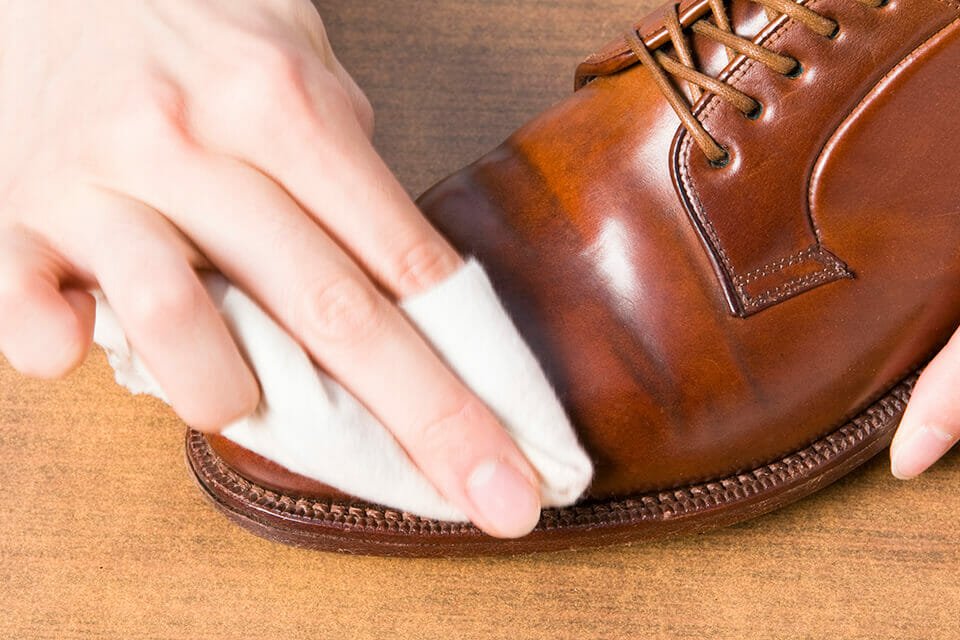
Good leather shoes are an investment — and like any investment, they need maintenance. A £150 pair of leather shoes, cared for, will outlast three £50 pairs that are neglected: they’ll look better, feel better and cost less per wear. Yet most people’s shoe care consists of… nothing, until the leather cracks. Taking care of leather shoes is genuinely easy — fifteen minutes every few wears — and the difference it makes is extraordinary. So, How do I take care of leather shoes? Here’s what actually works.
How do I Take Care of Leather Shoes — Understand what leather needs
Leather is skin. It dries out, it cracks, it stains — and like skin, it responds to cleaning and moisturising. The enemies: water (dries leather as it evaporates), salt (winter roads are brutal), heat (never dry wet shoes on a radiator — it cooks the leather), and neglect. The routine below addresses all of them.
The basic routine (15 minutes, every 3–5 wears)
- 1. Remove laces, brush off dirt. A horsehair brush (a few pounds, lasts years) flicks off dust and dried mud. For muddy shoes, let the mud dry completely first — wet mud smears, dry mud brushes off.
- 2. Clean. Wipe with a slightly damp cloth. For grime, use saddle soap or a dedicated leather cleaner — a tiny amount, worked into a lather, wiped off. Don’t soak the leather.
- 3. Condition. This is the step everyone skips and the one that matters most. Leather conditioner (or cream polish) replaces the oils leather loses. Apply a thin layer with a cloth, let it absorb for 15 minutes, buff off. Conditioned leather stays supple and resists cracking for years; unconditioned leather dries, creases deeply and eventually splits. Every 3–5 wears, or monthly for regulars.
- 4. Polish. Cream polish (nourishes + adds colour) for most shoes; wax polish (protects + shines) for dress shoes. Apply thinly, buff with a brush or cloth. Match the polish colour to the shoe — or use neutral for everything.
- 5. Protect. A waterproofer spray (especially for suede and nubuck, which need different care — see below) before first wear and periodically after. Don’t expect miracles, but it buys crucial time in rain.
Daily habits that double shoe life
- Use shoe trees. Cedar shoe trees (£15–£25) absorb moisture, hold the shape and reduce creasing. The single best shoe-care purchase. Insert them every time you take the shoes off.
- Rotate your shoes. Never wear the same pair two days running. Leather needs 24 hours to dry out from foot moisture; daily wear without rest rots them from the inside. Two pairs alternated outlast three pairs worn daily.
- Untie them. Forcing shoes on and off without untying crushes the heel counter. Use a shoehorn — it takes three seconds and saves the structure.
- Rest them after rain. Wet shoes: stuff with newspaper (changed once), dry at room temperature away from heat, condition once dry. Patience here prevents permanent damage.
Suede and nubuck: different rules
Suede doesn’t get polish — it gets a suede brush (restores the nap), suede protector spray (essential, applied before first wear), and a suede eraser for marks. Water stains on suede: let dry, then brush. Salt stains (winter’s gift): equal parts water and white vinegar, dabbed on, then brushed when dry. Suede is higher-maintenance, which is why our comfortable shoe guide notes the trade-offs honestly.
When to resole, when to retire
Good shoes can be resoled — a cobbler can replace worn soles and heels for £25–£50, giving quality shoes a second life. This is the economic argument for buying well: a £150 shoe + £40 resole = 10 years. A £40 shoe = 18 months, unresoleable. Our guide to reviving old clothes covers the broader repair mindset, and affordable brands notes where to find shoes worth maintaining.
Retire shoes when: the leather is cracked through (not just creased — cracked), the insole is destroyed, or repairs cost more than the shoe’s remaining value. Don’t mourn them; they’ve served.
The shoeshine ritual: step by step
A proper shoeshine is one of life’s small satisfactions — fifteen meditative minutes that transform tired shoes. Here’s the full ritual for dress shoes:
What you need: horsehair brush, damp cloth, leather cleaner or saddle soap, cream polish (matching colour), wax polish (matching or neutral), two soft cloths (old T-shirts are perfect), and optionally a shine brush. Total investment: £20–£30 for a kit that lasts years.
Step 1: Prepare. Remove laces (clean them separately — or replace; new laces are £3 and transformative). Brush off all dust and dirt with the horsehair brush, getting into the welt (where sole meets upper) and crevices. If the shoes are dirty, wipe with a barely-damp cloth and let dry.
Step 2: Clean. Apply a small amount of leather cleaner or saddle soap with a damp cloth, working in circles. This removes old polish build-up and grime. Wipe clean with a fresh damp cloth. Let dry completely — five minutes.
Step 3: Condition and cream. Apply cream polish sparingly with a cloth, working it into the leather in small circles — including the tongue and the areas under the laces (neglected zones that dry out). The cream nourishes and adds colour. Let it absorb for 10–15 minutes (make tea), then buff vigorously with a clean brush or cloth. The leather should look rich and even.
Step 4: Wax. Apply wax polish in thin layers with a cloth — thin is critical; thick layers crack. Two thin coats, buffing between each with a shine brush. The wax provides the protective shine. For a mirror shine on toe caps (the military “bulling” technique): tiny amounts of wax, water droplets, and patient circular rubbing. It’s meditative; the result is spectacular.
Step 5: Finish. Buff the whole shoe with a clean soft cloth. Replace (or renew) the laces. Admire. The transformation from dull to gleaming never gets old, however many times you do it.
How often: full shine every 4–6 wears for regular dress shoes; conditioning (cream only, no wax) every 2–3 wears. The history of shoe polish is a fun rabbit hole, but the practical lesson is simpler: regular light maintenance beats occasional rescue missions. Fifteen minutes now saves an hour later — and shoes maintained this way genuinely last decades.
The practical takeaway
Leather shoe care = brush, clean, condition (the critical step), polish, protect — fifteen minutes every few wears — plus shoe trees, rotation, and never drying on radiators. Suede gets brushing and protector spray instead of polish. Resole good shoes rather than replacing them. It’s a small ritual that turns £150 shoes into decade-long companions instead of two-year disappointments.



Leave a Reply